
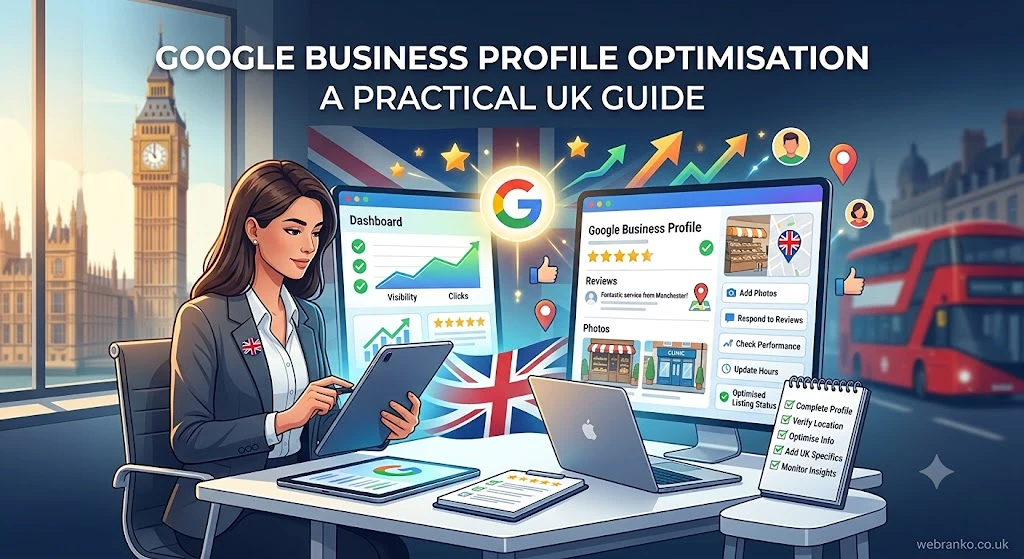
Google Business Profile optimization means filling out every section of your free listing. Choose the most specific category available. Keep your name, address, and phone number consistent everywhere. Build a steady flow of reviews. When you get the basics right, UK businesses often see movement in the Google Map Pack. This often happens within 30 to 90 days. You can do it without spending a penny on ads.
Why this matters more than your homepage
For a huge share of local searches, your Google Business Profile is the only part of your online presence someone actually looks at. They see your opening hours, your phone number, a handful of photos and your star rating, then they call or they don’t. Your website comes second, if it gets a look in at all.
That’s not an excuse to neglect your site. On page signals still reinforce your profile. But if you’ve only got a few hours a month for local SEO, GBP is where they should go first.
The GBP Optimisation Priority Matrix
Not every task carries the same weight, and most guides list them in no particular order. Here’s how to prioritise based on effort and typical impact.
| Task | Effort | Typical impact | When to do it |
|---|---|---|---|
| Verify your profile | Low | Essential, nothing else works without it | Immediately |
| Choose primary and secondary categories | Low | High | Week one, review every quarter |
| Fix NAP consistency across directories | Medium | High | Month one, especially after a rebrand or move |
| Add 15 or more current photos | Low | Medium | Ongoing, refresh quarterly |
| Build a review request habit | Medium | High | Ongoing from day one |
| Post weekly updates | Low | Medium | Once the basics above are done |
| List services with clear descriptions | Medium | Medium | Month one |
| Add LocalBusiness schema to your website | Medium, technical | Medium | Once your GBP itself is complete |
| Track calls, direction requests and website clicks | Low | Essential for knowing what’s working | From month one |
Getting the foundations right
Your primary category is arguably the single biggest lever in your whole profile. Your primary category is the main category that Google associates with your business, so it deserves careful thought rather than a quick guess. Google’s own guidance backs this up, explaining that the categories you choose help connect your business with customers searching for your products or services, and they directly affect how you show up in local search results. Pick the narrowest accurate option, not the broadest one that feels safe.
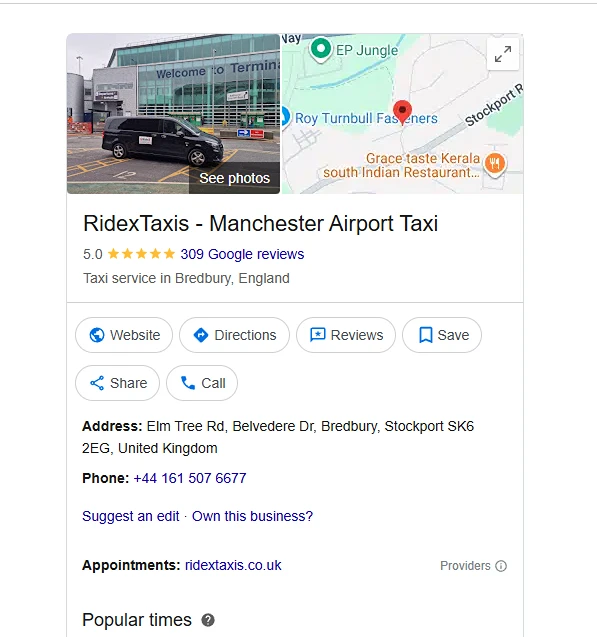
NAP consistency is the boring bit nobody enjoys.Still, it is where many UK businesses trip up.
If you are a limited company, Companies House lists your registered office address.You must report any change within 14 days.A PO box alone is not a valid registered address.
This address can differ from where you actually trade.A common mistake is using the registered office on your GBP listing.That is a problem if customers cannot visit that location.
Use your real trading address instead.Or hide your address and set a service area if you are mobile.
On verification, don’t panic if the postcard takes a while. The postcard typically takes around a week to arrive, and Google then needs roughly another week to manually verify the listing. Video and phone verification are faster where they’re offered, but not every business qualifies.
Keeping the profile active
Reviews, photos and posts are the ongoing work, and this is where most profiles quietly go stale after the initial setup. Industry surveys estimate reviews carry a meaningful share of local pack weight, with reviews making up around a fifth of local pack ranking influence and on-page website signals contributing roughly 15 percent, though it’s worth being honest that Google has never published exact figures, so treat any specific percentage as an informed estimate rather than gospel.
Ask for reviews at the moment a job finishes or an order ships, not weeks later when the memory has faded. A simple text or WhatsApp link works better than relying on people to find your listing themselves. And remember, Google doesn’t let you buy your way to a better organic position. Paid advertising does not improve your organic local ranking, so the profile still has to be earned through accuracy, relevance, and genuine activity.
FAQ
Is Google Business Profile free to use?
Yes, completely. There’s no paid tier that buys you a better organic position on Maps or in the local pack. You can pay for Local Services Ads separately, which is a different product, but standard GBP optimisation costs nothing beyond your own time.
How long does it take to rank on Google Maps?
Most UK businesses that fix categories, NAP and reviews see some movement within 30 to 90 days. There’s no fixed timeline Google will confirm, and competitive categories in busy cities generally take longer than niche services in smaller towns.
How do I verify a Google Business Profile without a shop front?
Set yourself up as a service area business during setup. You hide your exact address and list the postcodes, towns or counties you cover instead. Plumbers, electricians and mobile traders across the UK use this option regularly.
What is the single most important ranking factor?
Most local SEO practitioners point to your primary category first, since it defines what searches you’re even eligible to appear in. NAP consistency and review volume follow closely behind, but a wrong category undermines everything else.
How often should I post on Google Business Profile?
Once a week is a sensible minimum, since standard posts expire after seven days. Businesses that post consistently tend to look more active to both Google and potential customers than those with a profile last touched months ago.
How many photos should a Google Business Profile have?
Aim for at least 15 to 20 to start, covering your premises, team, products and completed work, then keep adding a few each month. Stale, sparse photo sections are one of the most common reasons profiles look neglected.
Can I change my Google Business Profile category later?
Yes, and you should revisit it every quarter as your services evolve. Seasonal businesses sometimes switch their primary category to match demand, though frequent changes without a real reason can look inconsistent to Google.
Your next steps
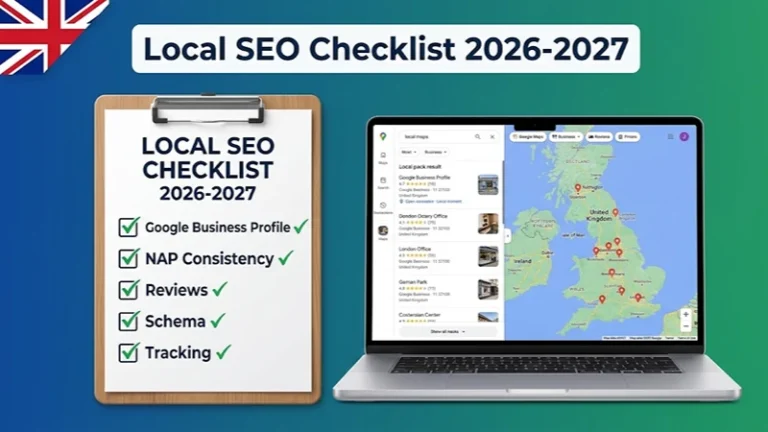
Start with verification if you haven’t already, then spend an hour choosing your categories properly using business.google.com and Google’s own Business Profile Help centre. Run a quick NAP audit by searching your business name and checking the top directories against your actual trading address. If you’re a limited company, cross check that address against what’s held at Companies House so the two don’t quietly drift apart. Then set a recurring monthly reminder for reviews, photos and posts, because this is a maintenance job, not a one off setup task.

Be the first to leave a comment below.