
In-Depth Guide
The Complete Guide to Membership & LMS
Our team has written a comprehensive guide covering technical specs, best practices, and the exact approaches we use on every project.
Selling a course through someone else’s platform feels convenient right up until you check what they’re taking off every single sale. Twenty percent, sometimes more, gone before it ever reaches your account.
We hear this from training providers constantly. They built an audience and produced genuinely good content, then handed the selling of it to a platform that owns the student relationship, controls the branding, and quietly takes a cut forever. Building your own membership site changes that equation entirely.
Membership Website Development: The Direct Answer
Here’s what UK businesses need to know before starting a membership or course build.
| Question | Answer |
|---|---|
| What does a membership website cost in the UK? | Varies by complexity. A single-tier membership costs considerably less than a multi-course platform with drip content and tracking |
| MemberPress or LearnDash, which is right? | MemberPress suits simpler gated content. LearnDash suits structured courses with quizzes and progress tracking |
| Can this be built on WordPress? | Yes, giving full platform ownership rather than a percentage taken by a third-party host |
| What happens if a payment fails? | A properly built site notifies the member and attempts renewal before cutting access |
| Can one-to-one sales and subscriptions coexist? | Yes, though pricing and access rules need planning early to configure correctly |
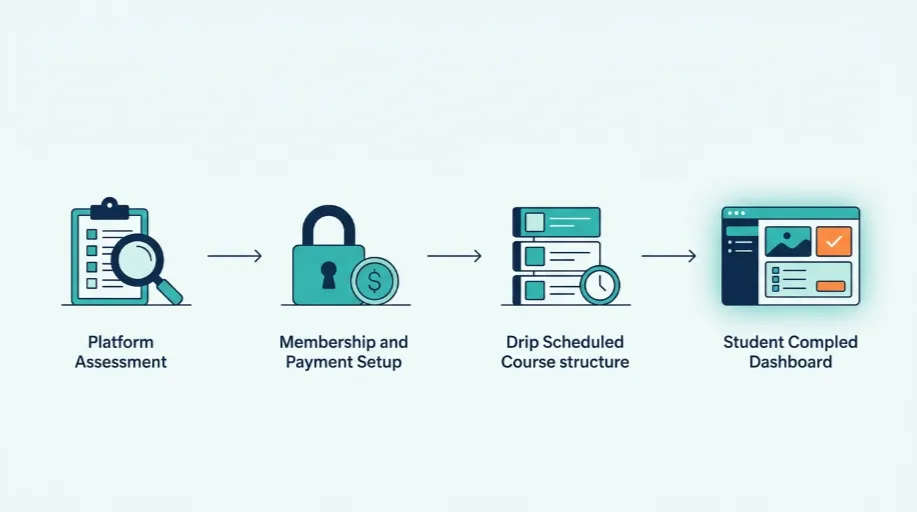
| What’s the typical build timeline? | Around four weeks from platform assessment through to launch |
The platform question trips up more businesses than anything else on this list. Getting it wrong early means rebuilding later, usually with existing members already signed up and depending on the site working properly.
Why Generic Course Platforms Start to Feel Restrictive
In our testing and client work, we’ve noticed a pattern. Course creators start on an all-in-one platform because it’s fast to launch. Then, somewhere around a hundred students in, the restrictions start showing.
We worked with a training academy based in Surrey who had been running their entire course catalogue through one of these platforms for two years. Their student dashboard couldn’t be customised to match their branding. Drip content releases were clunky and confusing for students. Worst of all, every renewal payment sent a percentage straight to the platform, regardless of how the customer relationship was actually built. Moving to a proper WordPress-based membership site gave them a dashboard students genuinely liked using, drip content that released on a sensible schedule, and renewals that stayed entirely theirs.
That’s the trade-off worth understanding. Generic platforms are fast to start on, but they’re rarely built to grow with a business that’s serious about its own content.
What Actually Goes Into a Proper Build
A membership or course site involves several moving parts that all need to work together correctly.
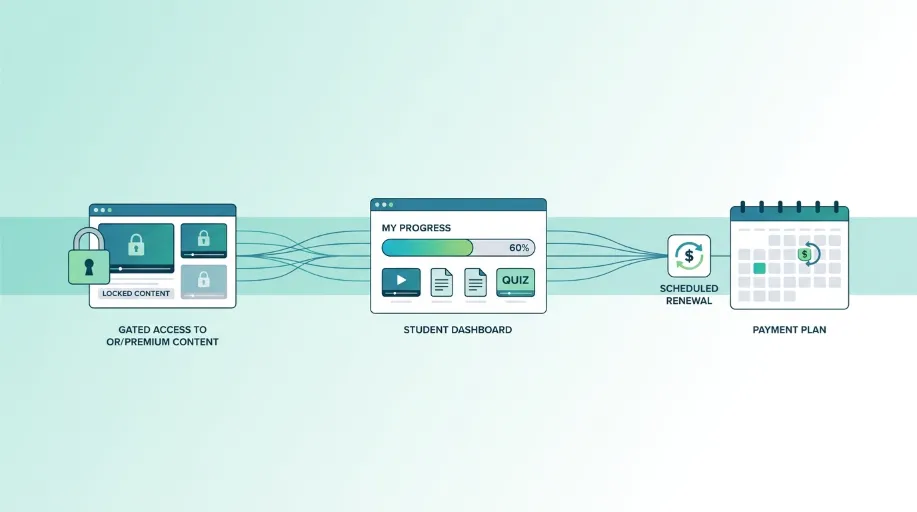
- Content gating that ties access directly to payment status, not simply hiding pages from a navigation menu where a direct link could still bypass it entirely
- Recurring payment configuration handling renewals, failed payments and cancellations properly, so a member never loses access unfairly or keeps it when they shouldn’t
- Drip content scheduling releasing course material at sensible intervals rather than dumping everything on a student the moment they enrol
- Progress tracking giving students a clear view of where they are in a course, which matters more for completion rates than most people assume
- Student dashboard design built around what members actually need to see, not a generic template that looks the same regardless of what’s being sold
- Platform selection choosing MemberPress or LearnDash based on genuine requirements, since picking wrong early means a difficult migration later
Skip the planning stage and you end up with a technically functioning site that doesn’t actually match how you sell or how students learn.
Where the Underlying Build Fits In
A membership platform is only as solid as the WordPress site it sits on. If the core build needs attention first, whether that’s performance, structure, or general reliability, that’s a separate conversation worth having before layering membership functionality on top.
Our WordPress Development service covers exactly that foundation. Some clients come to us wanting a membership site when what they actually need is a proper WordPress rebuild underneath it, and we’ll always flag that honestly rather than building membership logic on shaky ground.
Proof This Actually Works for Training Providers
It’s worth being specific here rather than vague. We’ve worked directly with training providers on both the technical build and the search visibility side, which gives us a genuinely useful view of what makes these sites succeed beyond just the platform itself.
Our SEO work with training providers shows the kind of results a properly built and properly optimised training site can achieve, which matters here because a beautifully built membership platform still needs people finding it in the first place. The technical build and the visibility work aren’t separate problems. They’re two halves of the same outcome.
When Ecommerce Functionality Needs to Sit Alongside Membership
Some businesses aren’t purely selling subscriptions. They’re selling physical products, one-off digital downloads, and ongoing membership access all through the same site, and that combination needs careful handling rather than bolting one system onto another as an afterthought.
If your business sells products alongside a membership or course offering, our WooCommerce Development service handles that side properly, making sure the shopping experience and the membership experience work together rather than feeling like two separate websites stitched together under one domain.
Getting the Foundation Right From the Start
The businesses that get the most out of a membership site are the ones who think through pricing, content structure and platform choice before development starts, not halfway through once students are already depending on the site working.
That planning conversation is where most of the value actually gets decided. Get the platform right, get the payment handling right, and get the student experience right. The rest of the build follows from those three decisions.