
In-Depth Guide
The Complete Guide to Technical SEO
Our specialists have written a comprehensive guide covering strategy, best practices, and the exact approaches we use for our clients.
Technical SEO Agency UK: Crawl Fixes, Site Health and Real Rankings
Your content can be brilliant. Your design can be spotless. But if Google’s crawlers can’t properly access, read, and index your site, none of it matters. That’s the part most agencies skip over or mention briefly in a report and never actually fix.
We don’t do that. Webranko is a technical SEO agency that UK businesses come to when rankings have plateaued, traffic has dropped without explanation, or a site migration has gone quietly wrong. We go into the codebase, the server, the crawl logs. We find what’s broken, what’s leaking authority, and what Google simply cannot see, and then we fix it.
What Does a Technical SEO Agency Actually Do?
A technical SEO agency audits and resolves the structural, crawlability, and performance issues that prevent search engines from properly indexing your site. Core work includes crawl optimisation, XML sitemap configuration, robots.txt management, canonical tag implementation, Core Web Vitals improvement, structured data schema deployment, and hreflang setup for UK and international targeting. Unlike on-page SEO, technical SEO operates at the infrastructure level; it’s ongoing, not a one-time report.
Why Technical SEO Is the Foundation, Not an Add-On
There’s a version of SEO that looks busy but achieves nothing. Blog posts published weekly. Meta descriptions tweaked. Keywords researched. And yet rankings sit flat for six months.
Nine times out of ten, the issue is technical. A misconfigured robots.txt blocking crawlers. Duplicate content across HTTP and HTTPS versions. Paginated product pages eating crawl budget without returning anything useful. Internal links pointing at redirects that point at more redirects.
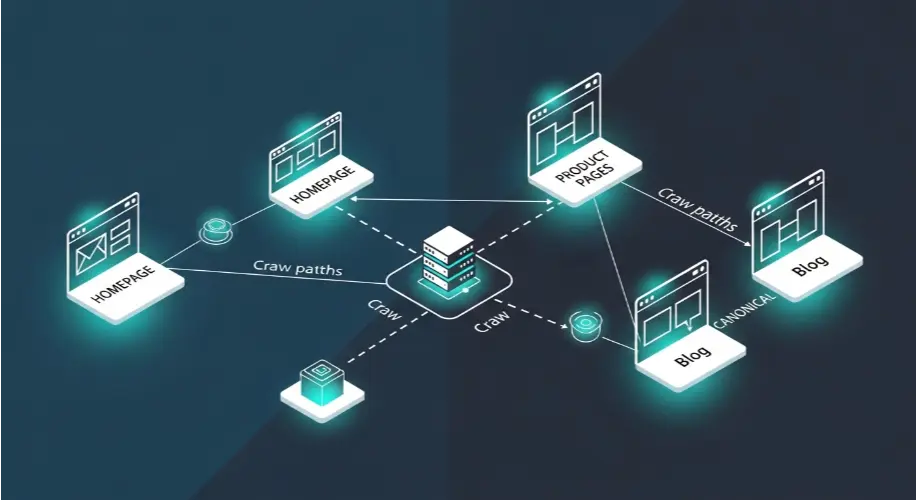
Google has limited time to spend on your site. Crawl budget optimisation is the discipline of making sure every second of that time counts, prioritising your highest-value pages, eliminating dead weight, and ensuring your XML sitemap reflects your actual site architecture rather than a bloated, stale snapshot from 2022.
As a technical SEO specialist team, we’ve worked on sites ranging from single-location service businesses in Leeds to 40,000-SKU e-commerce platforms in Manchester. The problems are different in scale, but the diagnostic process is the same: start from the server, work inward.
Technical SEO Services: What We Look At
Our technical SEO service covers every layer of your site’s health. Not a spreadsheet of 200 low-priority issues nobody will action. A ranked, prioritised report with clear ownership and estimated impact.
Here’s what we look at across every layer:
- Crawlability: robots.txt rules, noindex tags, crawl traps, JavaScript rendering issues, pagination configuration
- Indexation: XML sitemap accuracy, canonical tags, duplicate content across subdomains, parameter handling
- Core Web Vitals SEO: LCP, CLS and INP scores across mobile and desktop, identifying resource-level causes rather than vague “improve speed” recommendations
- Structured data schema: Implementation of Organisation, BreadcrumbList, FAQPage, Product, and LocalBusiness markup where applicable
- Hreflang UK: Correct implementation for sites targeting England, Scotland, Wales, or Northern Ireland separately, or UK vs. international audiences
- Internal link architecture: Equity flow, orphaned pages, redirect chains, anchor text distribution
- Security and accessibility: SSL/TLS certificate validity, HTTPS migration completeness, basic WCAG compliance signals
The difference between our technical SEO service and a standard SEO report is implementation. We don’t hand over a document and wish you luck. We either perform the fixes or work directly with your development team to ensure they are deployed properly.
Core Web Vitals: The Part Most UK Agencies Get Wrong
Since Google’s Page Experience update, Core Web Vitals have been a confirmed ranking factor. Most agencies know this. Fewer actually understand how to diagnose and resolve CWV failures at the code level.
LCP failures are almost always caused by render-blocking resources, unoptimised hero images, or server response time issues. CLS problems come from layout shifts triggered by ads, embeds, or fonts loading without reserved space. INP, the metric that replaced FID, is a measure of how responsive your page feels to user interaction, and it’s where a lot of WordPress-heavy sites quietly struggle.
We’ve improved LCP scores from 6.2 seconds to under 2.5 on UK ecommerce clients without touching a single line of product content. The changes were entirely infrastructure: image delivery via CDN, deferred non-critical scripts, and preloading the hero asset. Measurable. Documented. Repeatable.
Structured Data, Schema, and Search Appearance
Structured data schema is one of the most underused tools in UK technical SEO. When implemented correctly, it gives Google explicit, machine-readable signals about what your content means, not just what it says.
For a law firm in Birmingham, that means FAQPage schema pulling answers directly into the SERP. For a Bristol retailer, it’s the product schema enabling rich results with price, availability and review stars. For a national service business, organisation, and local business, markup strengthens entity understanding across Google’s Knowledge Graph.
We implement schema using JSON-LD, validated against Google’s Rich Results Test, and monitor for errors via Search Console post-deployment. Not guesswork. Not copy-paste templates pulled from a GitHub repo in 2019.
Hreflang, International Signals and UK-Specific Targeting
If your business operates across the UK and internationally or even just targets England and Scotland with different landing pages, hreflang UK implementation needs to be correct. Wrong hreflang tags send mixed signals to Google about which version of a page to serve which audience. The result is cannibalisation, ranking confusion and traffic loss that’s genuinely difficult to diagnose without looking at the right data.
We’ve resolved hreflang conflicts for UK businesses serving both domestic and EU markets post-Brexit, where content and regulatory references differ between territories. It’s technical, tedious, and absolutely worth getting right.
Ongoing Technical SEO vs a One Time Audit
An SEO audit answers the question: what is wrong right now? Ongoing technical SEO services answer a different question: what’s drifting, what’s been introduced by the last development push, and what does the next algorithm update require?
Sites change. Development teams ship new features. Plugins get updated. Server configurations get touched. Crawl budget shifts as content scales. Monthly technical SEO monitoring catches regressions before they compound into a rankings problem.
Proactive website security audits are only part of the picture. Our retained technical SEO service includes monthly crawl reports, Search Console anomaly monitoring, Core Web Vitals tracking, and a standing technical task queue addressed in order of priority. It is the difference between maintaining your technical health and firefighting every six months.
What to Look for in a Technical SEO Company
You’ll find no shortage of agencies offering a “free SEO audit”. What you get is usually a screaming frog export with 600 rows, no prioritisation, and a sales pitch at the end.
Here’s what separates a credible technical SEO company from the noise:
- They look at server logs, not just crawl tools
- They talk about crawl budget in the context of your specific site architecture
- They can explain why a canonical tag is pointing where it is, not just flag it as an issue
- They understand the difference between a 301 and a 308, and when each applies
- They report on outcomes ranking movement, index coverage, CWV scores, not just tasks completed
Webranko works with UK SMBs from Edinburgh to Exeter. We’re registered with the ICO, operate under UK GDPR and the Data Protection Act 2018, and handle client site access with proper access control and audit logging. No shortcuts. No offshore link farms. No black-hat crawl manipulation that looks good for three months and tanks a site in the fourth.
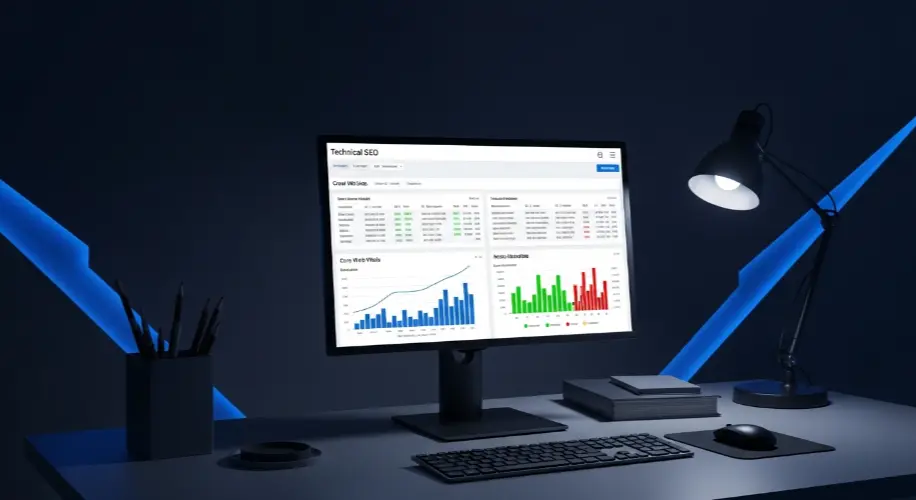
Interactive Tool: Technical SEO Health Checker
On this page, we’re building out a Technical SEO health score tool. Enter your URL, and it runs a lightweight check across five key areas: indexation signals, robots.txt configuration, canonical consistency, Core Web Vitals field data (via CrUX), and structured data presence. The output is a scored summary with prioritised next steps, not a wall of raw data. It’s designed to give UK business owners a starting point without needing to know what any of it means. Implementation due Q3 2026.