

Skip to content
Security Monitoring

Website Security Monitoring UK – 24/7 Threat Detection

A hardened site is a much harder target, but hardening alone doesn’t tell you the moment something actually happens. Website security monitoring UK businesses rely on fills that gap, watching your site continuously for file changes, blacklist flags, intrusion attempts and suspicious activity, and alerting you the moment something needs attention rather than weeks later when the damage is already done. This isn’t a one off configuration project like hardening, and it isn’t routine plugin updates like maintenance. It’s ongoing detection, built on the same monitoring discipline used in enterprise security operations, watching your site around the clock so problems get caught in hours, not months.

Fixed-price quotes UK-based developers 90+ PageSpeed guaranteed
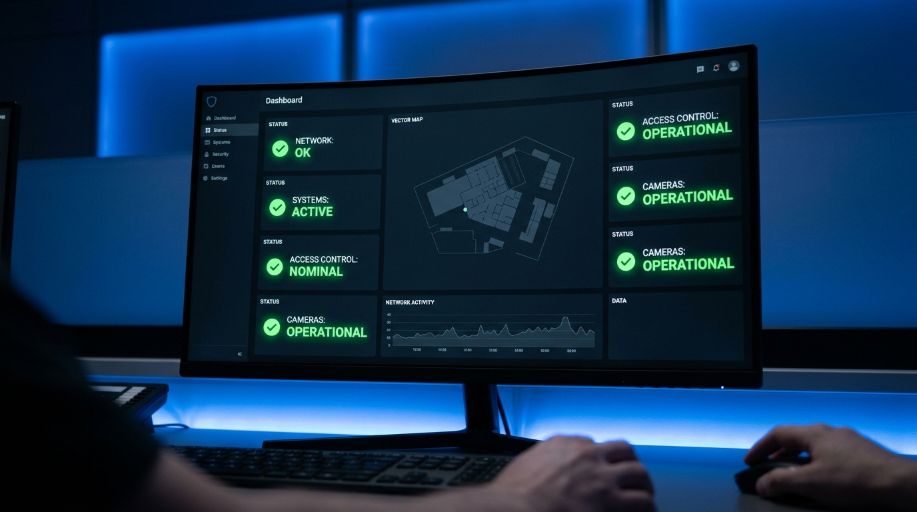
Web Ranko team working on Security Monitoring
Continuous detection, not a one time check

Ongoing Detection

Monitoring Is Detection. It Isn't Setup, and It Isn't Maintenance.

Website security work splits into distinct stages, and monitoring occupies a specific one that’s often confused with the others. Hardening is a one time preventive configuration project, locking down login access, firewalls and file permissions on a healthy site. Maintenance is the ongoing routine work of updating plugins, themes and core WordPress files, and managing backups. Monitoring is different again. It’s continuous, active observation of a site that’s already been secured, watching for the signs that something has slipped through anyway, an unauthorised file change, a blacklist flag, an unusual login pattern, or a spike in suspicious traffic that suggests an active attempt is underway right now.

Even a properly hardened site benefits from monitoring, because no configuration removes risk entirely, it only reduces it. New vulnerabilities get disclosed constantly, and attackers occasionally find a way through defences that were solid when they were configured. Monitoring is what catches that moment early, often within minutes of an unauthorised change occurring, rather than a business discovering weeks later that their site has been flagged by Google, blacklisted by a browser, or quietly serving malicious content to visitors without anyone noticing until customers start complaining.

Businesses wanting continuous oversight after a hardening project
Sites handling customer data or payments needing active threat detection
Businesses previously hacked, wanting early warning if it happens again
Companies needing blacklist monitoring to protect search visibility
Businesses wanting a documented incident response process in place
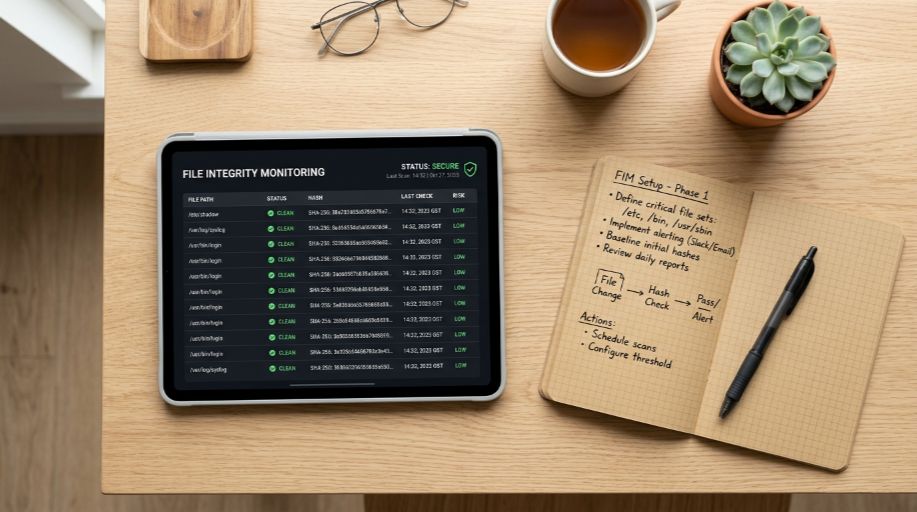
Web Ranko Security Monitoring specialist at work

Common issues we fix

No visibility into unauthorised file changes until damage is already done High
Site blacklisted by Google or browsers with no early warning in place High
Intrusion attempts going unnoticed for weeks before being discovered High
No documented process for what happens when a threat is detected High
Uptime issues caused by attacks not identified until customers report them High
No historical log of security events to review after an incident High
Suspicious login activity going unnoticed across admin accounts High
Hardening configured once with no ongoing check that it's still effective High

What's Included

What's Included in Security Monitoring

A senior developer owns your project from first line to launch. Here is exactly what you get.

File Change Detection

Every core, theme and plugin file is monitored continuously for unauthorised changes, catching the earliest sign of a compromise before it spreads further.

  • Continuous file integrity monitoring across the full installation
  • Instant alerts on unauthorised or unexpected file changes
  • Baseline comparison against known clean file states
  • Historical change log for post incident review

Blacklist and Reputation Monitoring

We actively monitor whether your site has been flagged by Google Safe Browsing, major browsers or security blacklists, since a flag can silently destroy your search visibility and visitor trust.

  • Continuous Google Safe Browsing status monitoring
  • Browser and antivirus blacklist status checks
  • Immediate alerting if your site is flagged
  • Delisting support included if a flag occurs

Intrusion and Anomaly Detection

Unusual login patterns, suspicious traffic spikes and known attack signatures are monitored continuously, drawing on the same detection discipline used in enterprise security operations.

  • Login attempt pattern monitoring across admin accounts
  • Suspicious traffic and request pattern detection
  • Known attack signature and malware pattern scanning
  • Alerting built around genuine severity, not constant false noise

Uptime and Availability Monitoring

Continuous uptime checks ensure that an attack or technical issue affecting availability is caught immediately, not discovered when a customer can't reach your site.

  • Continuous uptime monitoring from multiple locations
  • Immediate alerting on downtime or slow response times
  • Historical uptime reporting and trend tracking
  • Correlation between downtime events and security incidents

Incident Response

When something is detected, a documented response process kicks in immediately rather than leaving you to figure out what to do while the clock is running.

  • Documented incident response process for every alert type
  • Immediate initial assessment when a threat is detected
  • Direct communication throughout any active incident
  • Handover to malware removal service if a compromise is confirmed

Monthly Security Reporting

Clear monthly reporting shows exactly what was monitored, what was detected, and what action was taken, giving you a documented record of your site's security posture over time.

  • Monthly report covering all monitoring activity
  • Summary of any alerts, incidents or anomalies detected
  • Recommendations if monitoring reveals recurring patterns
  • Historical record for compliance or insurance purposes

Why It Matters

Why Businesses Choose Webranko for Security Monitoring

Hardening reduces risk. Monitoring is what catches the moment risk turns into an actual event, often before real damage has been done.

Web Ranko development team
Get a free Security Monitoring audit

Built on Real SOC Monitoring Experience

Our monitoring approach draws directly on security operations centre practices, applying the same detection discipline used to protect major financial institutions to your website.

Continuous, Not Periodic

Monitoring runs around the clock rather than through occasional manual checks, so the gap between something happening and someone noticing is measured in minutes, not weeks.

Clear Response, Not Just an Alert

Every alert type has a documented response process behind it, so detection actually leads to action rather than an email that sits unread.

Genuine Severity, Not Constant Noise

Alerts are tuned to reflect real risk, so you're not drowning in false positives that eventually get ignored altogether.

Complements Hardening and Maintenance

Monitoring works alongside your existing hardening configuration and maintenance schedule, catching anything that slips through either without duplicating the work either already covers.

How We Work

How Webranko Delivers Website Security Monitoring

A structured monitoring setup built around continuous detection and a clear response process from day one.

Web Ranko development team at work
Senior developers. Fixed-price. No surprises.
Day 1

Baseline and Setup

We establish a clean file baseline, configure monitoring across your site's core files, login activity and uptime, and confirm your current hardening and maintenance status.

Day 2

Blacklist and Reputation Monitoring Activation

Google Safe Browsing and major blacklist monitoring is activated, with alert thresholds configured to reflect genuine risk rather than routine noise.

Ongoing

Continuous Detection

File changes, login patterns, traffic anomalies and uptime are monitored around the clock, with every signal assessed against known attack patterns.

As Needed

Alert and Response

When something is detected, you're alerted immediately with a clear initial assessment, and the documented incident response process begins straight away.

Monthly

Reporting and Review

Monthly reports summarise all monitoring activity, any incidents detected, and recommendations if recurring patterns suggest further hardening is needed.

Real Results

Results Businesses Achieve Through Webranko Security Monitoring

35+ Years of Web Development and Security Experience
24/7 Years of Web Development and Security Experience
98% Client Retention Rate
Minutes Average Alert Response Time
Priya Chandra

We’d had our site hardened previously but had no way of actually knowing if something got through anyway. Webranko set up proper monitoring and within the first two months caught an unauthorised file change within about twenty minutes of it happening, well before it could have turned into anything serious. Having that kind of active oversight has genuinely changed how much I worry about our website.

Priya Chandra Operations Director, Chandra Retail Group

In-Depth Guide

The Complete Guide to Security Monitoring

Our team has written a comprehensive guide covering technical specs, best practices, and the exact approaches we use on every project.

Website security is not something that most business owners bother about until it is too late. A homepage with nasty graffiti, Google blacklist warning, hosting provider suspending account overnight. The cleanup is costly, but by then it’s already a done deal.

Monitoring is designed to detect issues ahead of time; not afterward.

What Website Security Monitoring Actually Covers

Website security monitoring is the automated monitoring of a site’s files traffic and uptime, with alerts fired off when things go awry. Monitoring tools keep an eye on your site 24/7, flagging suspicious activity as it occurs.It’s better than preparing for a scheduled audit, which could take weeks before any issues are uncovered.Finding out about site problems through customers is also not ideal.Your business has time to respond before damage occurs.

Why UK Businesses Underestimate This

We have taken over WordPress sites where malware lay undetected for weeks. It pasted spam links stealthily. It also sent some mobile traffic to an another domain. Nobody caught on, as the homepage still loaded fine and nothing broken appeared visible.

The issue specifically comes with the security threats of WordPress. Many do not announce. The visible symptoms of a breach tend to show up long after the breach occurred. Therefore, uptime & security monitoring exists because this has always been the case.

Core Components of a Proper Monitoring Setup

A monitoring service worth paying for covers several distinct layers, not just one alert type.

  • File change alerts, flagging when core files, plugins, or themes get modified outside a scheduled update
  • Intrusion detection, watching for unusual login attempts, brute force patterns, and suspicious admin activity
  • Blacklist monitoring, checking whether Google, Norton, or other authorities have flagged the domain
  • Uptime tracking, confirming the site is actually reachable and responding correctly at all times

Skip any one of these and there’s a genuine gap. A site can pass uptime checks perfectly fine while quietly serving malware to a portion of its visitors, which is exactly why file change alerts and blacklist checks need to run alongside basic availability monitoring, not instead of it.

How Real Time Detection Changes the Outcome

The difference between catching an issue in minutes versus discovering it weeks later isn’t small. A file change alert firing the moment an unauthorised script gets injected means removal happens before search engines index the compromised page, before customers encounter a warning screen, before a blacklist listing tanks organic traffic.

In our experience running monitoring across UK client sites, threats caught within the first hour rarely cause lasting SEO damage. Threats left undetected for weeks almost always do, and recovering rankings after a blacklist listing takes considerably longer than the incident itself.

Monitoring vs a One Off Security Audit

These two get confused often enough that it’s worth spelling out plainly.

Aspect Ongoing Security Monitoring One Off Security Audit
Timing Continuous, 24/7 Single point in time
Purpose Catches new threats as they happen Assesses current state and existing vulnerabilities
Best used As standard ongoing protection Before launch, after an incident, or periodically
Response speed Real time alerts Findings delivered after the audit completes

A website security audit tells you where things stand right now. Monitoring tells you the moment something changes after that. Most businesses genuinely need both, an audit to establish a clean baseline, then monitoring to keep it that way.

What Happens When Monitoring Catches Something

Detection alone isn’t the finish line. When an alert fires, response speed matters just as much as the initial catch. Our SOC monitoring process flags the issue, confirms whether it’s a genuine threat or a false positive, and moves straight into containment if needed.

For sites already compromised before monitoring was in place, that work sits under our dedicated website malware removal service, cleaning infected files, closing the entry point, and confirming the site’s clean before it goes back live.

Try Our Threat Exposure Checker

Imagine a short tool where you enter your domain, and it runs a quick surface-level check, confirming whether your site currently appears on any major blacklist, checking SSL status, and flagging obviously outdated plugin versions visible from the frontend. It gives business owners a fast, honest snapshot of exposure before committing to a full monitoring setup.

Setting Realistic Expectations

Monitoring reduces risk considerably. It doesn’t eliminate it entirely, and any provider claiming otherwise isn’t being straight with you. New vulnerabilities get discovered constantly, and no system catches everything the second it happens.

What monitoring genuinely delivers is speed. The gap between a threat appearing and a business finding out about it shrinks from weeks to minutes, and that gap is usually what decides whether an incident becomes a minor fix or a genuine crisis.

At webranko, we treat monitoring as standard practice for sites we manage ongoing, rather than an optional extra bolted on after something’s already gone wrong.

FAQ

Security Monitoring questions, answered honestly

Questions businesses ask us most before starting website security monitoring with Webranko.

Ask us anything
How is security monitoring different from hardening?

Hardening is a one time preventive configuration project, locking down login access, firewalls and file permissions on a healthy site. Monitoring is the ongoing, continuous watch over that site afterward, detecting anything that slips through despite hardening being in place. Most businesses benefit from both, hardening to reduce the chance of an incident, and monitoring to catch it quickly if one happens anyway.

Do I still need monitoring if my site is already hardened?

Yes. Hardening significantly reduces risk but doesn’t eliminate it entirely, since new vulnerabilities are disclosed constantly and no configuration can account for every future threat. Monitoring is what catches the moment something does get through, often within minutes, rather than leaving your business unaware until a customer reports an issue or Google flags the site.

What happens if a threat is actually detected?

Every alert type has a documented response process behind it. You’re notified immediately with an initial assessment of what’s been detected, and depending on severity, this can range from a straightforward configuration fix through to a handover into a full malware removal process if a genuine compromise is confirmed.

Can you monitor for Google blacklisting specifically?

Yes. We actively monitor Google Safe Browsing status alongside major browser and antivirus blacklists, since a blacklist flag can silently destroy your search visibility and visitor trust within hours if left unnoticed. If a flag does occur, delisting support is included as part of the response.

Is this a managed security service, or do we still need our own IT team?

This is a fully managed website security monitoring UK service, meaning we handle the detection, assessment and initial response ourselves. You don’t need an in house security team to benefit from it, though we’re happy to work alongside one if your business already has internal IT support.

How quickly can 24/7 website monitoring service UK setup be completed?

Initial baseline setup and monitoring activation typically takes one to two days, after which continuous monitoring begins immediately. There’s no lengthy onboarding process standing between deciding you need monitoring and actually having it in place.

Start today

Ready for Continuous Detection, Not Just a One Time Check?

Whether your site is already hardened or you're not sure what protection is currently in place, let's set up monitoring that catches problems in minutes, not months.

What's in your free consultation

Delivered in 48 hours by a senior developer.

Current hardening and maintenance status review
File integrity and blacklist monitoring setup
Documented incident response process
Monthly security reporting included as standard