

In-Depth Guide
The Complete Guide to ECommerce SEO Services
Our specialists have written a comprehensive guide covering strategy, best practices, and the exact approaches we use for our clients.
If your online store is sitting on decent products but barely showing up in search, you are not alone. Finding the right e-commerce SEO agency UK businesses can actually trust is harder than it should be. Most agencies offer the same surface-level work dressed up in different packaging. Webranko does something different. We look at the architecture, the crawl behaviour and the platform-specific problems that most agencies walk straight past.
That is where rankings are actually won or lost on an e-commerce site.
What a Proper Ecommerce SEO Service Actually Looks Like
A lot of UK e-commerce businesses come to us after spending months with an agency that delivered reports but no results. The reason is almost always the same. The work never went deep enough. Here is what a complete e-commerce SEO service needs to cover across every type of store.
| Component | What It Does For Your Store |
|---|---|
| Technical SEO audit | Maps crawl behaviour, indexation issues and Core Web Vitals failures at page type level |
| Category page SEO | Aligns keywords with search intent, builds internal authority, manages canonical structure |
| Product page SEO | Implements product schema, creates scalable copy frameworks, fixes structured data gaps |
| Faceted navigation | Stops filter combinations generating thousands of duplicate indexable URLs |
| Platform optimisation | Handles WooCommerce and Shopify as separate disciplines with separate solutions |
| Content strategy | Builds buying guides, comparison pages and transactional landing pages that rank |
| Link building | Targets category-level pages for authority rather than just the homepage |
Getting all of those working together is what separates an e-commerce SEO agency UK stores can grow with from one that just keeps the retainer ticking over.
Why Ecommerce SEO Is a Completely Different Discipline
Ranking a five-page brochure site and ranking a shop with 800 product pages genuinely have almost nothing in common. The architecture is different. The crawl dynamics are different. The keyword intent is different too because e-commerce searches are heavily transactional, price-sensitive, and comparison-driven all at once.
We have worked with UK e-commerce clients whose organic traffic flatlined for months despite solid domain authority and a well-funded paid search account. The cause was almost every single time structural. Either a faceted navigation setup quietly generating thousands of duplicate URLs that Google was crawling instead of the real category pages. Or product pages carrying manufacturer descriptions copied and pasted across fifteen nearly identical SKUs with nothing to distinguish them.
Google does not reward effort. It rewards structure.
That is the angle most e-commerce SEO companies completely miss. They run a standard on-page pass, move a few title tags around and call it a strategy. What actually moves rankings on an e-commerce site is a forensic audit that separates genuine technical debt from real content opportunity and then attacks both in the right order.
eCommerce SEO Agency UK Expertise Across Both Major Platforms
Does it actually matter which platform your store runs on?
Yes. It genuinely does. More than most businesses realise.
WooCommerce gives you far more architectural control. You can shape URL structures, implement custom schema, manage crawl directives precisely and build taxonomies that serve both UX and search intent at the same time. That flexibility is powerful. It is also where things can go wrong quickly if the person configuring it lacks deep platform knowledge. Misconfigured RankMath or Yoast settings on a WooCommerce store can quietly deindex entire product categories without triggering a single alert. We have seen it happen to stores that had been trading for years.
Effective SEO for car dealerships requires the same platform-specific attention as any complex e-commerce operation. Shopify is more constrained. The canonical URL rules the platform applies automatically, the duplicate collections and product paths and the restricted robots.txt access are all real obstacles for e-commerce SEO. None of them are insurmountable, but they need platform-specific solutions rather than a generic checklist applied to every client regardless of what they are running.
Webranko handles both. We do not apply the same playbook to different platforms just because it is easier for us.
What Happens When Ecommerce SEO Goes Wrong
A poorly structured e-commerce site does not just rank badly. It actively wastes the crawl budget Google allocates to it. It splits link equity across duplicate pages that should never have been indexed. It sends mixed signals about which category pages are actually meant to rank and which ones are just navigation artefacts.
We worked with an online retailer in Leeds with around 1,200 product lines, a solid brand reputation and three years of trading history. Their WooCommerce store had accumulated over 14,000 indexable URLs generated purely by filter combinations. Google was spending almost its entire crawl allocation on those pages rather than touching the actual category structure. Organic revenue had been flat for nearly two years. Within four months of implementing a proper faceted navigation SEO strategy and tightening the crawl directives, category page impressions increased by 62% in Google Search Console.
That is not a dramatic transformation. That is just fixing the foundation.
Product Page SEO — Where UK Stores Are Losing Revenue Right Now
Product pages are the engine room of any e-commerce SEO strategy, and they are almost universally underpowered on UK sites. The same problems show up again and again regardless of the sector or platform.
No unique copy, as manufacturer descriptions have been duplicated across all variants. Missing or malformed product schema markup is leaving rich result eligibility completely untapped. Title tag structures that ignore transactional modifiers like “buy” and “free delivery” that buyers are actually using in searches. No internal linking flow between related products and parent categories. Images with no alt text despite image search being a meaningful traffic source for many product types.
Search engine optimisation for e-commerce at the product level is not about writing a five hundred-word essay for every SKU. It is about intentional on-page decisions that match real buyer behaviour at scale. “Black leather Chelsea boots, size 10 UK” is a real search with genuine purchase intent. Your product page either captures that intent clearly or it does not.
Webranko builds product page frameworks that scale properly. Adding 50 new products to your catalogue should not mean 50 individual SEO tasks every time. Without scalable systems in place, e-commerce SEO becomes impossible to maintain as a store grows.
Why Category Pages Carry More Weight Than Most Stores Give Them
Category pages are where the commercial authority of an e-commerce site lives. They are the pages that should be ranking for the head terms. Women’s trainers. Kitchen appliances. Garden furniture. Getting them right takes more than placing a keyword in an H1.
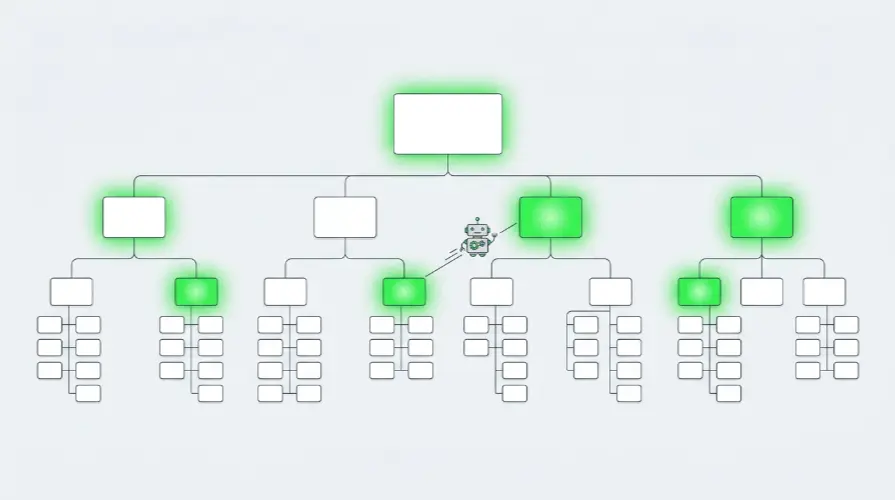
Good category page SEO requires several things to work together at once. Clean URL architecture that reflects the actual site hierarchy. An internal linking structure that passes authority downward from the top-level categories rather than scattering it across deep subcategory pages. Copy above the fold that serves both conversion and ranking simultaneously. Schema markup at the category level. A clear canonical strategy for every filtered or sorted version of the same page.
We have seen category pages stuck on page two for years simply because the site’s internal linking structure was feeding authority to irrelevant lower-level pages that nobody was searching for. Fix the architecture first, and rankings often follow without a single new piece of content being written.
How Webranko Runs an Ecommerce SEO Project
We do not start with a content calendar. We start with a full technical SEO audit that maps the current crawl behaviour, surfaces indexation issues, identifies Core Web Vitals failures at the page-type level and flags any crawl budget problems actively working against the site. That audit sets the entire strategy because until you know what is broken, you are guessing at what to fix.
From there we build a keyword architecture that maps search intent to the right page type across the entire site. Transactional keywords go to product and category pages. Informational keywords go to buying guides and supporting content. No overlap and no cannibalisation.
The third phase is authority building with structured link building that targets category-level pages rather than just the homepage. Most agencies skip this entirely. We do not.
Every engagement includes monthly reporting through Google Search Console and GA4, with plain English summaries that show what moved, what did not and what we are prioritising in the next cycle. No jargon. No vanity metrics. Just the numbers that matter to a store owner.
What Our Ecommerce SEO Services Cover as Standard
We do not sell rigid tiered packages. UK e-commerce businesses range from a 50-product Shopify store run by one person to a 10,000-SKU WooCommerce operation with a full internal marketing team. What is appropriate for one is completely wrong for the other.
Every Webranko e-commerce SEO engagement includes a full technical audit, keyword architecture across the site, on-page optimisation of priority pages, schema implementation, crawl and indexation management, a content strategy and regular reporting with real numbers attached. Scope and timeline vary depending on catalogue size and the competitiveness of your market.
Want to know what a proper strategy would actually look like for your store specifically? A conversation is far more useful than a price list page. We’re happy to take a look before you commit to anything.
FAQ
How much does e-commerce SEO cost in the UK?
Most UK e-commerce SEO services sit between £600 and £3,000 or more per month depending on catalogue size, competition and the scope of work involved. A small Shopify store needs far less than a large WooCommerce operation. Webranko prices based on what your store actually needs rather than fitting you into a standard package.
How long does e-commerce SEO take to show results?
Most stores see measurable movement in Google Search Console impressions within 60 to 90 days of technical fixes going live. Ranking gains on competitive category terms typically take three to six months. Anyone promising faster results without first auditing your site is not being straight with you.
Do you work with both WooCommerce and Shopify stores?
Yes. Both platforms need platform-specific approaches. WooCommerce offers more architectural control, while Shopify requires workarounds for its canonical structure and URL constraints. We have delivered e-commerce SEO services across both, and we do not treat them the same.
What is faceted navigation SEO, and why does it matter?
Faceted navigation generates new URLs every time a shopper filters or sorts products. Left unmanaged, it creates thousands of duplicate indexable pages that dilute crawl budget and split link equity. For any catalogue over a few hundred products, this needs addressing as a priority.
Can you improve my store’s SEO without rebuilding the whole site?
Yes, and that is usually exactly the right approach. Schema, crawl directives, internal linking and on-page copy can all be improved on an existing store without touching the underlying build. If the platform architecture itself is the root cause, we will tell you that honestly rather than sell you a rebuild you do not need.
What ongoing support comes with your e-commerce SEO service?
Monthly reporting, GSC monitoring, keyword tracking, content support for new category and product pages and continued link building. E-commerce SEO is not a one-time task. Catalog updates, competitor movements and algorithm changes all mean ongoing management is worthwhile for any store serious about organic growth.
Your store has the products and the potential. Organic visibility is a solvable problem. Webranko works with UK e-commerce businesses that want real revenue from search, not just monthly reports with numbers that don’t connect to what matters.