


Skip to content
SEO Services

Content strategy Agency that builds the topical authority Google rewards with rankings

Publishing content without a strategy is just noise. Most UK businesses have blogs full of posts that rank for nothing, cover topics at random and compete against each other without anyone realising. A proper content strategy changes that entirely. Webranko builds content architectures that map every topic your audience searches for, assign each piece a clear role in your organic authority structure and turn your site into the most comprehensive resource in your market. That is what Google rewards with rankings that hold.

No lock-in contracts UK-based specialists Core Web Vitals certified
Content Strategy Agency UK That Builds Topical Authority Your Competitors Cannot Outrank performance analytics
Topical authority that compounds over time

The Architecture Layer

What a content strategy actually is and why most UK businesses do not have one

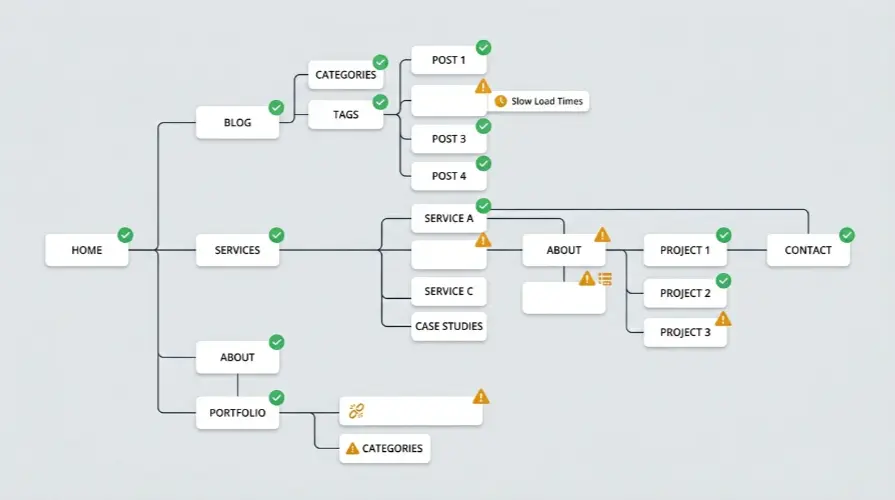
A content strategy is a structured plan for building topical authority across your market through a deliberate architecture of interconnected content. It defines which topics your site needs to cover, how those topics relate to each other, which page types serve which search intent and how the internal linking between every piece of content distributes authority toward the commercial pages that need it most. Without that structure, content production is just publishing. With it, every piece you produce contributes to a compounding organic authority system that gets harder to displace over time.

Most UK businesses mistake activity for strategy. They publish regularly, cover topics that feel relevant and wonder why their organic traffic does not reflect the effort. The reason is almost always architectural. Google does not rank individual pieces of content in isolation. It evaluates whether a site is genuinely authoritative on a subject across its full coverage. A content strategy builds that coverage deliberately, in the right sequence, with every piece connected to the overall structure in a way that signals real topical depth rather than broad but shallow publishing activity.

Your site covers every topic your UK audience searches for across all intent layers
Your pillar pages and cluster content work as a connected authority system rather than isolated pieces
Your internal linking distributes authority toward your commercial pages rather than scattering it randomly
Every piece of content you produce has a clear role in your topical architecture before it is written
Your content plan addresses gaps your competitors have not filled rather than competing on their strongest terms
Content Strategy Agency UK That Builds Topical Authority Your Competitors Cannot Outrank specialist at work

Common technical issues we fix

Existing content covering topics at random with no topical architecture connecting them High
Blog posts cannibalising each other across overlapping keyword territories High
No pillar and cluster structure leaving head terms without supporting authority High
Content gaps across entire keyword clusters that competitors are already ranking for High
Internal linking built by habit rather than by authority distribution strategy High
Content heavily weighted toward informational topics with no commercial intent layer Med
No content calendar mapped to topical architecture priorities Med
Existing high value content not optimised or internally linked to maximise authority contribution Med

What's Included

Everything in our Content Strategy Agency UK That Builds Topical Authority Your Competitors Cannot Outrank service

A comprehensive, senior-led service — not a checklist handed to a junior. Here's exactly what you get.

Content and SEO Audit

A full assessment of your existing content mapped against keyword opportunities, identifying what is ranking, what is not, what is cannibalising itself and what gaps need filling.

  • Existing content performance mapping
  • Cannibalisation identification across all pages
  • Ranking opportunity baseline assessment
  • Content quality and depth review
  • Gap identification against competitor coverage

Keyword Architecture and Topical Map

A complete map of every relevant search topic in your market with intent classification, page type assignment and pillar and cluster relationships planned before any content is produced.

  • Full keyword universe research for your UK market
  • Intent layer classification across all topics
  • Pillar topic identification and scoping
  • Cluster content grouping under each pillar
  • Content gap prioritisation by opportunity size

Pillar and Cluster Content Planning

Detailed content planning across your full topical architecture with every pillar page and cluster piece scoped, briefed and sequenced for maximum authority-building impact.

  • Pillar page scope and structure planning
  • Cluster content topic and depth specifications
  • Content production briefs for every piece
  • Publishing sequence mapped to authority priorities
  • Competitor content depth benchmarking

Internal Linking Strategy

A deliberate authority distribution plan that maps every internal linking relationship across your content and commercial pages to ensure authority flows where it is needed most.

  • Authority flow mapping across pillar and cluster structure
  • Commercial page linking priorities
  • Existing internal link audit and correction plan
  • Anchor text strategy across the full site
  • Ongoing internal linking management for new content

Content Calendar and Production

A strategic content calendar mapped to your topical architecture with every piece connected to its role in the authority building system and produced to brief by Webranko's content team.

  • Monthly content calendar mapped to architecture priorities
  • Brief-led content production for every piece
  • Internal review and optimisation before publication
  • Post-publication internal linking implementation
  • Performance tracking from first publication

Strategy Reporting and Iteration

Monthly reporting covering ranking movement across your full keyword map, organic traffic by content type and commercial performance with a rolling roadmap adjusted as authority builds.

  • Monthly keyword ranking movement across full topic map
  • Organic traffic and engagement by content type
  • Commercial conversion contribution from content
  • New gap opportunities identified as authority grows
  • Rolling content calendar updates based on performance data

Why It Matters

Publishing without a strategy builds traffic that never converts to revenue

Content produced without a topical architecture can generate individual page traffic but it does not build the kind of compounding domain authority that produces competitive national rankings. A structured content strategy changes the return profile of every piece you produce because each one contributes to a system rather than standing alone. The businesses that dominate organic search in their markets are not publishing more than their competitors. They are publishing more strategically.

Web Ranko SEO team collaborating
Fix my technical SEO

Organic authority that compounds over time

A properly structured topical map means every new piece of content you publish strengthens the pillar pages above it and the domain authority behind it. The system gets more powerful with every addition rather than starting from zero with each new piece.

Rankings on competitive head terms

Topical authority built through a pillar and cluster architecture is what allows sites to compete for high-volume head terms against established competitors. Individual page optimisation alone cannot produce the same result regardless of content quality.

Content that serves commercial intent directly

A content strategy built across all three intent layers means your publishing output serves buyers at every stage of their decision-making journey. Informational content builds authority. Commercial content builds consideration. Transactional content converts.

A content asset that earns backlinks naturally

Genuinely comprehensive content that covers a topic better than anything else in your market earns links from other sites without active outreach. That kind of editorial link equity is the most authoritative signal Google receives and it comes from content depth rather than content volume.

How We Work

Our content strategy process from audit to compounding authority

Content strategy without a clear process produces a document that gets shelved. Every Webranko content strategy engagement follows a structured sequence that moves from understanding your current position to building an architecture that produces measurable organic results.

Web Ranko technical SEO team collaborating
Senior-only team. No junior handoffs.
Week 1 to 2

Content Audit and Market Research

We audit your existing content against the full keyword opportunity in your market. We map what you have, what is ranking, what is cannibalising and what is missing. We run a full competitor content benchmarking exercise to understand the coverage your market has already established and identify the specific gaps your strategy needs to address. This phase produces the honest baseline without which any strategy is built on assumptions.

Week 2 to 3

Keyword Architecture and Topical Map

We build the complete topical map for your site. Every relevant search topic in your market gets mapped to a page type and an intent layer. Pillar topics are defined and scoped. Cluster content topics are grouped under each pillar with priority sequencing based on keyword opportunity and competitive gap size. The full internal linking architecture is planned at this stage before any content is briefed or produced.

Week 3 to 5

Content Calendar and Brief Production

We produce the strategic content calendar mapped to the topical architecture and write detailed briefs for every piece of content in the first phase of production. Each brief specifies the topic, search intent, keyword targets, content depth, internal linking requirements and relationship to the pillar structure. The calendar is built as a strategic document, not a publishing schedule.

Ongoing Monthly

Production, Reporting and Iteration

Content production runs to a brief with internal review before publication. Monthly reporting tracks ranking movement across the full keyword map, organic traffic contribution and commercial performance. We review what is producing results, identify new gap opportunities as authority builds and update the content calendar and topical map accordingly. The strategy is a living document, not a one-time deliverable.

Real Results

What a structured content strategy delivers for UK businesses

84% average increase in organic leads from content within 5 months of strategy implementation
3x average increase in content-driven organic traffic within 12 months
67% of audited UK business sites have significant topical gaps competitors are already ranking for
6months typical time to first competitive head term rankings through topical authority building
Rachel Okafor

We had been producing content for over a year with almost nothing to show for it in organic terms. Webranko audited what we had and rebuilt our entire content architecture, and within six months we were ranking for terms we had been chasing since we launched the site. The difference was not the quality of the writing. It was the structure behind it.

Rachel Okafor Head of Marketing · Okafor Financial Services, Edinburgh

In-Depth Guide

Everything you need to know about Content Strategy Agency UK That Builds Topical Authority Your Competitors Cannot Outrank

Our specialists have written a comprehensive guide covering strategy, best practices, and the exact approaches we use for our clients.

Why Most UK Content Marketing Produces Very Little

Publishing content is not a content strategy. That distinction sounds obvious, but it is the reason most UK businesses with active blogs, regularly updated service pages and well-written articles still cannot rank for the terms that would actually move their revenue.

Content without architecture is just noise in an already crowded search landscape. If you are looking for a content strategy agency UK businesses can rely on to build genuine organic authority rather than just fill a content calendar, the difference comes down to one thing. Whether the agency understands how Google actually evaluates topical depth in 2026 and builds your content around that understanding rather than around publishing frequency and word counts.

Webranko builds content strategies that start with architecture. The topics, the relationships between them, the gaps in your current coverage and the internal structure that turns individual pieces into a compounding authority system. Everything else follows from that.


What a Proper SEO Content Strategy Actually Involves

The Difference Between Content and Content Architecture

There is a meaningful difference between having content and having a content architecture. Most UK businesses have the former without realising they are missing the latter.

A content architecture is a deliberate structure that assigns every topic your audience searches for to a specific page type with a specific role in your overall organic authority system. Pillar pages cover broad head terms comprehensively. Cluster content covers every related subtopic in depth. The internal linking between them signals to Google that your site is not just one page about a subject but the most complete resource on it. That signal is what produces topical authority, and topical authority is what produces competitive national rankings in 2026.

Without that architecture you can publish fifty blog posts on related topics and rank for none of them at scale because Google sees disconnected individual pages rather than a coherent subject matter authority.

What Topical Authority Means in Practice

Topical authority is the concept that Google evaluates not just individual pages but whether a site covers a subject area comprehensively enough to be considered a genuinely authoritative resource. A site with one well-written article on a topic will consistently lose to a site that covers every angle of that topic in depth across a structured network of connected pages.

Building topical authority requires identifying the full range of questions, concerns and search terms your target audience uses across every stage of their decision-making process and then producing content that addresses each of them clearly, with every piece connected to the others through a deliberate internal linking structure.

Done properly this creates a compounding effect. Each new cluster piece strengthens the pillar page it connects to. Each improvement to your internal linking passes more authority to the pages that need it. The more comprehensively you cover a topic, the harder your positions become to displace.


Content Gap Analysis — Finding What Your Site Is Missing

Why Gap Analysis Comes Before Strategy

Most content strategies are built around what the business wants to publish rather than what the audience is searching for and what competitors are already covering. The result is a content plan that feels productive and produces very little organic movement because it is not addressing the specific gaps in your market’s search coverage.

A proper content gap analysis starts from the keyword data. We map every relevant search term in your market, identify which ones your site currently has coverage for, which ones competitors are ranking for that you are not and which ones nobody in your market is covering well. That third category is where the fastest organic gains come from because you are competing for positions that are genuinely available rather than trying to displace well-established pages on their best terms.

We worked with a B2B software company in London that had been publishing two blog posts per week for over a year. Their organic traffic had barely moved. When we ran a full content gap analysis, we found they had extensive coverage of broad industry topics that were too competitive for their domain authority level and almost no coverage of the specific problem-focused searches their actual buyers were making in the consideration stage of their purchase journey. Those problem-focused terms had lower competition, clearer commercial intent and far more relevance to actual revenue. Within five months of restructuring the content plan around those gaps, organic leads from blog content increased by 84%.

Competitor Content Benchmarking

Understanding what your competitors are ranking for is as important as understanding what your own site is missing. A content gap analysis at Webranko includes a structured competitor benchmarking exercise that maps the specific topics, page types and content depths your main organic competitors have that your site does not.

This is not about copying competitor content. It is about identifying the coverage floor your market has established and making sure your strategy builds beyond it rather than just matching it. The sites that dominate organic search in a given market are almost always the ones whose content architecture is more comprehensive than every competitor’s, not just slightly better optimised on individual pages.


The Pillar and Cluster Framework

How Pillar Pages Work

A pillar page is a comprehensive piece of content that covers a broad topic area in enough depth to serve as the authoritative resource on that subject for your site. It targets a high-volume head term and is structured to answer the full range of questions a reader might have on the topic while making it clear that deeper coverage exists across the cluster content connected to it.

The pillar page does not try to answer every question exhaustively. It answers them sufficiently and signals through its internal linking structure that more detailed treatment of each subtopic is available on the relevant cluster pages. That structure is what tells Google the pillar page is backed by genuine topical depth rather than just being a long article.

How Cluster Content Supports Pillar Authority

Cluster content pages are the individual subtopic pieces that surround a pillar page. Each one covers a specific aspect of the broader topic in genuine depth, targets a more specific keyword and links back to the pillar page it belongs to. The relationship is bidirectional because the pillar page also links to each cluster piece.

This bidirectional linking structure creates a topic cluster that Google can recognise as a coherent subject matter system. The pillar page accumulates authority from every cluster piece connected to it. Each cluster piece benefits from the domain-level authority the pillar page holds. The system compounds in a way that individual unconnected pages simply cannot replicate.

Internal Linking as an Authority Distribution System

Internal linking is one of the most undervalued elements of a content strategy and one of the most consistently mismanaged on UK business sites. Most sites link content organically as new pieces are published without any deliberate plan for where authority should flow and why.

A properly designed internal linking strategy treats every link as a deliberate authority signal. High equity pages link to the commercial pages that need authority. Cluster content links to the pillar pages that anchor the topic. Supporting content links to the primary conversion pages in the most relevant context. None of this happens naturally without a plan behind it.

Webranko designs internal linking architecture as a core component of every content strategy because no amount of well-written content produces its full organic potential without the authority distribution structure that connects it.


SEO Content Strategy UK — Planning and Production

Content Planning That Serves Commercial Intent

A content strategy that only covers informational topics builds traffic without building revenue. The most effective SEO content strategies for UK businesses cover all three intent layers systematically.

Informational content addresses the questions your audience asks before they are ready to buy. It builds brand familiarity, earns backlinks and establishes topical authority at the broadest level of your market. Commercial content serves buyers in the consideration stage, comparing options, evaluating providers and looking for reasons to trust one business over another. Transactional content is directly targeted at purchase-ready searches and is where organic traffic most directly converts to revenue.

Most UK business content plans are heavily weighted toward informational content because it is the easiest to produce and the most likely to get shared. The commercial and transactional layers are where the organic revenue actually lives, and they are consistently underserved.

The Content Calendar as a Strategic Document

A content calendar is not a list of blog post titles with scheduled publication dates. It is a strategic document that maps every planned piece of content to its place in the topical architecture, its target keyword cluster, its intent layer and its relationship to the pillar pages and commercial pages it is designed to support.

When a content calendar is built this way, every piece produced has a clear purpose beyond filling a publishing slot. The team producing the content understands what the piece is trying to achieve, which pages it needs to link to and from, and how its publication contributes to the broader topical authority the strategy is building.

Webranko produces content calendars as strategic documents rather than publishing schedules because a calendar that does not connect to the architecture behind it is just a list.


How Webranko Builds a Content Strategy

Discovery and Audit

Every content strategy engagement starts with a full audit of your existing content. We map what you have published against the keyword opportunities available in your market, identify what is currently ranking and what is not, surface cannibalisation between existing pages that are competing against each other and establish a baseline for measuring everything the strategy produces.

The audit gives us an honest picture of your starting position. How much of your existing content is worth optimising versus replacing? Which topics do you have partial coverage on that can be developed into proper pillar and cluster structures? Which areas of your market are currently unaddressed and represent the fastest organic growth opportunities?

Keyword Architecture and Topical Map

From the audit we build the full keyword architecture. Every relevant search topic in your market gets mapped to a page type and an intent layer. Pillar topics are identified and scoped. Cluster content topics are grouped under each pillar. The full internal linking structure is planned before a single piece of new content is commissioned.

This is the document that drives everything else. Without it, a content strategy is just a list of ideas. With it, every piece of content produced has a clear destination in the overall architecture and a clear contribution to the topical authority the strategy is building.

Production, Optimisation and Measurement

Content production at Webranko is brief-led. Every piece of content is produced from a detailed brief that specifies the topic, the search intent, the keyword targets, the content depth required, the internal links to include and the relationship to the pillar structure. This ensures consistency regardless of who produces the content and makes the strategy transferable to an in-house team if needed.

Monthly reporting tracks keyword ranking movement across the full content map, organic traffic contribution by content type and the commercial performance of content against conversion goals. We review what is working, identify new gap opportunities as authority grows and adjust the content calendar accordingly.


What Our Content Strategy Services Include

Service Component What It Delivers
Content and SEO audit Baseline assessment of existing content against keyword opportunities
Content gap analysis Identification of topics competitors rank for that your site does not cover
Keyword architecture Full topic map with intent classification and page type assignment
Pillar and cluster planning Comprehensive content structure with internal linking design
Content calendar Strategic publishing plan mapped to topical architecture
Content production Brief-led content created to exact topical authority specifications
Internal linking strategy Authority distribution plan across all content and commercial pages
Monthly reporting Ranking, traffic and commercial performance tracking

FAQ

How much does a content strategy service cost in the UK?

Content strategy services in the UK range from £800 to £4,000 or more per month depending on the scope of the strategy, the volume of content production required and whether competitor benchmarking and ongoing management are included. Webranko scopes every engagement around your specific market and objectives.

What is the difference between a content strategy and a content calendar?

A content calendar is a publishing schedule. A content strategy is the architecture behind it. A proper strategy defines which topics to cover, how they relate to each other, which page types serve which intent layers, how internal linking should distribute authority and how the whole system builds topical authority over time. A calendar without that architecture produces very little organic growth.

How long does it take for a content strategy to produce ranking results?

Most sites see measurable movement in organic impressions within 60 to 90 days of implementing structural changes and publishing the first wave of strategically planned content. Competitive rankings on head terms typically take six to twelve months depending on domain authority and market competition. Content strategy is a long-term compounding investment rather than a quick win.

What is topical authority and why does it matter for SEO content?

Topical authority is Google’s assessment of whether your site covers a subject area comprehensively enough to be considered a genuinely authoritative resource. Sites with deep, structured coverage of a topic consistently outrank sites with better individual pages but shallower overall coverage. Building topical authority through a pillar and cluster content architecture is the most reliable path to competitive organic rankings in 2026.

Can you work with our existing content, or do you start from scratch?

We always start from an audit of your existing content. Most sites have pieces worth optimising and developing into proper pillar or cluster pages alongside gaps that need new content to fill them. Starting from scratch is rarely necessary and almost never the most efficient approach. The audit tells us exactly what to keep, what to improve and what to build new.

Do you produce the content as well as plan it?

Yes. Webranko offers both content strategy as a standalone planning and architecture service and full production where we produce the content to brief alongside the strategy work. We can also produce detailed briefs for your in-house team or an existing content resource if you prefer to keep production internal.


Your competitors are building topical authority right now across every keyword cluster in your market. Every month without a structured content strategy is a month that the gap widens. Webranko works with UK businesses that are ready to close it systematically, starting with a strategy that is built around how organic search actually works rather than how often you can publish.

FAQ

Technical SEO questions, answered honestly

The questions UK businesses ask us most often before commissioning a content strategy. Honest answers, no padding.

Ask us anything
How much does a content strategy service cost in the UK?
Content strategy services in the UK range from £800 to £4,000 or more per month depending on scope, content production volume and whether ongoing management is included. Webranko scopes every engagement around your specific market and the depth of architecture your keyword opportunity requires rather than a standard package price.
What is the difference between a content strategy and just publishing blog posts regularly?
Regular publishing without architecture produces isolated pieces with no cumulative authority effect. A content strategy defines the topical map, intent layers, pillar and cluster relationships and internal linking structure that makes every piece contribute to a compounding authority system. Publishing frequency matters far less than publishing within a deliberate architecture.
How long does content strategy take to produce ranking results?
Structural improvements and early content pieces typically show measurable movement in organic impressions within 60 to 90 days. Competitive head term rankings take six to twelve months, depending on domain authority and market competition. Content strategy produces compounding returns over time rather than immediate results and the strongest gains come in months four through twelve
Can you work with our existing content team or do we need to use yours?
Both approaches work well. Webranko can produce the full strategy and architecture and hand over detailed briefs for your in-house team to produce against. We can also manage production entirely if you prefer. The strategy and architecture are the same either way. What matters is that content is produced to brief rather than to instinct.

Start today

Find out what your content is missing and what it is going to take to rank

Webranko will audit your existing content against the keyword opportunities in your market, identify the topical gaps your competitors are already exploiting and outline a content strategy built around the specific architecture your site needs to build genuine organic authority. No obligation, no generic proposals.

What's in your free audit

Delivered in 48 hours by a senior Technical SEO specialist.

Content audit mapped against your target keyword opportunities
Topical gap analysis against competitors currently outranking you
Initial pillar and cluster architecture recommendations for your market
A plain English summary of what your content strategy needs to prioritise first