Skip to content
App Development

Mobile App Development UK Native iOS and Android Apps Built to Launch

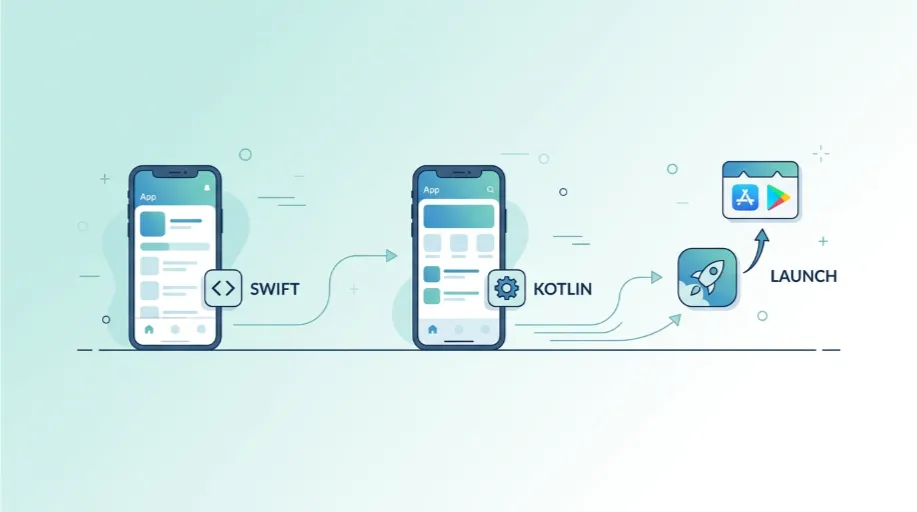
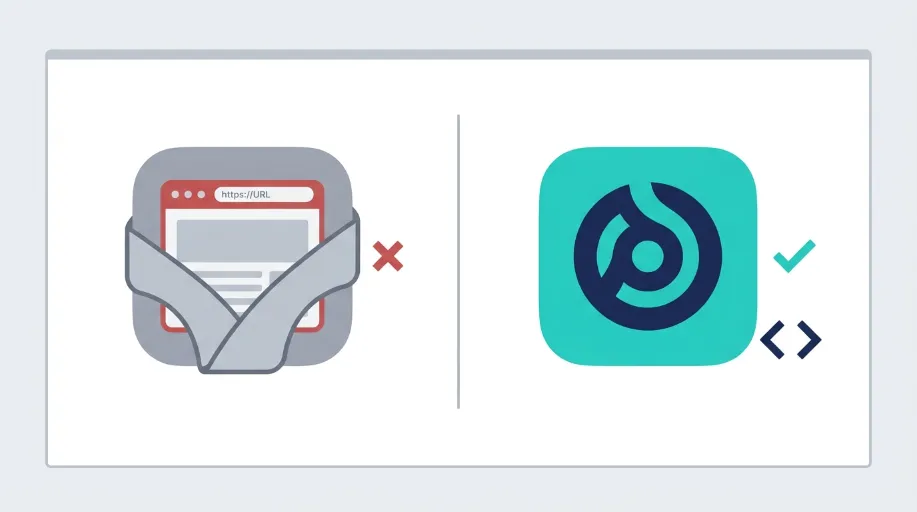
Many agencies selling mobile app development just wrap a website in a shell. They then call it an app. It looks like an app for about five minutes. Then scrolling feels wrong. Push notifications do not work properly. It gets rejected during App Store review anyway. We build natively in Swift for iOS and Kotlin for Android. This is the best way to get real performance, reliable offline use, and full access to device features. If you need a fast-loading website that users can install, our Progressive Web App Development service can help. We will tell you honestly which option fits before any development begins.

Fixed-price quotes UK-based developers 90+ PageSpeed guaranteed
Web Ranko team working on App Development
Built natively in Swift and Kotlin, not wrapped from a website

Native App Development

What native mobile app development actually involves, and why it is not the same as a wrapped website

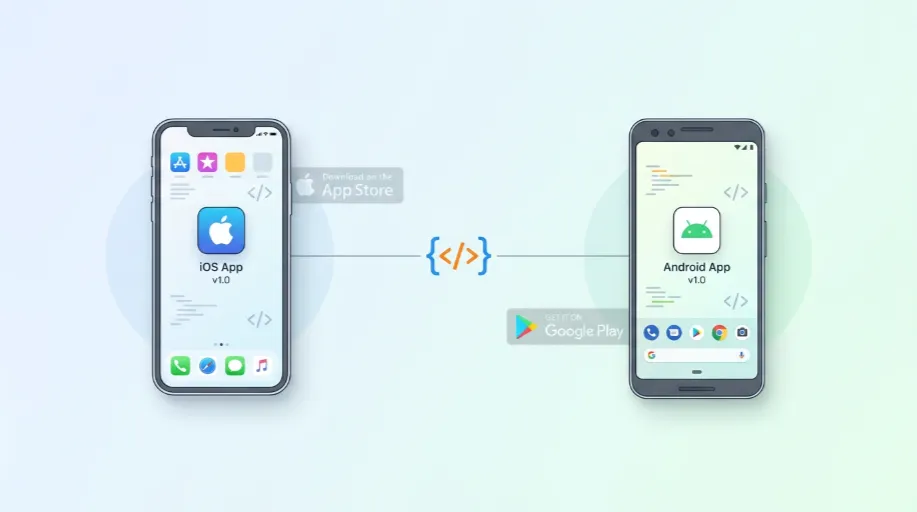
A native app is built specifically for the operating system it runs on, using Swift for iOS and Kotlin for Android, rather than a single generic codebase stretched across both. This is what gives a genuinely smooth interface, proper offline functionality, and reliable access to device features like the camera, push notifications, or background location. A wrapped website, sometimes sold as a cheaper alternative, cannot replicate this properly, and it usually shows the moment a user starts scrolling or tries to use the app without a connection.

Building natively also means handling submission properly. iOS apps go through TestFlight for testing before App Store review, and Android apps get prepared correctly for a Play Store listing, both of which have their own requirements around performance, permissions and content guidelines. Getting rejected during review is common for apps that were not built with these requirements in mind from the start. Not every project needs a native app though, and we are upfront about that. If your use case is closer to a fast loading, installable website, our Progressive Web App Development service is a genuinely different technology built for a different kind of project, worth comparing properly before native development begins.

Startups needing a genuine native app for an MVP launch
Businesses whose app needs reliable offline functionality
Apps requiring deep device access such as camera or background location
Businesses who tried a wrapped website app and had it rejected by App Store review
Established businesses expanding an existing product into a native mobile app
Web Ranko App Development specialist at work

Common issues we fix

App built as a wrapped website rejected during App Store review High
Push notifications unreliable or not working across devices High
No offline functionality, app unusable without a connection High
Interface does not follow native iOS or Android design conventions Med
Play Store listing incomplete or missing required assets Med
App performance noticeably worse than comparable native apps High
No clear plan for post launch updates or bug fixes Med
Budget spent on a cross platform wrapper that needs rebuilding natively High

What's Included

What's Included in App Development

A senior developer owns your project from first line to launch. Here is exactly what you get.

Discovery and Technical Planning

We start by understanding what your app actually needs to do, then plan the technical build around genuine requirements rather than a generic template.

  • Requirements gathering across features, devices and target users
  • Technical architecture planned before development begins
  • Clear scope agreed so nothing gets built twice
  • Honest recommendation on native versus PWA where relevant

Native iOS Development

iOS apps are built in Swift, following Apple's design and performance conventions properly rather than approximating them.

  • Built natively in Swift for genuine iOS performance
  • Interface follows Apple's Human Interface Guidelines
  • Push notifications and device features configured correctly
  • Prepared and tested through TestFlight before submission

Native Android Development

Android apps are built in Kotlin, matched properly to the wide range of devices and screen sizes Android users actually have.

  • Built natively in Kotlin for genuine Android performance
  • Interface follows Material Design conventions properly
  • Tested across a genuine range of device sizes and versions
  • Prepared correctly for a complete Play Store listing

Offline Sync and Data Handling

Apps are built to work sensibly without a connection, syncing data properly once connectivity returns rather than simply failing.

  • Offline functionality built in where the app genuinely needs it
  • Data sync configured to resolve conflicts sensibly
  • Local storage handled securely on the device
  • Tested thoroughly under real world poor connection conditions

App Store and Play Store Submission

Submission is handled properly, with the assets, descriptions and technical requirements each store expects prepared correctly the first time.

  • App Store submission handled through TestFlight and review
  • Play Store listing prepared with all required assets
  • Store guidelines checked against before submission, not after rejection
  • Support given through the review and approval process

Post Launch Support

An app needs attention after launch as operating systems update and users report issues, so we offer ongoing support rather than a one time build.

  • Bug fixes and updates handled after launch
  • Compatibility maintained as new iOS and Android versions release
  • Feature additions supported as the app grows
  • Performance monitored and reported on periodically

Why It Matters

Why UK Businesses Choose Webranko for Mobile App Development

A native app either performs properly or it does not, there is no middle ground once real users start relying on it. We build genuinely native apps, tested against real devices and real store requirements, not a wrapped website hoping nobody notices.

Web Ranko development team
Get a free App Development audit

Genuinely Native, Not Wrapped

Built in Swift and Kotlin specifically, giving performance and device access a wrapped website simply cannot match.

Built for Store Approval

Apps are prepared against App Store and Play Store requirements from the start, avoiding the common rejection issues.

Offline Functionality That Works

Apps are tested under real poor connection conditions, not just assumed to sync correctly once online again.

Swift and Kotlin, Not a Template

Your app is built by a developer with genuine native iOS and Android experience, not a generalist stretched across a dozen frameworks.

How We Work

How Webranko Handles Mobile App Development

A structured process that starts with an honest technical assessment, so the final app is built natively for what it actually needs to do.

Web Ranko development team at work
Senior developers. Fixed-price. No surprises.
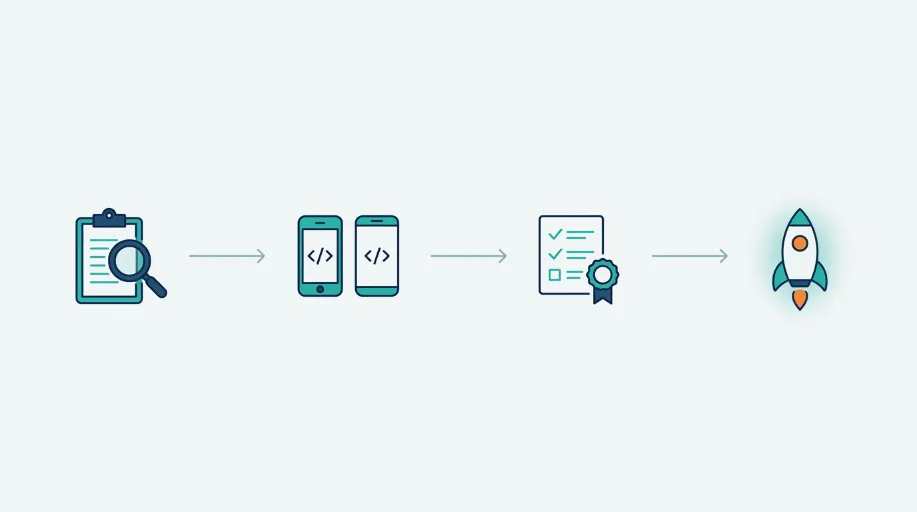
Week 1 to 2

Discovery and Planning

We gather requirements and plan the technical architecture, agreeing a clear scope before any native development begins.

Week 3 to 6

Native iOS and Android Development

The app is built natively in Swift and Kotlin, with offline sync and device features configured properly throughout.

Week 7

Testing and Store Submission

The app is tested thoroughly, prepared for TestFlight and Play Store submission, and reviewed against store guidelines before going live.

Week 8 onwards

Launch and Ongoing Support

The app launches on both stores, with bug fixes and compatibility updates continuing to be handled afterwards.

Real Results

What Happens After Mobile App Development

35+ Years' combined development experience
2 Native codebases, iOS and Android
8wk Typical MVP timeline
24hr Average response to your enquiry
James Whitfield

We had already paid another agency for a wrapped website version of our app and it got rejected twice during App Store review. Webranko rebuilt it natively in Swift and it passed review on the first submission, with offline functionality that genuinely works when our field engineers lose signal on site.

We had already paid another agency for a wrapped website version of our app and it got rejected twice during App Store review. Webranko rebuilt it natively in Swift and it passed review on the first submission, with offline functionality that genuinely works when our field engineers lose signal on site.

James Whitfield Founder, Whitfield Field Services

In-Depth Guide

The Complete Guide to App Development

Our team has written a comprehensive guide covering technical specs, best practices, and the exact approaches we use on every project.

Mobile app development goes wrong most often before a single line of code is written. Ask around a startup meetup in Manchester or London and you’ll hear the same story with different names attached: a wrapped website submitted as an app, bounced back by Apple twice, budget already spent.

We see the aftermath of this fairly often. A business comes to us having already paid for what they were told was a mobile app, only to discover it was a website squeezed into a shell, incapable of doing half of what they actually needed.

Native App Development: The Direct Answer

Here’s what UK businesses need to know before starting a mobile app project.

Question Answer
What language is used for native iOS apps? Swift, Apple’s native language built specifically for iOS performance and design
What language is used for native Android apps? Kotlin, the modern standard for genuine Android development
Is a wrapped website the same as a native app? No. Wrapped apps lack proper offline sync, reliable push notifications and native performance
How long does a native app take to build? Around eight weeks for a typical MVP, from planning through to store submission
Do I need separate iOS and Android builds? Yes. Native development means building each platform separately for the best performance
Should I consider a PWA instead? Sometimes, if deep device access and offline sync aren’t essential to what the app does

That last point is worth taking seriously rather than skipping past. Not every idea needs a native app, and pretending otherwise wastes budget you could spend better elsewhere.

Why Wrapped Websites Keep Getting Rejected

In our testing and repeated client experience, wrapped website apps fail App Store review for fairly predictable reasons. Apple’s guidelines expect genuine native functionality, not a browser dressed up to look like something else.

We worked with a field services business based in the Northwest whose engineers needed an app to log site visits, often in areas with poor or no signal. Their previous developer had built a wrapped website version, and it fell over the moment connectivity dropped, since a website simply cannot store and sync data properly without a genuine native foundation underneath it. Rebuilding it in Swift gave them offline logging that actually worked, syncing automatically once a connection returned. It passed App Store review on the first submission too, something their original build never managed even once.

That’s the pattern worth understanding. A wrapped app might look identical to a native one in a screenshot. The moment a user tries to use it properly, offline, with push notifications, with camera access, the difference becomes obvious fast.

What Genuinely Native Development Involves

Building properly for iOS and Android separately means covering several things a shortcut simply cannot replicate.

  • Swift development for iOS, following Apple’s Human Interface Guidelines properly rather than approximating the look from a distance
  • Kotlin development for Android, built against Material Design conventions and tested across the genuinely wide range of Android devices in circulation
  • Offline sync and local storage, so an app remains useful without a connection and resolves data conflicts sensibly once one returns
  • Push notifications configured natively, which work reliably rather than intermittently across different devices and operating system versions
  • TestFlight testing before submission, catching issues on real devices before they become a rejection during official App Store review
  • Play Store listing preparation, with every required asset and description in place correctly the first time

Each of these sounds fairly technical on its own. Together, they’re the difference between an app that genuinely works and one that quietly frustrates every user who tries to rely on it.

When a Native App Isn’t Actually the Right Call

We’d rather say this plainly than sell a native build to everyone who asks. Some projects genuinely suit a progressive web app better, particularly where installability and speed matter more than deep device integration.

Our Progressive Web App Development service covers that alternative properly, and it’s genuinely worth comparing the two before committing to native development. A PWA costs less, ships faster, and skips app store review entirely, though it trades away some of what native access provides. We’ll tell you honestly which one fits, rather than defaulting to whichever is more profitable for us to build.

Where Native Apps Connect to a Bigger System

A lot of the native apps we build don’t exist in isolation. They talk to a backend, pull data from an existing system, or need custom functionality that goes well beyond a typical off-the-shelf integration.

If your app needs a custom backend, API integration, or bespoke functionality behind the scenes, that’s a separate but closely related piece of work. Our Custom Web Application Development service covers exactly that side, and for apps with real complexity behind them, the native front end and the custom backend usually get planned together from the start rather than treated as two unconnected projects.

Who’s Actually Building Your App

It’s worth knowing who’s behind the keyboard on something this technical. A lot of agencies selling mobile app development are coordinating outsourced contractors rather than doing genuine native work in-house, which shows up eventually in how the finished app performs and how quickly issues get fixed.

Our native development work sits with a developer who’s spent years specifically in Swift and Kotlin, not a generalist stretched across a dozen different technologies. You can see more about the team actually building your app on our Meet the Team page, which matters more for something like this than for a lot of other web work, since native app quality tends to track fairly directly with genuine hands-on experience.

Getting Started Without Wasting Budget

Mobile app development works out best for businesses that are honest about scope before any code gets written. The decisions you make early, native app or PWA, iOS first or both at once, MVP or full feature set from day one, all shape your cost and timeline considerably.

Having that conversation at the outset saves far more than it costs. Set against what we see too often, a rejected app, a wasted budget, and a rebuild, the cost of talking it through properly is small.

FAQ

App Development questions, answered honestly

Questions UK businesses ask us most before starting native mobile app development.

Ask us anything
How much does mobile app development cost in the UK?

Cost depends heavily on features, whether both iOS and Android are needed, and how much offline or device specific functionality is required. A straightforward MVP costs considerably less than a feature rich app with complex offline sync, so scope shapes price directly.

Should I build a native app or a progressive web app?

Native apps suit projects needing deep device access, reliable offline functionality, or App Store presence. A progressive web app suits simpler use cases where installability and speed matter more than native device integration, often at lower cost and faster timeline.

Why was my app rejected by the App Store?

Common rejection reasons include incomplete functionality, poor performance, missing required permissions explanations, or an interface that does not follow Apple’s design guidelines. Wrapped website apps are rejected particularly often, since they rarely meet native performance expectations.

Do I need a separate app for iOS and Android?

Yes, native development means building separately for each platform using Swift for iOS and Kotlin for Android. This gives better performance and device integration than a single cross platform codebase, though it does mean two builds rather than one shared one.

How long does it take to build a native mobile app?

A typical MVP takes around eight weeks from discovery through to store submission, covering planning, native development for both platforms, testing and the submission process itself. More complex apps with extensive offline functionality can take longer.

Start today

Was Your App Rejected, or Are You Starting From Scratch

Whether you need a native app built properly from the start, or a wrapped website app rescued and rebuilt after rejection, let's talk about what your app actually needs.

What's in your free consultation

Delivered in 48 hours by a senior developer.

Honest native versus PWA assessment before development begins
Built natively in Swift and Kotlin, not a wrapped website
Store submission handled properly, avoiding common rejection issues
Ongoing support after launch as operating systems update