


Skip to content
Website Speed Optimisation

Your Slow Site Is Costing You Customers Every Single Day

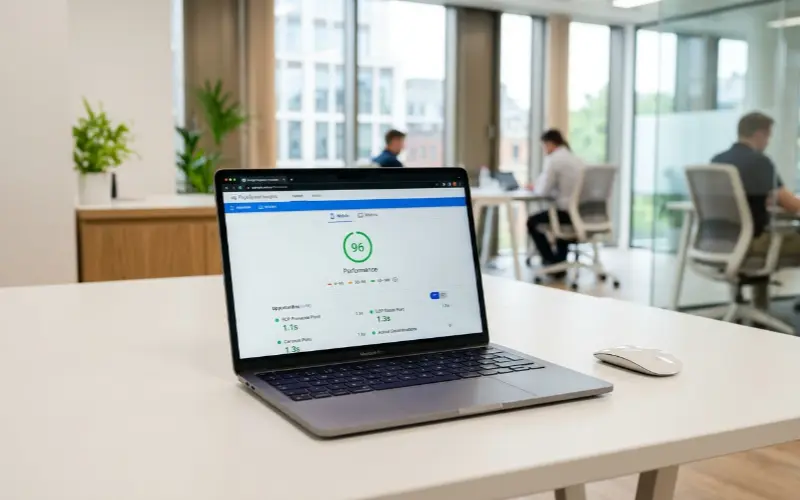
If your pages take longer than three seconds to load, most of your visitors are already gone. We audit your existing site, identify exactly what is dragging your performance down, and fix it at the source. Better GTmetrix scores, cleaner Core Web Vitals, faster load times across mobile and desktop, and rankings that reflect the quality of your business rather than the weight of your JavaScript. No rebuilds, no disruption, just a measurably faster site.

Fixed-price quotes UK-based developers 90+ PageSpeed guaranteed
Website Speed Optimisation for UK Businesses. Faster Pages, More Revenue. — Web Ranko
Core Web Vitals Specialists

The Problem Most UK Sites Have

Why Your Website Is Slower Than It Should Be

Speed is not just a technical concern. It is a commercial one. Google confirmed Core Web Vitals as a ranking factor, and your visitors confirmed it long before Google did. A page that takes four seconds to load on a mobile phone in Manchester is a page that does not get read. The bounce happens before the content arrives. The inquiry goes to your competitor. The sale you worked hard to earn through SEO or paid search disappears behind a slow loading bar.

Most UK small and medium business sites are slower than they need to be, not because the work was done badly, but because performance optimisation was never part of the original brief. Themes accumulate plugins. Images get uploaded at full resolution. Third party scripts pile up. Hosting that was fine two years ago starts showing its limits. The result is a site that looks exactly the same as it did on launch day but performs a fraction as well. Our website speed optimisation service is built specifically to diagnose and fix these issues on your existing site without touching your design, your content or your rankings.

Full GTmetrix and PageSpeed Insights audit before any work begins
Largest Contentful Paint fix so your main content loads fast
Cumulative Layout Shift resolution for stable, frustration free pages
Interaction to Next Paint improvements for responsive clicks and forms
Image optimisation including WebP conversion and lazy loading
Render blocking JavaScript and CSS elimination
Server level TTFB improvements and UK CDN configuration
WordPress plugin audit and database query reduction
Google Fonts self hosting to remove external request delays
Before and after reporting with real user field data from Search Console
Website Speed Optimisation for UK Businesses. Faster Pages, More Revenue. specialist

Common issues we fix

Hero images over 1MB served without WebP High
No CDN or US based server serving UK visitors High
Render blocking third party scripts in head High
LCP image not preloaded High
WooCommerce cart fragments loading on all pages Med
Google Fonts loading via Google servers Med
Unused CSS and JavaScript loading site wide Med
No server side caching configured High
Images without width and height attributes causing CLS Med
PHP version below 8.1 on WordPress host Med

What's Included

Everything in our Website Speed Optimisation for UK Businesses. Faster Pages, More Revenue. service

A senior developer owns your project from first line to launch. Here is exactly what you get.

Technical Performance Audit

We start with a full diagnosis, not a guess. Before any fixes, we run your site through GTmetrix, Google PageSpeed Insights and Lighthouse and map out every resource in the waterfall. You get a clear picture of what is failing, why, and in what order we need to fix it.

  • GTmetrix Grade A target identified
  • Full waterfall analysis by resource type
  • Core Web Vitals field data from Search Console reviewed
  • Hosting response time and TTFB benchmarked
  • WordPress plugin and theme audit included

Image Optimisation and Delivery

Oversized images are the single most common cause of slow load times on UK SMB sites. We convert your image library to WebP, implement lazy loading correctly, add missing width and height attributes to eliminate layout shift, and configure your server or CDN to serve the right image size to the right device.

  • WebP conversion for all key images
  • Responsive srcset implementation
  • Lazy loading for offscreen images
  • Correct dimension attributes to fix CLS
  • Hero image preloading for LCP improvement

JavaScript and CSS Optimisation

JavaScript and CSS Optimisation

  • Render blocking script deferral and async loading
  • Unused CSS and JS removal per page type
  • Third party script load order management
  • Third party script load order management
  • Critical CSS inlining where beneficial

Why It Matters

What a Faster Site Actually Does for Your Business

Speed is not an end in itself. It is a lever. Faster pages rank better, hold attention longer, and convert more of the traffic you are already paying for or working hard to earn through SEO. Here is what our UK clients see after a proper speed optimization project.

Web Ranko development team
Get a free website speed optimisation audit

Rankings That Reflect Your Real Quality

Core Web Vitals are a confirmed Google ranking signal. If your site is currently failing LCP, CLS, or INP, you are handing a structural advantage to competitors who pass them. If you fix your scores, you remove that handicap. Most clients see measurable ranking movement within four to eight weeks of going live.

Mobile Performance That Matches Your Desktop

Google indexes your site on mobile first. A site that loads in 1.9 seconds on desktop but 5.4 seconds on mobile is being judged on the mobile experience. We optimize for both, but mobile always takes priority because that is where Google is scoring you and where most of your visitors arrive.

More Conversions from the Traffic You Already Have

Speed directly affects whether visitors stay long enough to take action. Our Birmingham client's 34% increase in enquiries after a load time reduction from 7.2 to 1.8 seconds is not unusual. You do not always need more traffic. Sometimes you just need to stop losing the traffic you already have.

A Stable Site That Does Not Embarrass You

CLS fixes mean your pages stop jumping around on load. Visitors stop accidentally clicking the wrong thing. Forms behave correctly. The overall experience feels considered and trustworthy, which matters enormously for service businesses where the website is the first impression your company makes.

How We Work

How We Optimise Your Site

We do not touch a live site until we know exactly what is wrong and why. Every project starts with evidence, moves through systematic fixes, and closes with verification. Here is what the process looks like from start to finish.

Web Ranko development team at work
Senior developers. Fixed-price. No surprises.
Day 1 to 2

Full Technical Audit

We run your site through GTmetrix, Google PageSpeed Insights, and Lighthouse from UK server locations. We pull your Core Web Vitals field data from Search Console to see what real users are experiencing, not just what a lab test shows. We document every issue, its severity, and its likely impact on performance.

Day 2 to 3

Diagnosis and Scope Agreement

We review the audit findings with you and agree on exactly what gets fixed and in what order. You receive a clear written scope so there are no surprises on delivery. We prioritize the fixes with the highest impact first, so even if scope needs to be phased, the most important work happens immediately.

Week 1 to 2

Staging Environment Setup and Fix Implementation

All work happens on a staging copy of your site. We never touch a live site without testing first. We work through the agreed scope systematically: server configuration, image optimization, script management, WordPress-specific fixes, and CDN setup. Each fix is tested individually before the next begins.

Week 2

QA and Cross Device Testing

Once fixes are in place, we test across mobile and desktop using real devices and emulators. We re-ran GTmetrix and PageSpeed Insights from UK locations to verify scores. We check Core Web Vitals lab data and compare against the baseline. Nothing goes live until the numbers are where they need to be.

Week 2 to 3

Go Live and Monitoring

We push changes to your live site during a low-traffic window and monitor for any unexpected issues in the 24 hours following deployment. Real user field data in Search Console typically starts reflecting improvements within 28 days of the changes going live, and we flag you when the data confirms the improvement.

Week 4

Final Report and Handover

You receive a full before-and-after performance report covering GTmetrix grades, PageSpeed Insights scores for both mobile and desktop, Core Web Vitals status, and a summary of every fix implemented. We include maintenance recommendations so your site does not drift back toward poor performance over the following months.

Real Results

The Numbers Behind Our Speed Work

90+ Average PageSpeed score achieved
4s Average load time reduction per project
34% Average enquiry uplift post optimisation
50+ UK sites optimised and improved
James Whitfield

Our site had been slow for years, and we assumed it was just something we had to live with. Webranko audited it, explained the issues in plain English, and fixed everything within two weeks. Our PageSpeed score went from 41 to 94, and we started ranking on page one for terms we had been chasing for months. I wish we had done it sooner.

James Whitfield Director, Clearview Legal Services, Leeds

In-Depth Guide

Everything you need to know about Website Speed Optimisation for UK Businesses. Faster Pages, More Revenue.

Our team has written a comprehensive guide covering technical specs, best practices, and the exact approaches we use on every project.

What Does a Website Speed Optimization Service Actually Do?

A professional page speed optimization service audits your existing site using tools like GTmetrix and Lighthouse, then fixes the specific technical issues dragging down your load times and Core Web Vitals scores. This includes server-level work covering time to first byte, hosting performance, and CDN configuration; front-end work covering image formats, render-blocking scripts, and layout stability; and CMS-level fixes for WordPress or WooCommerce environments. The result is measurable. Faster pages, better Google rankings, and more visitors who stay long enough to convert.


Slow Is Not Just Annoying. It Is Costing You Customers.

A visitor in Leeds does not wait. Neither does one in Edinburgh or Bristol. Research from Google has consistently shown that pages taking longer than three seconds to load see bounce rates climb sharply, and for mobile users in the UK, the threshold is even less forgiving.

Speed is a ranking signal. It has been confirmed as part of Google’s Page Experience update, and Core Web Vitals now form part of the direct ranking criteria. If your competitors have cleaner scores on Largest Contentful Paint and Cumulative Layout Shift, they have a structural advantage over you in the SERP, even with weaker content.

But the conversion impact is often bigger than the ranking impact. We worked with a Birmingham-based service business whose homepage was loading at 7.2 seconds on mobile. After fixing image delivery, resolving render-blocking JavaScript, and switching to a UK-based CDN node, load time dropped to 1.8 seconds. Inquiries from organic traffic increased 34% in the following 60 days. The site’s content hadn’t changed. The audience hadn’t changed. The speed had.


What Actually Slows a Site Down in 2026

People assume slow sites are caused by bad hosting. Hosting matters, and a poor server with a high time to first byte is often the first culprit we find, but it is rarely the whole story.

Here is what we typically find when we audit a UK SMB site.

Unoptimized images are almost universal. Hero images served at 2MB in JPEG format when WebP at 180KB would render identically. There is no excuse for this in 2026, but it is still the most common issue on WordPress sites we see.

Render blocking resources. Third-party scripts like live chat widgets, analytics tags, and cookie consent banners load synchronously and hold the browser hostage before it renders anything visible. This kills LCP scores, which directly affects your Google PageSpeed score.

CLS issues. Layout shift happens when elements jump around as the page loads. Fonts swapping in, images without dimensions, and banners loading late. Google measures this as cumulative layout shift. It is fixable, but it requires knowing where to look.

Hosting performance. A shared hosting environment in the US, serving pages to users in Manchester, adds latency before a single asset even starts to download. UK hosting or a properly configured CDN with UK edge nodes makes a meaningful difference, especially for time to first byte.

WordPress-specific bloat. Themes loading 12 font variants. Plugins adding their own CSS and JavaScript to every single page regardless of context. WooCommerce cart fragments are firing AJAX requests on non-shop pages. These are the issues that don’t show up in basic audits but quietly damage your performance score.


Core Web Vitals Optimisation: What Each Metric Means for Your Business

Google measures three Core Web Vitals. You don’t need to memorize the technical definitions, but you do need to understand what each one costs you when it fails.

LCP, or Largest Contentful Paint, measures how quickly your main content loads. Fail this and users perceive your site as slow before they’ve even decided whether it’s relevant. Target: under 2.5 seconds.

CLS or Cumulative Layout Shift measures visual stability. A page that jumps around while loading feels broken. It’s one of the leading causes of accidental clicks and frustrated exits. Target: under 0.1.

INP or Interaction to Next Paint replaced FID in 2024 and measures how quickly the page responds when a user actually does something, like clicking a menu or submitting a form. For WooCommerce sites, particularly, this is where we see failures that never get caught because they’re not obvious on initial page load.

All three feed into your Google PageSpeed score. A score above 90 on mobile isn’t just a vanity metric. It’s a real indicator that your site isn’t giving Google a reason to rank you below a competitor.


What a WordPress Speed Optimisation Project Looks Like

WordPress speed optimization is its own discipline. The flexibility that makes WordPress great, plugins, themes, and customization is also what creates performance debt over time.

Our process starts with a full technical audit. GTmetrix and PageSpeed Insights give us the headline scores, but the real work is in the waterfall. Identifying which specific resources are causing the most damage and in what order they load. From there, we work through the stack systematically.

At the server level, that means checking your hosting provider’s UK response times, reviewing your PHP version, and configuring object caching correctly. At the WordPress level, it means auditing your active plugins, removing redundant CSS and JavaScript from pages that don’t need them, and fixing image delivery. WebP conversion, lazy loading, and correct srcset attributes all matter here.

If your theme is generating excessive database queries or loading Google Fonts via external requests instead of self-hosting them, we fix it. If your WooCommerce configuration is running cart fragment AJAX requests on the homepage, we fix that too.

The goal is a GTmetrix score of A, meaning 90 or above, and Core Web Vitals in the green. With the actual load experience matching the numbers, not just the lab test.


Speed Optimisation Is Not a Rebuild

Worth saying clearly: this service is for your existing site. We are not redesigning it, changing your branding or moving you to a new CMS. If your site is fundamentally broken and needs a full rebuild, that is a different conversation. Our website redesign service handles that.

What we are doing here is surgical. You keep your site. You keep your content and your current Google rankings. You just get a version of it that loads substantially faster and scores better on the metrics that Google and your visitors actually care about.


Speed Optimisation Cost Estimator

Tell us your current GTmetrix grade, your CMS, and whether you’re running eCommerce, and we’ll give you a realistic scope estimate for what a speed optimization project would involve for your specific setup. It takes about 90 seconds and gives you a ballpark before you’ve had to speak to anyone.

This interactive tool lives on the page. Inputting your current PageSpeed score, platform, and rough page count generates a custom scope estimate. It also prequalifies leads: someone who fills it in is already invested enough to tell you exactly what they’re working with.


FAQ

How much does website speed optimization cost in the UK?

It depends on the complexity of the site and the depth of issues found. For most UK SMB WordPress sites, a comprehensive speed optimization project runs from £500 to £1,500. WooCommerce stores or sites with significant technical debt typically sit at the higher end. We provide a fixed quote after an initial audit.

How long does a speed optimization project take?

For a standard WordPress site, most of the core fixes can be completed within 5 to 10 working days. Complex WooCommerce environments or sites with server configuration issues may take two to three weeks. We don’t start on live sites without testing in a staging environment first.

Will fixing my site speed improve my Google rankings?

Core Web Vitals are a confirmed Google ranking factor. Improving your LCP, CLS, and INP scores won’t override weak content or poor backlinks, but if your site is currently failing these metrics, you’re handing a structural advantage to competitors who pass them. Most clients see measurable ranking improvements within 4 to 8 weeks of optimization.

Do you work on WordPress sites only?

WordPress and WooCommerce are where most of our UK SMB clients are. We also work on Shopify stores and custom builds. If you’re unsure whether we can help with your specific setup, just ask. We’ll tell you honestly.

Will speed optimization affect my existing design or content?

No. We work on the performance layer, which covers server configuration, asset delivery, caching, and code efficiency. Your design, content, and brand stay exactly as they are. The only thing that changes is how quickly it all loads.

How do I know the improvements are real and not just test results?

We track before-and-after scores across GTmetrix, Google PageSpeed Insights, and real user field data from Google Search Console. Lab scores tell you what is possible; field data tells you what real UK users are actually experiencing. We report on both.


Getting Started

The first step is understanding what is actually slowing your site down. A lot of agencies will sell you a speed fix before they’ve looked at your site properly. We don’t.

Send us your URL, and we’ll run an initial audit covering GTmetrix, PageSpeed Insights, and a manual review of your hosting performance and CMS configuration. From there you get a clear picture of what the issues are and what fixing them would involve.

No obligation. No vague promises. Just an honest breakdown of where your site stands.

FAQ

Website Speed Optimisation questions, answered honestly

Common questions from UK businesses before starting a speed optimization project. If yours is not here, get in touch and we will answer it directly.

Ask us anything
How much does website speed optimisation cost in the UK?
Most UK SMB WordPress sites fall between £500 and £1,500 for a comprehensive speed optimization project. WooCommerce stores or sites with deeper technical debt typically sit at the higher end. We provide a fixed price quote after completing the initial audit so you know the full cost before any work begins.
How long does a speed optimisation project take?
For a standard WordPress site, the core fixes are typically completed within 5 to 10 working days from the point the audit is approved. Complex WooCommerce environments or sites requiring server migration or CDN setup may take two to three weeks. We always test on staging before touching your live site.
Will improving my site speed improve my Google rankings?
Core Web Vitals are a confirmed Google ranking factor. Improving your LCP, CLS, and INP scores removes a penalty that may be suppressing your rankings. Most clients see measurable movement within 4 to 8 weeks of the changes going live. It will not override weak content, but it removes a real structural disadvantage.
Do you only work on WordPress sites?
WordPress and WooCommerce account for the majority of our UK SMB projects. We also work on Shopify stores and custom builds. If you are on a different platform, contact us and we will tell you honestly whether we can help and to what extent before any commitment is made.
Will speed fixes change my design or affect my existing content?
No. We work exclusively on the performance layer. Server configuration, asset delivery, caching rules, and code efficiency. Your design, copy, branding, and URL structure remain completely unchanged. Your existing Google rankings are protected throughout because we are not moving pages or altering content.
How do I know the results are real and not just lab test improvements?
We report on both lab scores and real user field data. GTmetrix and PageSpeed Insights show the technical improvement. The Google Search Console Core Web Vitals report shows what actual UK visitors are experiencing on your live site. We provide a full before-and-after comparison covering both data sources so the results are verifiable and transparent.

Start today

Find Out Exactly What Is Slowing Your Site Down

Send us your URL, and we will run a full GTmetrix, PageSpeed Insights, and Core Web Vitals audit at no cost and with no obligation. You will receive a clear breakdown of what is failing, how serious each issue is, and what fixing it would involve. No vague reports, no sales pitch before the facts. Just an honest picture of where your site stands.

What's in your free consultation

Delivered in 48 hours by a senior developer.

Free initial audit with no obligation
All work tested on staging before going live
Full before and after reporting included 