

Quote requests from organic search went from 9 a month to 46 in twelve months for Calderbank Precision Fabrication, a sheet metal and CNC machining business in Wolverhampton. We got there by giving every process and material its own page, moving the site to WordPress and letting buyers attach engineering drawings to the quote form.
| Detail | Value |
|---|---|
| Client | Calderbank Precision Fabrication, 60 person manufacturer |
| Location | Wolverhampton, UK |
| Timeline | 12 months |
| Quote requests a month | 46, up from 9 |
| Keywords on page one | 52, up from 7 |
| Process and material pages | 14, up from 1 |
Who Calderbank Precision Fabrication Are
Calderbank makes sheet metal and CNC machined parts for a wide range of customers in the Midlands and beyond, including companies who specialise in the rail, agricultural and medical equipment sectors. Most of Calderbank’s business was generated through long-standing accounts and long-established contacts built over many years.
Their web presence was very basic, just a brochure site. No one knew where enquiries were coming from or who their competition was. They didn’t ask their team to mention the website to potential customers, so no one knew whether they’d got any new business from it or not.
The Problem
Buyers search by process and material
Our audit showed that procurement managers and engineers search for specific jobs, such as “laser cutting stainless steel” or “CNC machining aluminium”. Calderbank listed every process on one services page, so Google had no page to show for any of those searches. Competitors with a page for each process were winning the enquiries.
- Every process squeezed onto a single services page
- No pages for individual materials or tolerances
- Capability details locked inside three PDF files
- No file upload on the quote form, so drawings arrived by email
- An old custom CMS the team couldn’t edit without a developer
Technical and authority gaps
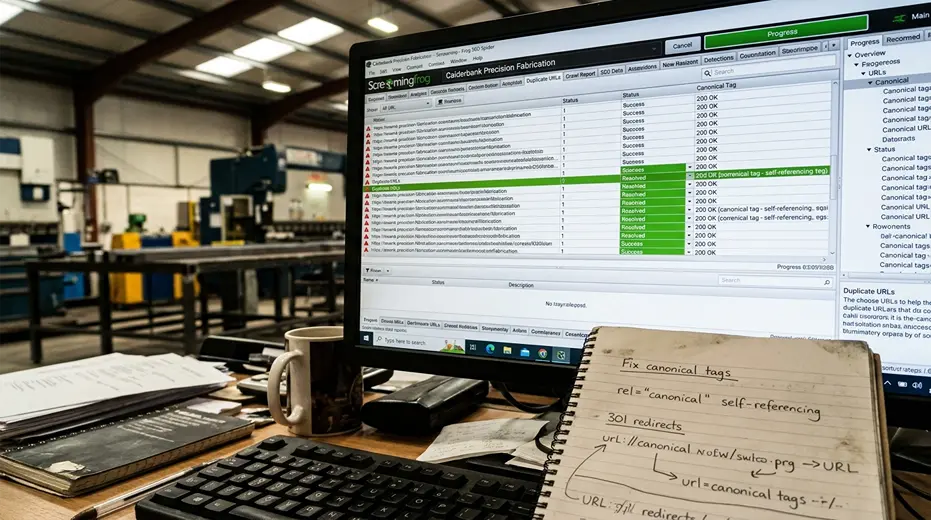
A Screaming Frog crawl found duplicate URLs, missing canonical tags and long redirect chains. Very few trade bodies or industry publications linked to the site.
Quote requests from organic search sat at 9 a month.
What We Did
Step 1: Rebuilding the site on WordPress
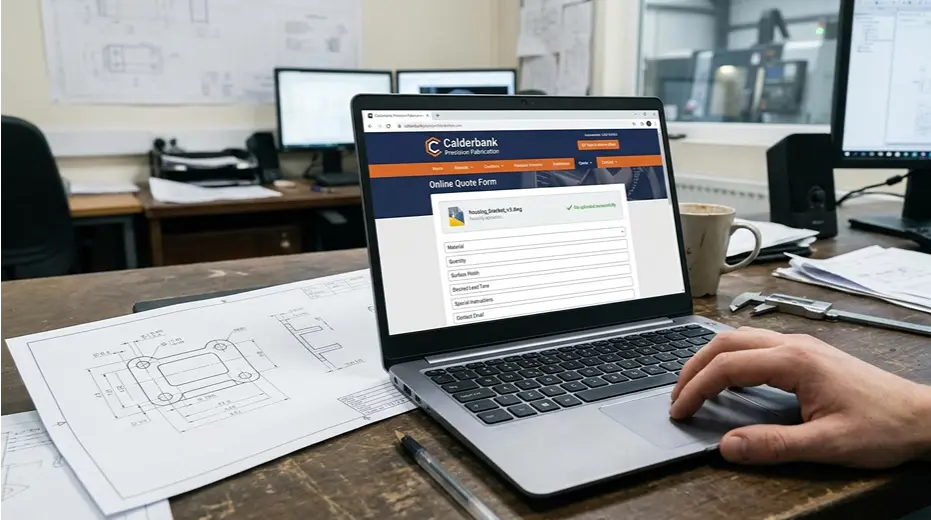
As the old CMS got in the way of any other improvements, we built a new WordPress site. We created templates so that simple pages (e.g. a process or material page) can be added in an afternoon by the team (and no developer required!). We also built a quote form, with the added bonus of accepting STEP, DXF, and PDF drawings.
Step 2: Writing a page for every process
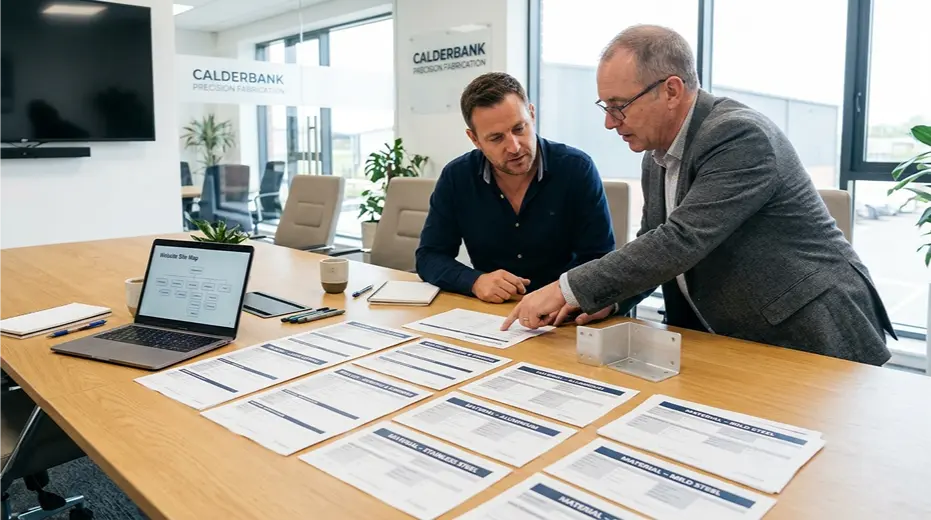
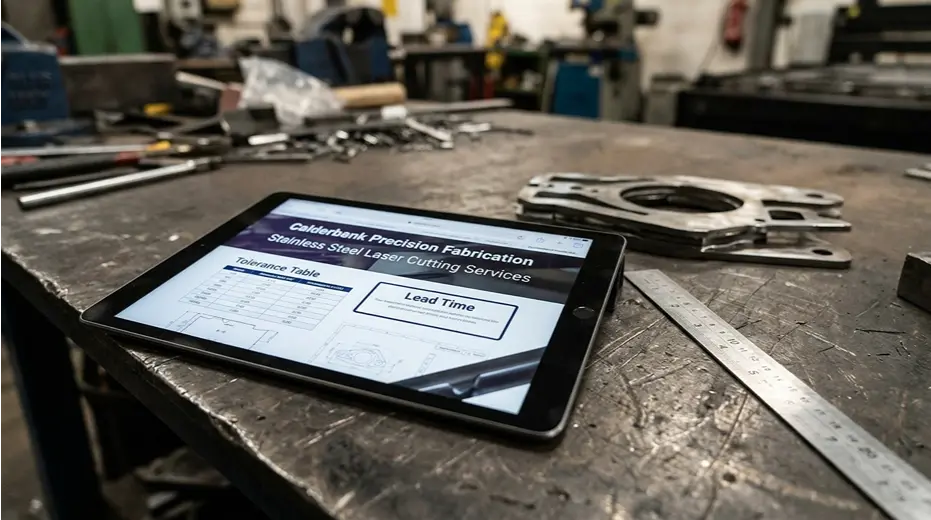
The sales team shared the jobs they had won and lost, and we built buyer-focused pages around the processes, materials and sectors Calderbank worked with. We used Google Search Console to check what terms buyers were using, before writing the copy, titles and headings. Each page holds the information a prospective buyer wants to know first: tolerances, lead times and certifications.
We replaced three PDF capability statements with web pages that Google could crawl and index.
Step 3: Fixing the technical foundation
We implemented schema markup (for the business, its services and certifications), canonical tags and fixed any redirect chains within the crawl.
Step 4: Building links from trade websites
Rather than focus on the number of links, we targeted trade bodies, supplier directories and publications that align with Calderbank’s target audience.
What didn’t go to plan
The first version of the quote form had 14 fields, which did not go down well. We cut it to 6 and moved the other questions to the follow-up email. Launch was also delayed because the engineers checked all the figures and tolerances just before go-live.
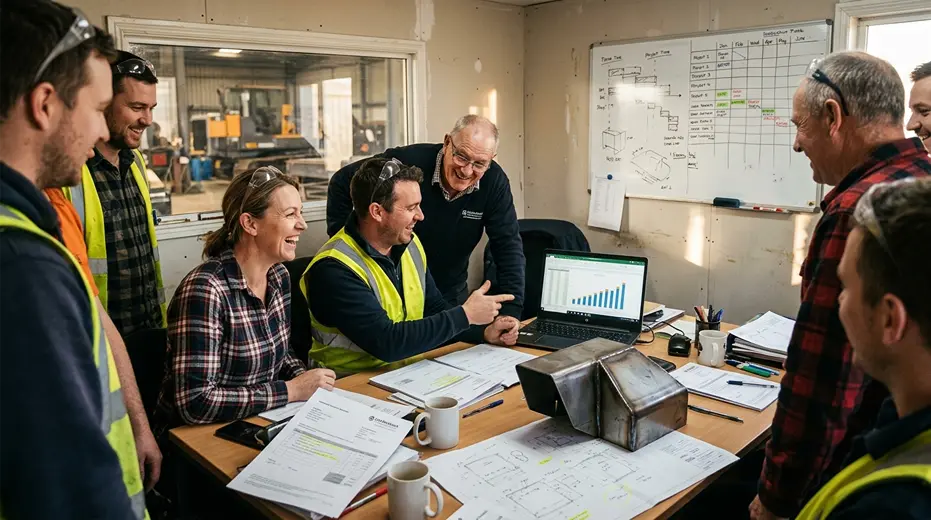
The client did not expect it to make any difference, because theirs is a relationship-based, traditional trade. The links changed their minds: leads came from trade body sites and then came back through the site to ask for a quote.
The Results
Month by month
- Months 1 to 2: audit and keyword mapping finished, page plan agreed
- Months 3 to 5: new WordPress site live with a shorter drawing upload form
- Months 6 to 9: process pages published in batches, first process pages on page one in month eight
- Months 9 to 12: link building finished, quote requests reached 46 a month
What the data showed
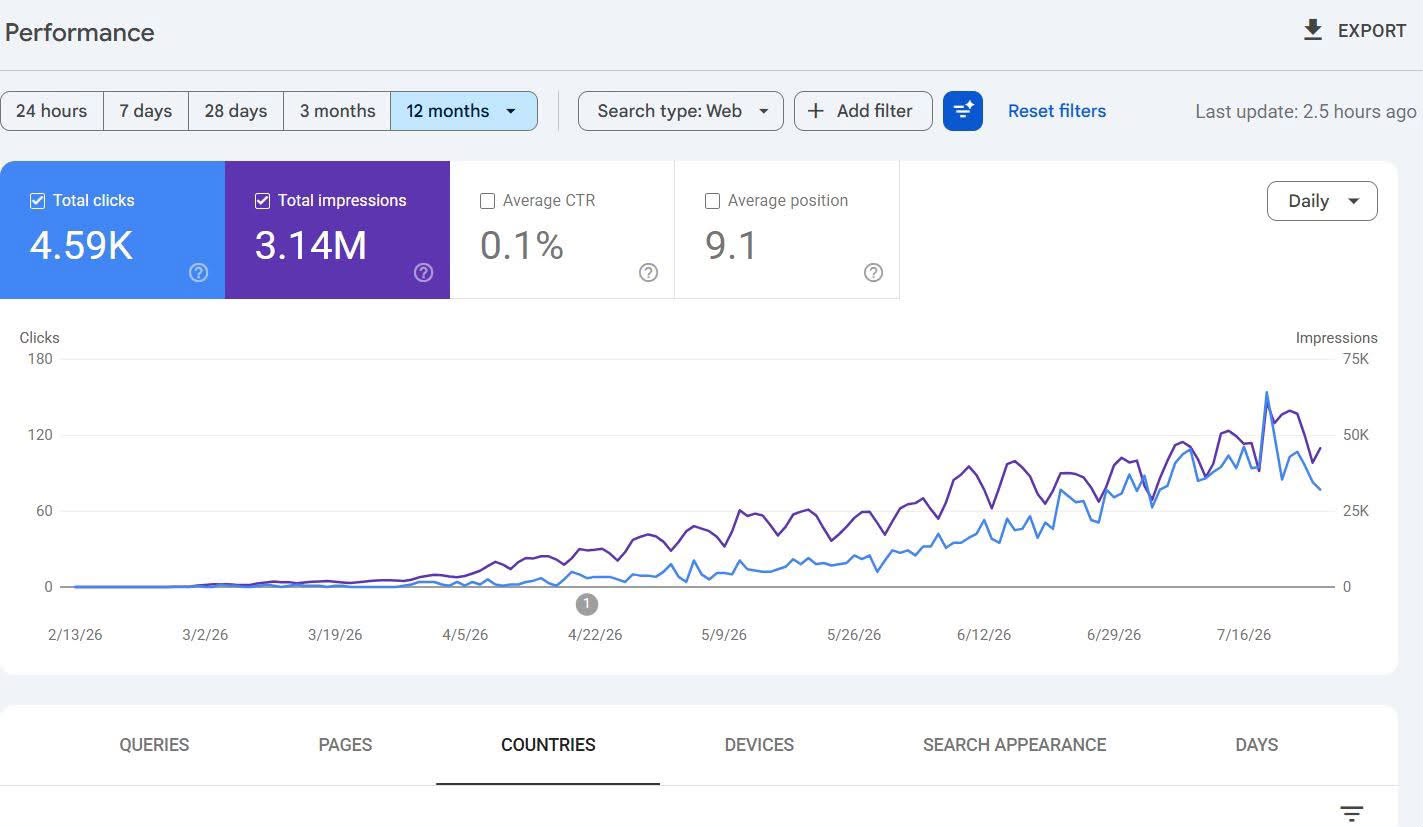
Lead quality improved before volume did. Buyers could attach a drawing early on, which meant that the sales team stopped chasing people for basic information, and quotes were delivered on the same day. By month eight, process pages were ranking, and quote requests began climbing and kept rising throughout the final quarter.
At month twelve, organic search brought in 46 quote requests a month, a 411% increase on 9.
We checked these figures against form tracking data, Screaming Frog crawl reports and Google Search Console data. They are not estimates.
What this means for manufacturers
This SEO campaign for manufacturing showed us that for manufacturers in the UK it’s important to structure your website in line with how your audience searches. People search for processes, materials and evidence of tolerance holding. Having a page for each of your capabilities and having a RFQ (request for quote) form that asks for attachments (eg engineering drawings) ticks all of these boxes. We use the same approach in our manufacturing and industrial web design work.
We wouldn’t dare to promise any specific outcome to manufacturers as it all depends on your competition and the amount of your in-house documentation etc. However, this has equally proven to be successful in many other B2B industries, as shown in our B2B lead generation case study.
Frequently Asked Questions
How long does SEO take for manufacturers?
Changes to the website and quote form will be noticeable within weeks, with some process page rankings following after six to eight months. Throughout the final quarter of the first year of SEO for manufacturers, you should see a steady increase in quote requests. This timeline can vary depending on your competition and the existing content on your website.
What is good SEO for manufacturers?
Manufacturing SEO follows the way that buyers search: by process, material and sector. Buyers want the information they need quickly, and when a page gives it to them, that can sometimes lead to a quote request.
Does SEO for manufacturers mean one page for each process?
Buyers search for specific manufacturing processes e.g. laser cutting, CNC machining. Having one services page is unlikely to rank for any of these services.
A separate page for each manufacturing service will provide Google with a clear answer, and give your potential customers the information they need (e.g. tolerances, materials, lead times etc.) before contacting you.
Does SEO involve building links for manufacturers?
Links from industry publications, supplier directories and trade bodies can help to build your website’s authority with Google, and can also drive traffic from those sites directly to yours.
It’s quality rather than quantity that counts, so the best links for manufacturers are from relevant websites from the trade that your target customers read and trust.