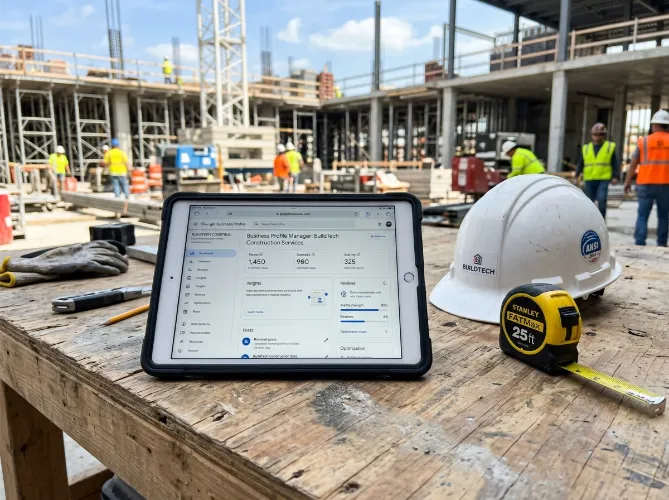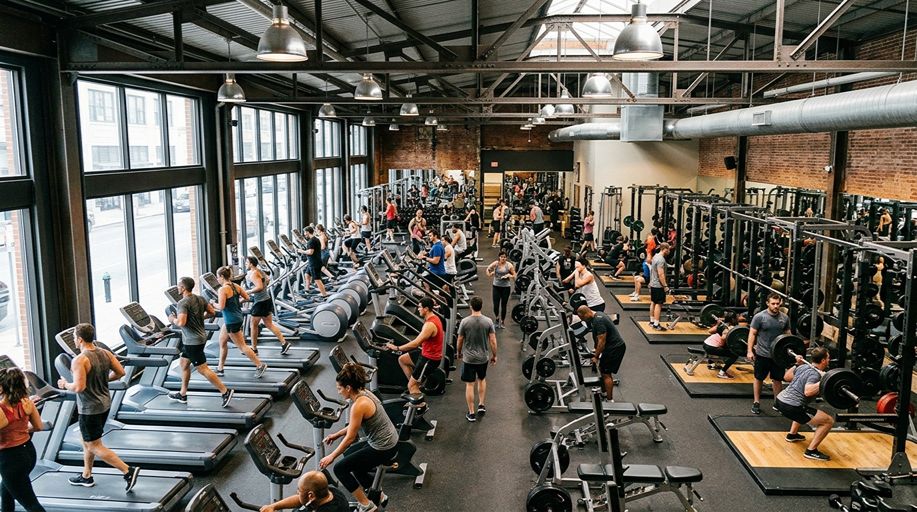
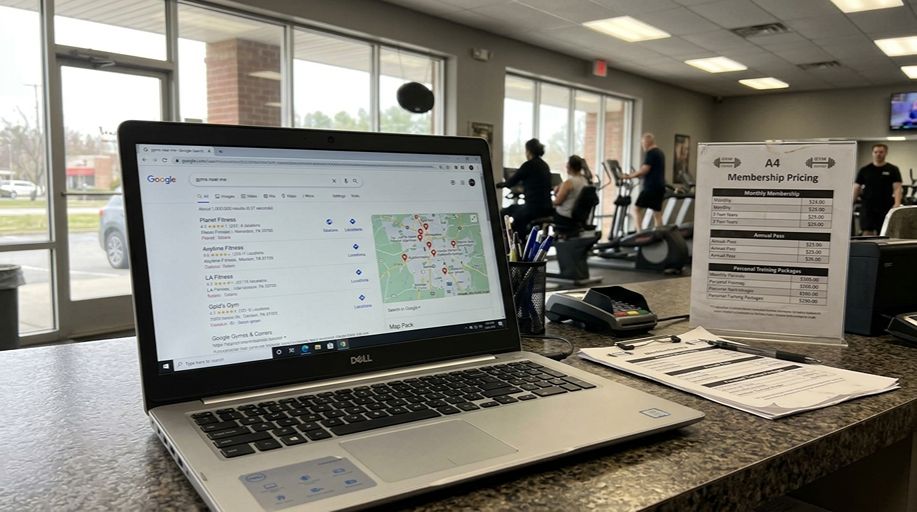
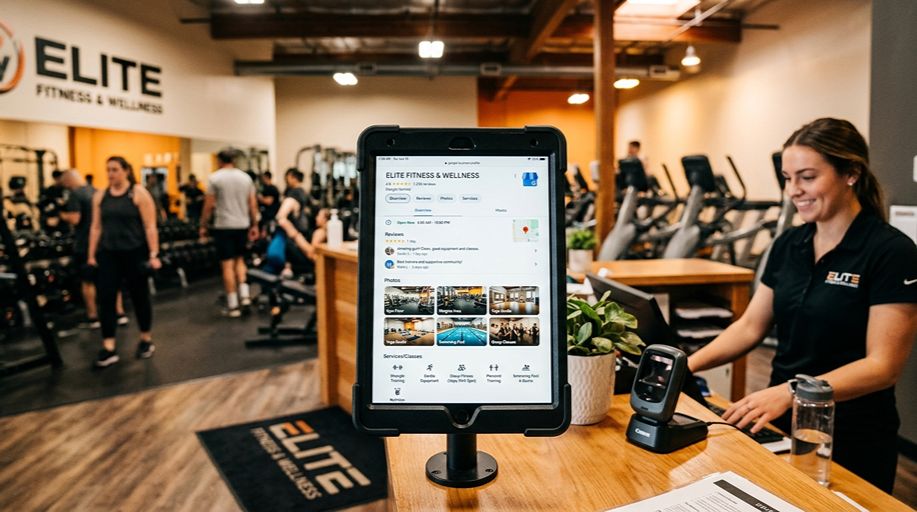

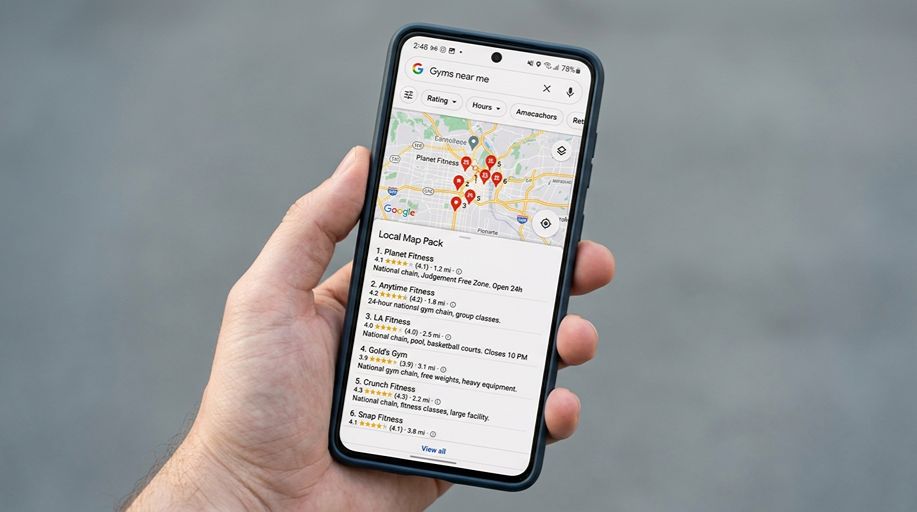
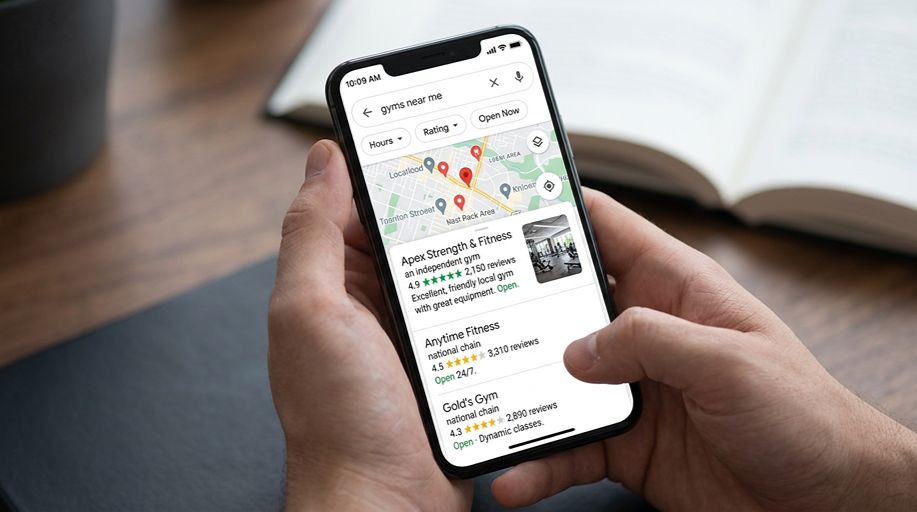
Nobody searches for a gym and scrolls to page three. They pick one of the first three options in the map pack, check the reviews, look at the photos, and either walk in or move on. Ironworks Fitness was losing that moment every day at three Newcastle locations. The facilities were not poor. They simply were not showing up.
This UK gym SEO case study is about fixing that specific problem. Not brand building, not social media, not paid ads. Just making sure that when someone in Newcastle searches for a nearby gym, Ironworks shows up as a real option. It should not be hidden behind national chain listings.
Why Independent Gyms Struggle Against National Chains in Local Search
While many independent gym owners assume they are outspent by national competitors, budget isn’t the main reason for their lack of visibility. The real differentiator is profile completeness and local optimization.
PureGym and The Gym Group don’t dominate local search results purely because they have bigger marketing departments. They lead because they keep a complete Google Business Profile for each location. They also post photos often. They have accumulated many reviews over the years. Their website content is well organized and matches what people search for. None of that requires a national marketing budget. It requires consistent attention to basics that most independent operators have never prioritised.
Ironworks had the facilities. They had competitive pricing. They had personal trainers who genuinely knew their clients. What they didn’t have was any of the local search infrastructure needed to make a good gym visible.
What the Audit Actually Showed Across All Three Locations
| No. | Audit Finding |
| 1 | GBP completeness across all three profiles is sitting at roughly 30% |
| 2 | Incorrect or missing fitness service categories on every profile |
| 3 | Outdated opening hours on two of the three listings |
| 4 | Fewer than 15 reviews per location after years of trading |
| 5 | No individual location pages on the website, despite three distinct sites |
| 6 | Zero class-specific content targeting group fitness search terms |
| 7 | No personal trainer profile pages despite twelve qualified trainers across the chain |
| 8 | Membership enquiry SEO producing near-zero organic leads from any location |
The review gap was particularly damaging in context. When a potential member opens Google Maps and sees PureGym with 340 reviews and Ironworks with 12, the choice is made. They decide before reading a single word of content. Reviews aren’t just a trust signal in the gym sector. They’re the primary decision filter.
Fixing Three Locations at Once
Running parallel rather than sequential was the only approach that made sense
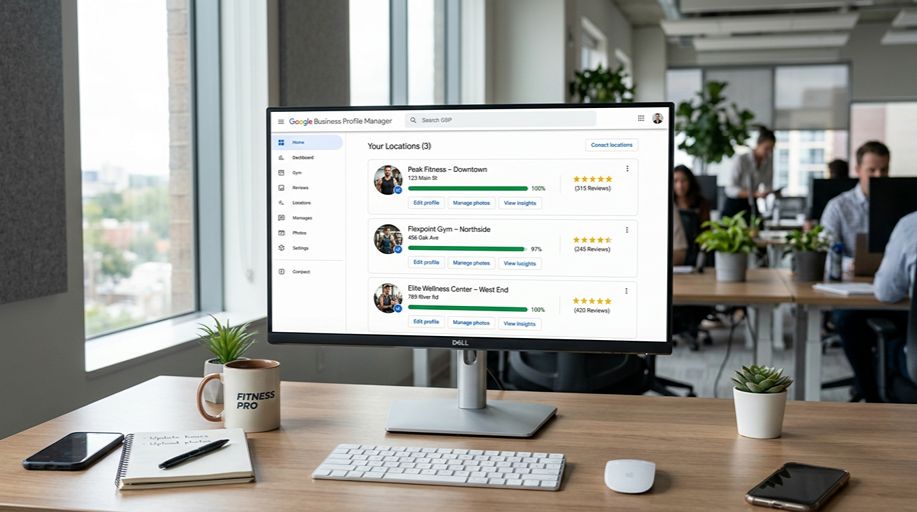
The three Ironworks locations are in different Newcastle neighbourhoods. Each has its own local catchment and competitive landscape. Treating them one at a time would have meant six months of work. It would have produced results at only one site. The other two would have kept losing potential members to competitors. All three GBP profiles were rebuilt simultaneously in month one.
Fitness-specific categories were set up correctly across all profiles. Opening hours were verified and updated. Facility photos began going up each week on all three profiles. We used real photos of the gym floors, equipment, locker rooms, and class spaces. We did not use generic images. The service sections included every class type and membership option the chain offered. They followed what Google’s Business Profile expects for health and fitness businesses.
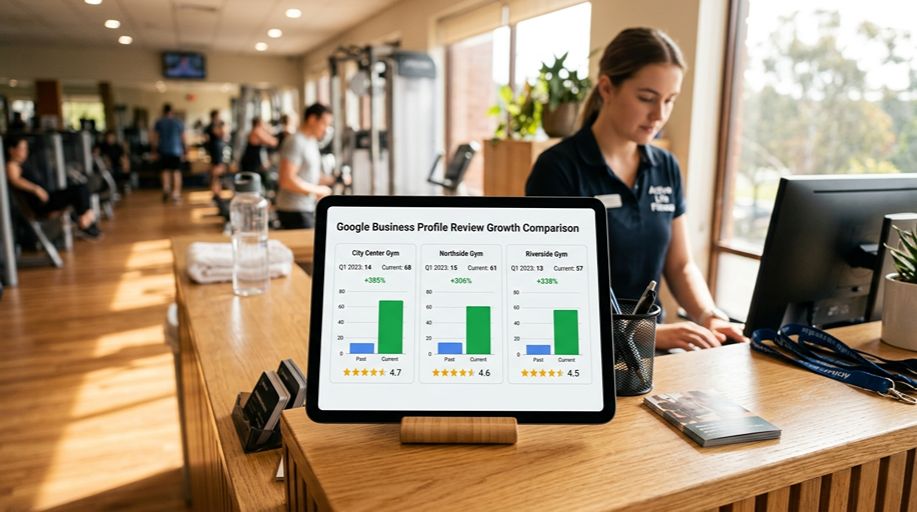
The review request system launched at the same time. Post-visit texts go out automatically 24 hours after the first visit. Post-class messages go out after group fitness sessions. We also send a gentle follow-up to members. They have attended for over three months without leaving a review. Existing members were happy customers. They just hadn’t been asked. Within six weeks, reviews were accumulating at a rate across all three locations that was visibly changing the competitive picture in the map pack.
Building the Website Content Around Real Search Behaviour
One page for three locations was never going to work
The existing website tried to describe three gym locations on a single generic page. No individual location pages, no neighbourhood-specific content, no class landing pages, and no personal trainer profiles. From Google’s perspective, there was no structured way to understand that this was a multi-site business with distinct local relevance to three different parts of Newcastle.
Individual location pages went live for all three sites, each one written with genuine context about that specific neighbourhood. Local transport links and parking details. The area’s mix of homes and businesses. The member types that the location usually serves. Not template content with the location name swapped in, genuinely distinct pages that gave Google clear signals about each site’s local relevance.
Class booking optimisation got the same treatment. Dedicated landing pages were built for spin, yoga, HIIT, boxing fitness, and pilates. Each page targets the search terms people use for those classes in Newcastle. Local pack fitness searches for specific class types convert much better than generic gym membership searches. This is because the intent is more specific. Someone searching for yoga classes in Jesmond on a Tuesday evening is very close to a booking decision. Ironworks had no content serving that moment at all before this campaign.
Personal Trainers as SEO Assets
Twelve qualified trainers with no profile pages anywhere online
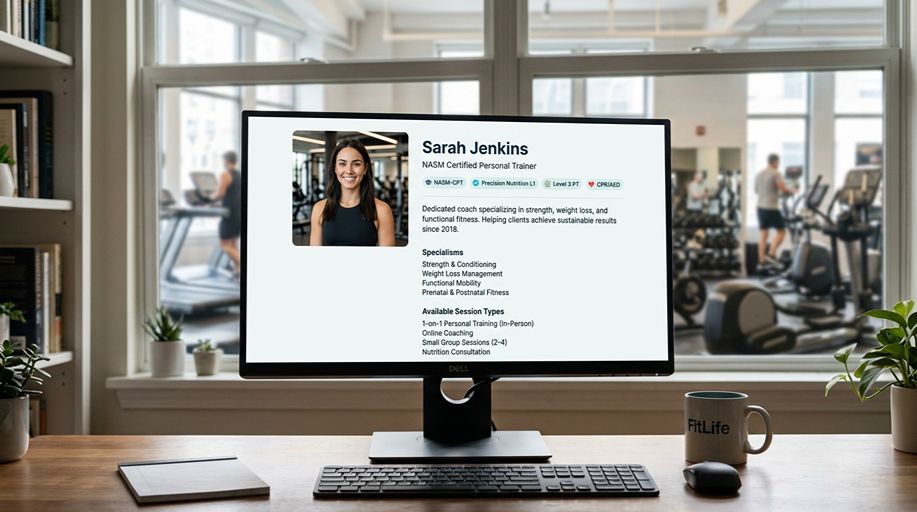
The personal trainer SEO opportunity was one of the clearest gaps in the whole audit. Ironworks had twelve qualified personal trainers across the three locations, several with specialist qualifications in areas like strength and conditioning, pre- and postnatal fitness, and sports rehabilitation. None of them had profile pages. None of their qualifications was mentioned anywhere on the website. From Google’s perspective, there was no evidence that qualified fitness professionals worked there at all.
Trainer profile pages went live for all twelve trainers. Each page includes a real bio in the trainer’s own voice. It also lists their qualifications and specialist areas. It explains the type of client they work best with. These pages serve two purposes simultaneously. They give potential members a reason to choose a specific trainer before they visit. This greatly improves the quality of personal training inquiries. They add real E-E-A-T signals about the gym team’s expertise. This matters for fitness content, like it does for medical and financial content.
This layered approach to building trust signals through content was something we applied similarly in the private clinic case study, where doctor credentials and author profiles were the foundation of the entire national SEO strategy. The principle holds across any sector where professional expertise is part of the product being sold. At Webranko, we treat credential visibility as a ranking signal, not just a conversion tool.
Six Months Later
What the enquiry data and search console actually showed
| Metric | Before | After 6 Months |
| Membership enquiries | Baseline | Up 3x |
| Keywords on page 1 | Fewer than 5 | 41 |
| Local pack positions | Zero | Top 3 all locations |
| Google reviews per location | Under 15 | Over 55 average |
| Trainer profile pages | Zero | 12 live |
| Class landing pages | Zero | 8 live |
The growth in membership inquiries was confirmed by records from the website contact form and call-tracking data. This data covered all three locations. These were real inquiries from people who found Ironworks through organic search. They did not find it by walking past the building or through a friend’s referral. Ironworks had never generated meaningful online inquiries before. This change created a new way to gain members, not just improve an existing one.
Independent gyms don’t need national marketing budgets to compete in local search. They need complete profiles, genuine reviews, content that matches what local people actually search for, and proof that qualified professionals work there. That’s not complicated. It’s just rarely done properly, and it is done by Webranko.
FAQ
How important is Google Business Profile for gym SEO?
It’s usually the single biggest factor. Most gym searches are local, “gym near me” or a specific area, so a fully verified and active Google Business Profile with photos and reviews tends to outperform website content alone in the local pack.
How many locations can one gym business rank for locally?
Each location needs its own Google Business Profile and ideally its own website page to rank individually. Gym marketing case studies consistently show that shared, generic content across multiple sites limits how well any single location performs.
Do personal trainers need their own SEO pages?
Yes. Personal trainer SEO benefits from individual pages that showcase specialisms, qualifications, and client outcomes, since people searching for a trainer often want specifics rather than a general gym homepage.
How long does local SEO take to work for a fitness studio?
Most fitness studios see local pack movement within 2 to 4 months once the Google Business Profile is fully optimised. Getting gym members from Google UK through broader organic search usually takes closer to 5 to 6 months.