











Meridian Cloud Accounting tripled organic leads in ten months through a content cluster strategy, without increasing advertising spend. The Manchester based accounting software provider now has a measurable content marketing result that reduced its dependency on paid search for the first time.
| Detail | Figure |
|---|---|
| Client type | SaaS accounting software provider |
| Location | Manchester, UK |
| Timeline | 10 months |
| Organic lead growth | 3x |
| Keywords ranking page 1 | 61 |
| Content clusters live | 14 |
Who Meridian Cloud Accounting Are
Meridian Cloud Accounting provides cloud based accounting software to small and medium UK businesses. The company understood its product and its customers well, and had invested heavily in paid search for several years to generate leads. What it had never built was an organic content asset that could keep generating leads without a direct cost attached to every click.
This is a common gap in content marketing projects. The marketing team knows the audience but has never had the internal resource, or the measurement, to prove that content investment pays off the way paid search clearly does.
The Problem We Found
Our audit identified specific gaps in both content structure and measurement, not just a general lack of blog output.
Content structure issues
- Inconsistent blog output with no keyword research behind topic selection
- No content cluster structure connecting related articles together
- No internal linking framework across existing content
- No comparison or alternative style content for buyers close to a decision
Measurement and attribution issues
- No attribution model linking blog content to actual leads in the CRM
- No way to prove content marketing ROI to leadership
- Domain authority well below the three named SaaS competitors ranking above Meridian
Strategic issues
- Heavy reliance on paid search with no organic lead growth strategy in place
- Every new article competing on its own rather than building shared topical authority
Without an attribution model, the marketing team could not tell leadership whether content spend was working at all, which made it hard to justify investing further no matter how good the writing was.
The Approach We Took
A content strategy only means something if the results can be traced to actual leads, not just traffic. The whole approach was built around proving that link before scaling content production.
Phase 1: Content audit and cluster planning, months 1 to 2
The first phase covered a full audit of existing content alongside keyword research to map out which topics deserved a pillar page and which fitted better as supporting cluster articles. Attribution tracking was built during this phase too, so results from month one onwards could be measured properly rather than estimated later.
Phase 2: Pillar and cluster content build, months 2 to 6
Pillar pages were built for each core topic area, supported by cluster articles linked back to the relevant pillar and to product pages. The technical SEO foundations were addressed alongside this, since an internal linking framework only works if the underlying site structure supports it. This phase took longer than expected, because subject matter accuracy needed sign-off from the product team on every article before publishing.
Phase 3: Bottom of funnel and comparison content, months 6 to 8
Once topical authority was building, we shifted focus to comparison and alternative style content aimed at buyers actively evaluating software options. This content had initially been deprioritised in favour of top of funnel topics, so bottom of funnel lead attribution lagged behind traffic growth for several weeks before catching up.
Phase 4: Link building and content refresh, months 8 to 10
Link building targeted relevant UK SaaS and finance publications to strengthen domain authority, alongside a refresh process for older underperforming articles rather than only publishing new ones. Leadership had been sceptical that content could ever match paid search on lead volume. The attribution data by this point said otherwise.
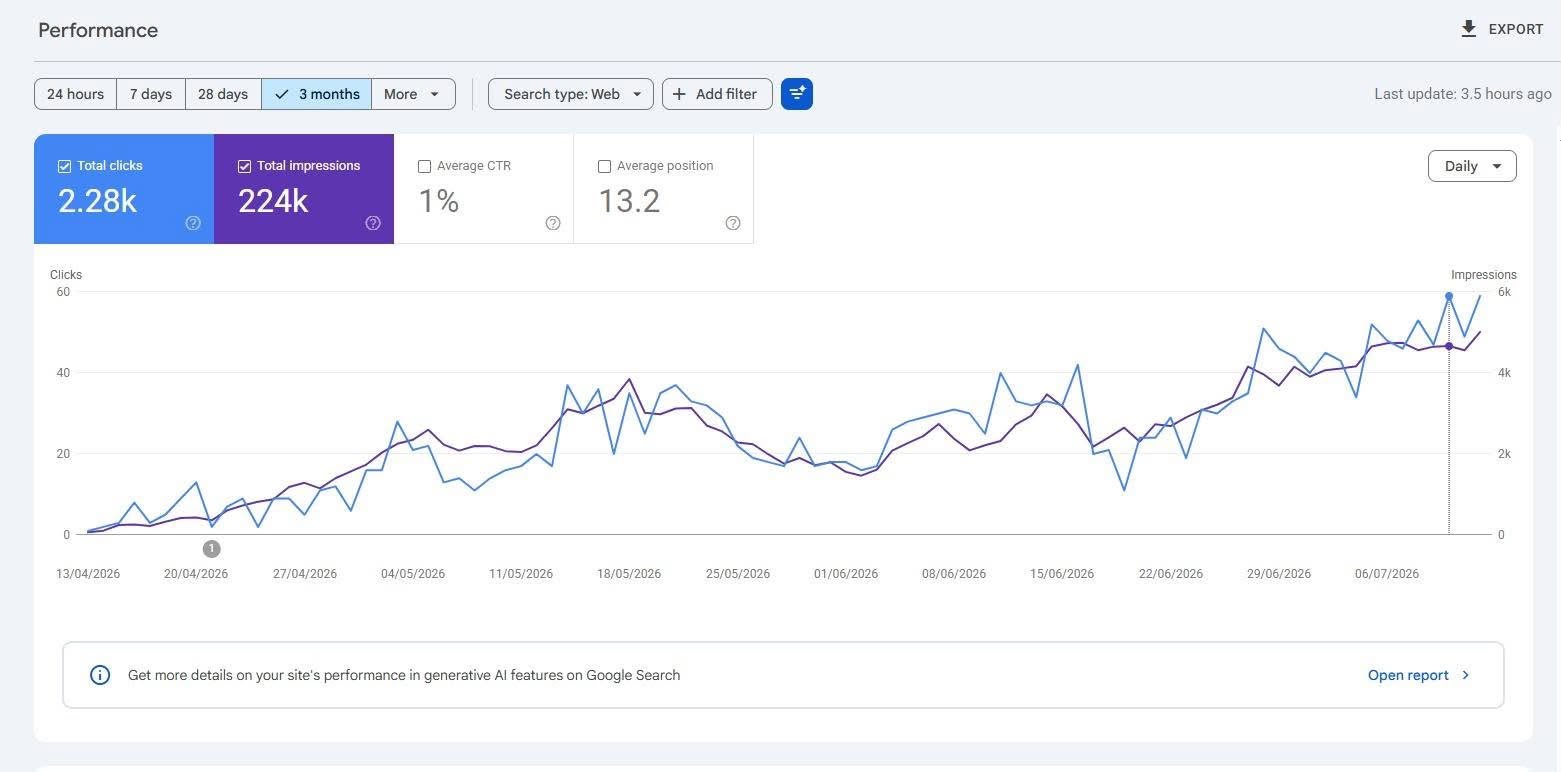
The Results, Verified Through CRM Attribution and Google Search Console
Traffic growth appeared before lead growth, which is typical for a content cluster strategy since topical authority needs time to compound before it converts.
- Cluster articles began ranking on page 1 from month four
- Pillar pages followed from month five as supporting content built authority around them
- Content sourced leads became consistent in the CRM by month seven, once comparison content was live
- By month ten, 61 keywords were ranking on page 1, and organic leads had tripled against the same period the previous year
These figures were confirmed through the CRM attribution model built jointly with the sales team, tracing individual leads back to the content that influenced them, rather than estimated from traffic growth alone.
What This Means for Content Marketing ROI in the UK
A content cluster strategy achieves ROI only when attribution is built before content is created, not added afterwards. Traffic and rankings are easy to prove. Crediting that traffic to actual leads and sales is a separate job, and it needs marketing and sales to agree upfront on what counts as a content sourced lead.
The other lesson is patience. The first few months of this project delivered structure and measurement rather than visible lead growth, which is uncomfortable when a business is used to paid search turning spend into leads the same week. For any business considering its own content strategy, the trade off is that topical authority compounds. The longer a cluster runs, the harder it becomes for competitors to displace the relationship between pillar, cluster and product pages.
Commonly Asked Questions
How long does content marketing in the UK take to generate ROI?
Most content cluster strategies take four to six months for rankings to turn into consistent leads. Topical authority needs time to build across a cluster before that visibility starts converting, and bottom of funnel content usually lags behind traffic growth by several weeks.
What is the correct way to calculate content marketing ROI?
You measure it through an attribution model that connects individual leads in the CRM back to the specific piece of content that influenced them. That model has to be agreed jointly with the sales team before any content is produced, otherwise you are estimating from traffic rather than proving anything.
What does content cluster strategy mean?
A content cluster strategy connects a pillar page covering a broad topic to related articles on subtopics, with internal links tying them together so they build topical authority as a group rather than each competing on its own.
Can content marketing replace paid search for leads?
It rarely replaces paid search entirely, but a properly built content cluster reduces reliance on it over time, as organic leads start arriving without a cost per click attached to each one.