In-Depth Guide
The Complete Guide to Salon and Spa Marketing
Our team has written a comprehensive guide covering technical specs, best practices, and the exact approaches we use on every project.
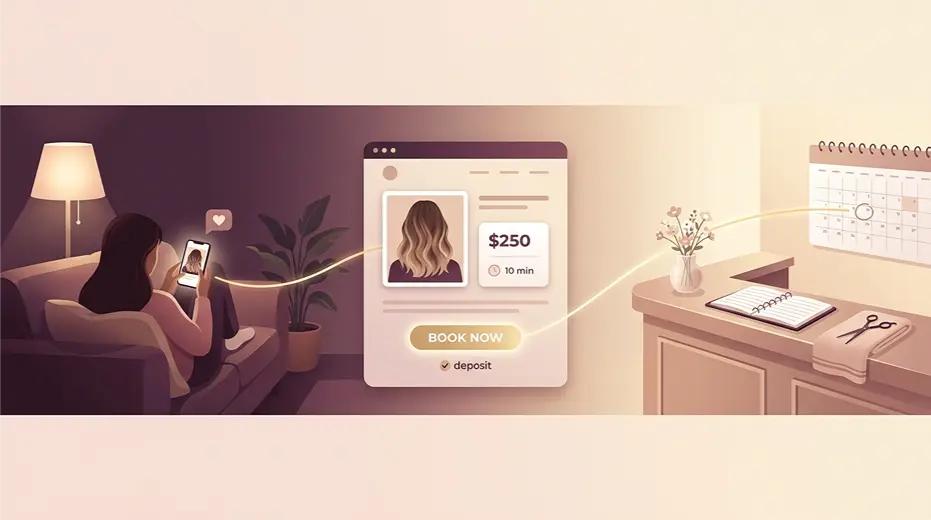
Ask a salon owner what the website is for, and the answer is usually the same. It shows the work. That matters, but a client who loves what she sees has one more question, which is how quickly she can get into the chair. If the site cannot answer that, the photos have done only half the job.
Most salon website design starts with colours and layout. As salon web designers, we prefer to begin with the diary. Which treatments need filling, which days sit quiet, and where do enquiries stall? The design follows from those answers, and it looks better for it.
What a New Client Needs Before She Books
Picture someone choosing a salon for the first time. She wants the price, the time it takes, the person doing it and a free slot this week. The table below shows where those answers should live and where they tend to go missing.
| What she wants to know | Where she looks | What often goes wrong |
|---|---|---|
| Price | Treatment page | Only given by message or phone call |
| Duration | Treatment page | Not stated, so she cannot plan her afternoon |
| Who does it | Team page | No names, or no link to their own work |
| Availability | Booking calendar | Opens a slow page that looks like another brand |
| Policy | Booking page | Cancellation rules appear only after she pays |
If a stranger cannot fill in that table in under a minute, she will not message you to ask. She will open another salon’s page instead.
Why Photos Alone Do Not Fill a Diary
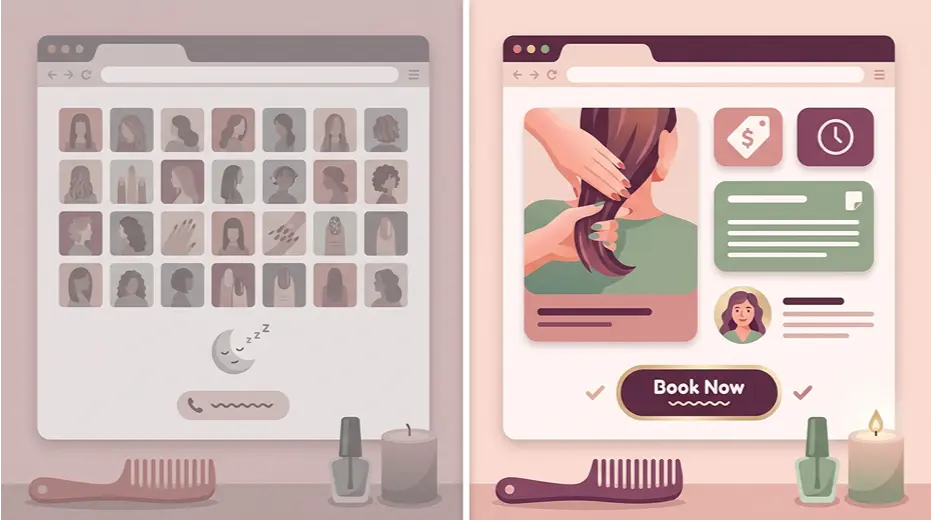
A gallery is persuasive, and every salon should have a good one. The trouble starts when the gallery is the whole site. Someone admires a set of balayage photos, then cannot tell whether the work took three hours or six, whether it needs a consultation first or what it costs.
Those unanswered questions feel small to the owner and enormous to the visitor. Each one is a reason to close the tab, and most visitors never tell you why they left.
Finding the Salon Near Her Postcode
People search for treatments with a place attached. A facial near them, bridal hair in a named town, nails open on a Sunday. They tend to choose from the first few results, and those often include a map with reviews and opening hours before any website appears.
Our local SEO service concentrates on that nearby search behaviour. For a salon, the practical work is simple. Keep your name, address and phone number identical everywhere, including your Google Business Profile, ask happy clients for reviews, and make your treatment pages say clearly which area you serve.
Treatment Pages That Do the Talking
A single page listing every service is quick to build and hard to rank. A page for each treatment gives a client precisely what she searched for, and gives you room to explain properly. Think of it as the conversation you would have at the front desk, written down once so it works at midnight too.
- Show the price, the duration and any aftercare on every treatment page, so nobody has to ask before booking
- Explain consultations and patch tests in plain words, including how many hours or days ahead they are needed
Use your own photographs and credit the stylist or therapist who did the work. Stock images make every salon look the same, and clients notice.
Protecting the Diary From Empty Chairs
Few things sting like a ninety minute colour appointment that nobody turns up for. Most owners know the pattern. A booking made on impulse, a busy week, and a client who forgets or feels awkward about cancelling.
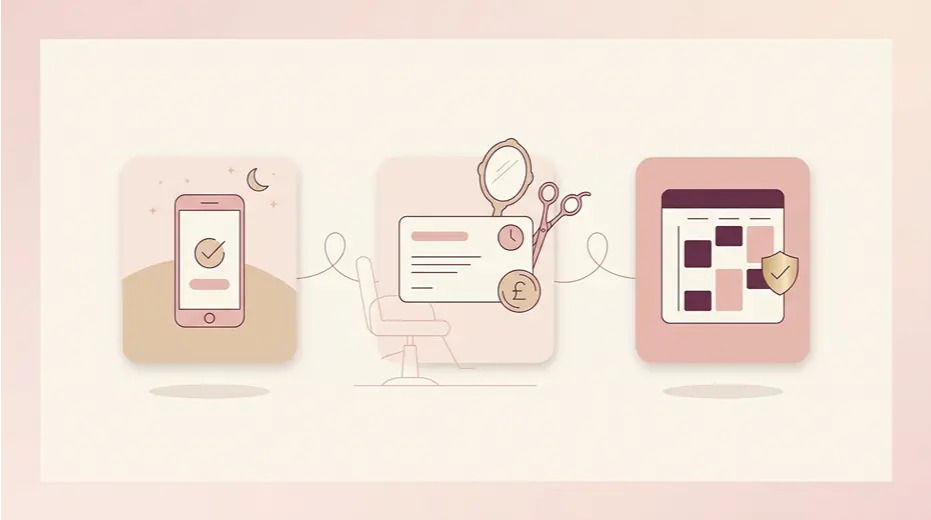
Three small habits reduce the damage. Take a deposit for longer or higher value treatments, send an automatic reminder the day before, and show your cancellation policy at the moment of booking rather than afterwards. If you charge a compulsory booking fee, include it in the treatment price you show from the start, as UK drip pricing rules have required since April 2025. A friendly tone matters here. Most clients accept a fair rule when it is explained kindly, and they respect a business that values its time.
Getting Ready for the Seasons That Matter
Salon demand is not steady. Wedding season, proms, graduations, the run up to Christmas and the first sunny weekend of the year all bring a rush of bookings, and the clients arriving then are often ready to commit quickly.
Many owners promote these moments through paid adverts or social posts. The visitors need a place to land, and a general homepage is a poor one. Our landing page design work builds a focused page for a single offer, such as bridal packages or a festive gift voucher, so interest turns into a booking rather than a browse.
Showing the Team, Not Just the Menu
People book people. A client who trusts a particular colourist will follow her from one salon to the next, so it helps to introduce your team properly. Give each person a short profile with their specialisms, a few examples of their work and the treatments they take bookings for.
This also protects the business when a stylist is on holiday or leaves. Clients can see who else offers the same service, and your site keeps working instead of pointing at someone who is no longer there.
Helping Google Read Your Menu
Search engines understand a page best when its details are labelled clearly behind the scenes. For a salon, that means marking up your opening hours, address, treatment names and prices with the right business type, such as HairSalon, BeautySalon, NailSalon or DaySpa, so search engines know exactly what you offer and where. Our schema markup work handles this technical layer. It sits comfortably alongside the visible content, because the labels only help if the pages already contain honest prices and clear answers.
Setting Realistic Expectations
A new site will not fill every chair by the end of the first week. Search rankings build over months, and local competition varies enormously between a quiet market town and a busy city centre. What you can expect sooner is a smoother booking journey, fewer messages asking for basic information and a clearer view of which treatments clients actually book.
Judge progress by bookings, deposits taken and the number of new clients who found you through search. Traffic figures alone can flatter a site that looks busy and earns nothing.
If you want a sensible place to begin, book yourself in as a customer on your own website using only your phone. Notice where you hesitate, where the page feels slow and where you would give up. Those moments are your first list of improvements, and most of them cost very little to fix.