

In-Depth Guide
The Complete Guide to Veterinary Marketing
Our team has written a comprehensive guide covering technical specs, best practices, and the exact approaches we use on every project.
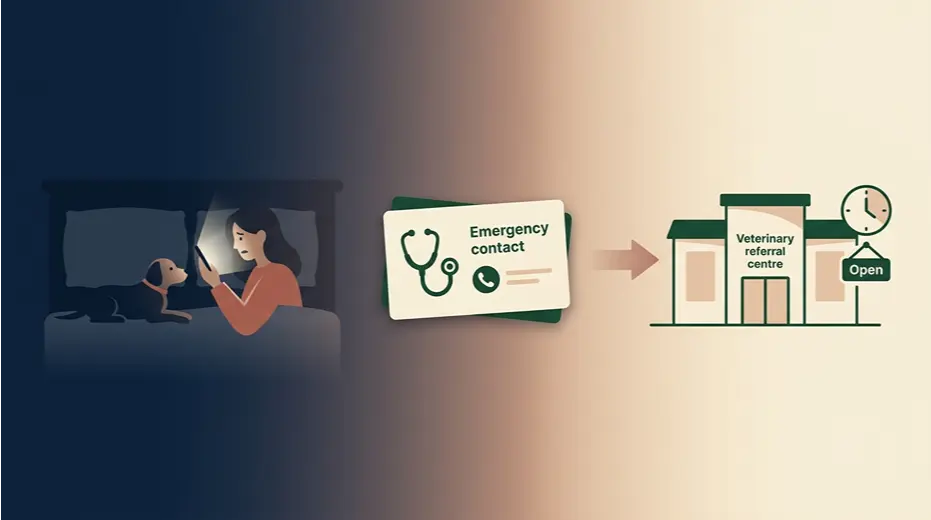
A dog owner standing in their kitchen at eleven at night, watching their pet vomit for the third time, is not browsing calmly through search results comparing practices on reputation alone. They are frightened, they are hesitating over cost, and every second spent on a confusing website is a second their pet does not have.
We have reviewed enough veterinary websites now to notice the same gap repeating. Beautiful photography of happy dogs, warm language about compassionate care, and no clear answer to the two questions running through a panicked owner’s head, is this an emergency and what will it cost.
What Owners Need to Know in the First Ten Seconds
| Question | Answer |
|---|---|
| What stops an owner calling immediately | Uncertainty about cost, more often than uncertainty about the practice itself |
| Is out of hours cover always in house | No, many practices refer to a separate emergency centre entirely |
| Do owners search differently for routine and urgent care | Yes, urgent searches are short and immediate, routine searches are more considered |
| Does pricing transparency affect conversion | Yes, vague or hidden pricing increases hesitation before calling |
| What causes confused, frustrated calls | Unclear referral arrangements, sending owners to a closed line at the worst time |
That last row causes more wasted minutes than almost anything else on a veterinary website. An owner calling a closed practice during a genuine emergency does not simply try again later. They panic further, and some give up entirely.
Why Hidden Pricing Costs More Calls Than People Realise
Many veterinary sites have long avoided mentioning cost, understandably nervous about setting expectations that vary case by case. The unintended result is an owner assuming the worst, sometimes delaying a call for an hour or more simply working up the courage to hear a number they cannot predict.
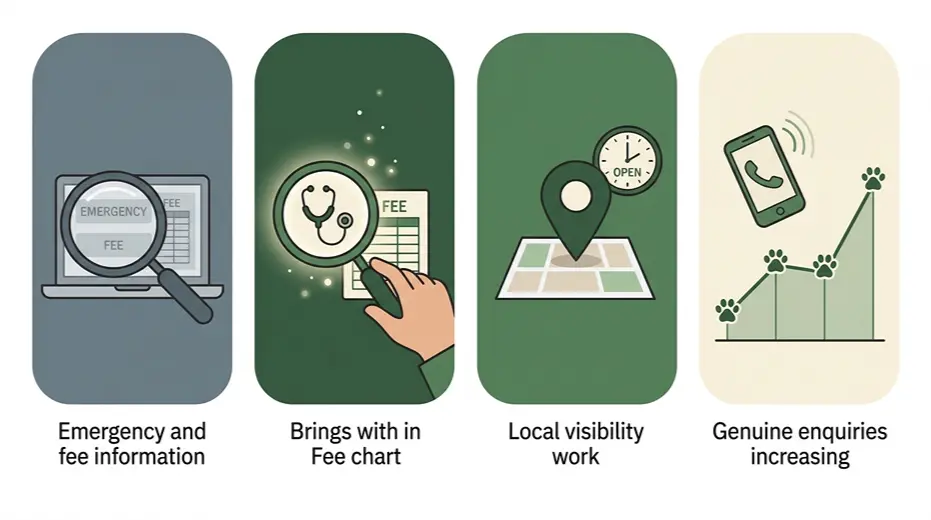
A clear consultation fee, stated honestly, removes far more hesitation than it creates confusion. Owners are not expecting a precise quote before diagnosis. They are looking for reassurance that walking through the door will not bankrupt them before anyone has even looked at their pet.
Since the CMA’s 2026 veterinary market investigation, this is no longer optional. UK practices are now required to publish standard price lists on their website, no more than one click from the homepage.
The Referral Confusion Nobody Explains Clearly
Plenty of smaller practices, quite sensibly, refer out-of-hours emergencies to a dedicated centre. They do this rather than staffing overnight themselves. The problem is rarely the arrangement itself. It is odd that so few websites state it plainly. An owner may only learn it after calling a number at eleven at night.
Stating this clearly on every relevant page, not buried in a single contacts section, saves confusion at the exact moment confusion is least affordable.
Routine Care Deserves Its Own Different Kind of Clarity
Not every visitor is in crisis. Someone booking a routine vaccination or a neutering consultation is browsing far more calmly, comparing practices on convenience, price and genuine reviews rather than urgency alone. Content built for this audience needs a different tone entirely, informative and unhurried rather than crisis focused.
Our on-page SEO work covers exactly this distinction, structuring service pages so each one satisfies the specific intent behind it rather than blending urgent and routine content into one confused page that serves neither audience particularly well.
Local Search Behaviour Changes Sharply During an Emergency
When a pet owner needs a vet in an emergency, they usually choose based on who is nearby and available, not on a reputation built over years. Even a practice with outstanding reviews can lose that enquiry if it is hard to find locally, while a newer competitor may win simply by appearing first and making it clear they can help.
- Emergency and out of hours searches prioritise speed and proximity over brand reputation
- Routine care searches allow more time for comparison, reviews and price consideration
- Accurate opening and out of hours times on Google Business Profile often decide which practice gets the call
Treating both search types identically wastes the specific urgency that defines emergency traffic, and the specific patience that defines routine traffic.
Finding Out Where Your Own Site Is Losing Owners
Plenty of practices sense something is not working without being entirely sure what. Enquiries feel inconsistent, a nearby competitor seems to rank higher for emergency terms specifically, or a website built years ago has simply never been revisited since.
That is precisely what a proper technical review is built to uncover. Our SEO audit service reviews a site methodically, checking whether emergency information, referral clarity and cost guidance are structured to satisfy the specific, often urgent intent behind a veterinary search.
What This Means for a Practice Rebuilding Its Website
None of this means changing what makes a veterinary website feel trustworthy: warmth, genuine care, and real photos of the practice and team. It simply needs clearer practical information alongside it—an easy-to-find emergency number, transparent pricing guidance, and referral arrangements explained clearly rather than left to assumption.
Practices that get both right, warmth and clarity, convert more of the traffic that matters most. That traffic is the owner who is frightened and uncertain. They simply need to know exactly what to do next.