Skip to content
App Store Optimisation

App Store Optimisation UK Get Your App Found In the App Store and Play Store

A brilliant app with no downloads helps no one, and building it was only half the job. The App Store and Play Store are search engines in their own right, each with its own ranking logic around keyword fields, category placement, and ratings velocity. We optimise titles, subtitles and keyword fields for genuine search relevance, then work on screenshots and store listing content to actually convert a search result into an install. ASO is not a one time task either. Ratings and conversion both shift as ratings accumulate, competitors update their listings, and store algorithms adjust. If your app still needs building, that work falls under our Mobile App Development service, and this page covers getting it found and downloaded once it exists.

Fixed-price quotes UK-based developers 90+ PageSpeed guaranteed
Web Ranko team working on App Store Optimisation
Optimised for search ranking and install conversion together

App Discoverability

What app store optimisation actually involves, and why it is a search engine problem, not a marketing one

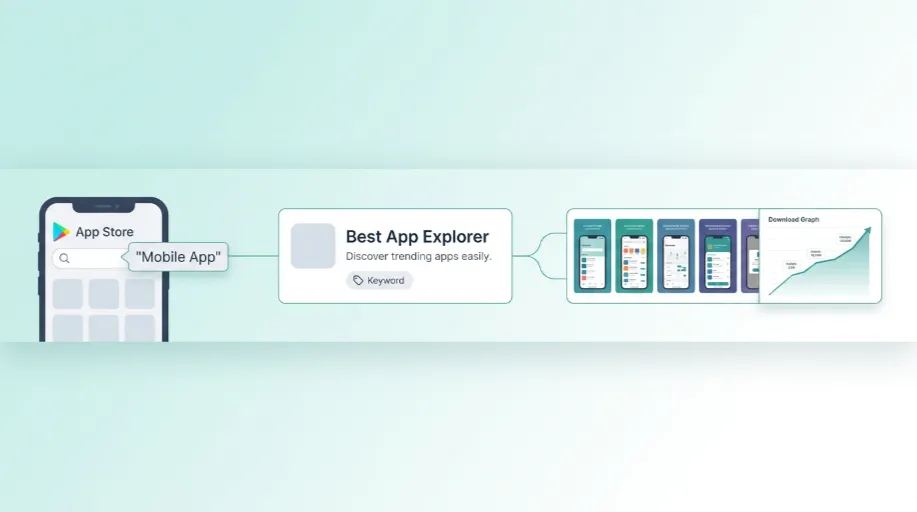
The App Store and Play Store are search engines, and like any search engine, they rank results based on relevance and performance signals. Apple weighs the app title, subtitle and a dedicated keyword field heavily for iOS ranking. Google Play works differently, relying more on the title, short description, and long description text, along with category performance and ratings velocity. Getting ASO right means understanding these differences, not applying one generic keyword list across both stores and hoping it works equally well on each.

Ranking well is only half the outcome that matters though. A listing that appears in search results still needs to convert that visibility into an actual install, and that depends heavily on screenshots, preview videos and the overall first impression someone gets in the few seconds before deciding to tap download. Our Mobile App Development service covers building the app itself, using genuine native development rather than a wrapped website. This service kicks in once the app exists, making sure people can find it and are convinced enough by the listing to install it.

Apps with reasonable functionality but very low organic download numbers
Developers who have never optimised their App Store keyword field
Apps ranking well but converting poorly once someone views the listing
Businesses launching a new app needing a proper store listing strategy
Apps losing category ranking position to newer competitor listings
Web Ranko App Store Optimisation specialist at work

Common issues we fix

App Store keyword field left mostly empty or poorly researched High
Title and subtitle not structured around genuine search terms High
Screenshots not designed to actually convert a search result into an install High
Play Store long description ignoring keyword relevance entirely Med
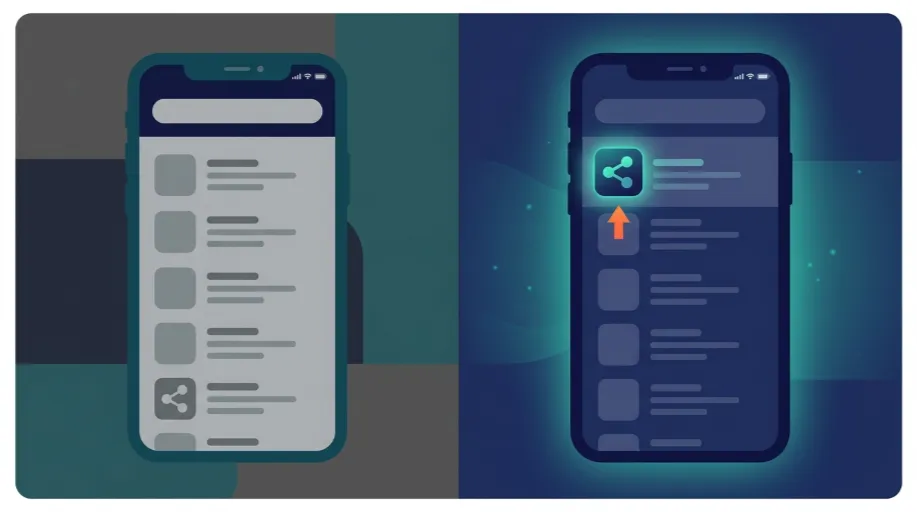
Low ratings velocity dragging down category ranking position Med
No preview video despite it being a strong conversion factor Med
Category selection not matched properly to actual competitive positioning Med
No ongoing monitoring as ranking and competitor listings shift Med

What's Included

What's Included in App Store Optimisation

A senior developer owns your project from first line to launch. Here is exactly what you get.

ASO Audit and Keyword Research

We start by reviewing your current listing and researching genuine app store search behaviour, separately for both the App Store and Play Store.

  • Full audit of current title, subtitle and keyword field usage
  • App Store and Play Store keyword research handled separately
  • Competitor listing review across your app category
  • Written summary of priority fixes before optimisation begins

Title, Subtitle and Keyword Field Optimisation

Every character of limited metadata space gets used properly, balancing genuine search relevance with a title that still reads naturally.

  • Title and subtitle structured around genuine search terms
  • App Store keyword field optimised to capture maximum relevant coverage
  • Play Store title and description optimised for its different ranking logic
  • Metadata checked against store guidelines to avoid rejection risk

Screenshot and Store Listing Conversion

Screenshots and store listing content are designed specifically to convert a search result view into an actual install, not just look attractive.

  • Screenshot sequence designed around genuine user decision making
  • Preview video strategy considered where it improves conversion
  • Store listing copy written to reinforce value quickly
  • A/B testing approach recommended where the platform supports it

Category and Ratings Strategy

Category placement and ratings velocity both affect ranking significantly, so we review and advise on both as part of a proper ASO strategy.

  • Category selection reviewed against genuine competitive positioning
  • Ratings and review strategy advised to support ranking velocity
  • Response strategy suggested for negative reviews affecting visibility
  • Update cadence reviewed for its effect on store algorithm signals

Cross Store Strategy Alignment

The App Store and Play Store rank differently, so strategy is built separately for each rather than assuming one approach fits both equally.

  • Separate keyword and metadata strategy built for each store
  • Ranking factor differences accounted for in optimisation approach
  • Store specific guideline compliance checked before publishing changes
  • Performance compared across both stores to spot genuine gaps

Ongoing Ranking Monitoring

App store ranking factors shift as competitors update listings and ratings accumulate, so we monitor performance rather than optimising once and stopping.

  • Ranking position tracked across priority keywords in both stores
  • Conversion rate from view to install monitored over time
  • Listings adjusted as competitor activity and algorithm behaviour shifts
  • Regular reporting on visibility and download impact

Why It Matters

Why UK App Developers Choose Webranko for ASO

Ranking well and converting well are two different problems, and getting both right takes genuine understanding of how each store actually works. We treat the App Store and Play Store as the distinct search engines they are, not one generic ASO checklist applied twice.

Web Ranko development team
Get a free App Store Optimisation audit

Store Specific Strategy

The App Store and Play Store rank differently, so we build separate keyword and metadata strategy for each rather than one generic approach.

Ranking and Conversion Together

We optimise for search visibility and for actually converting that visibility into installs, since one without the other wastes effort.

Clear Reporting on Real Impact

You get reporting on ranking position, conversion rate and downloads, not vague visibility metrics disconnected from actual results.

Natural Pairing With App Development

Our ASO work connects directly with genuine native app development experience, not a marketing team guessing at technical constraints.

How We Work

How Webranko Handles App Store Optimisation

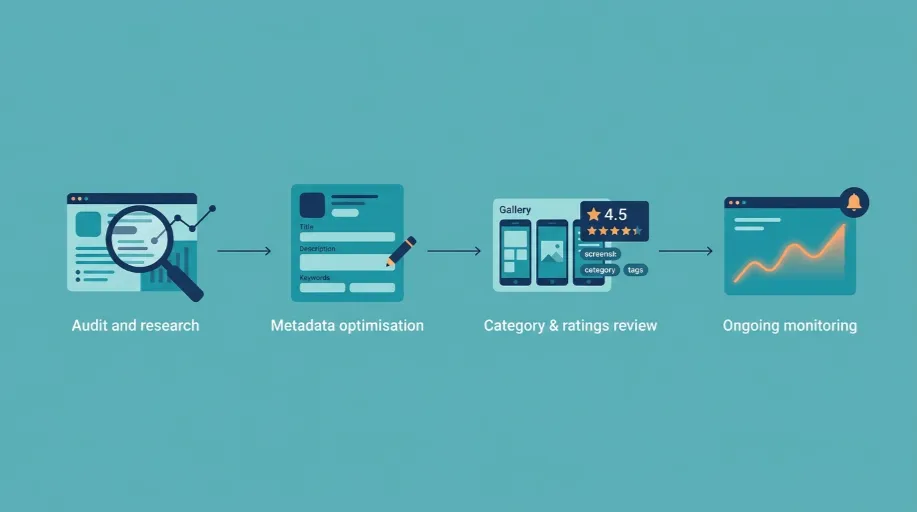
A structured process that starts with a proper audit across both stores, so optimisation is grounded in genuine search behaviour rather than assumption.

Web Ranko development team at work
Senior developers. Fixed-price. No surprises.
Week 1

ASO Audit and Keyword Research

We audit your current listing and research genuine App Store and Play Store search behaviour separately for each platform.

Week 2

Metadata and Listing Optimisation

Titles, subtitles, keyword fields and descriptions are optimised for each store, alongside screenshots built to convert.

Week 3

Category and Ratings Review

Category placement and ratings strategy are reviewed and advised on, since both affect ranking beyond keywords alone.

Ongoing

Monitoring and Adjustment

Ranking and conversion are tracked continuously, with listings adjusted as competitors and store algorithms shift.

Real Results

What Happens After App Store Optimisation

35+ Years' combined SEO and web experience
50+ Apps optimised across both stores
3wk Typical ASO timeline
24hr Average response to your enquiry
Ryan Coulson

Our app had decent functionality but almost nobody was finding it organically. Webranko rebuilt our App Store keyword field properly and redesigned our screenshot sequence, and our organic installs increased noticeably within a few weeks, without us spending anything extra on paid acquisition.

Ryan Coulson Founder, Coulson Field Services App

In-Depth Guide

The Complete Guide to App Store Optimisation

Our team has written a comprehensive guide covering technical specs, best practices, and the exact approaches we use on every project.

A brilliant app sitting at position forty in search results might as well not exist. Nobody scrolls that far, and nobody downloads what they never see.

We talk to developers regularly who assumed building the app was the hard part. It usually isn’t. App store optimisation starts when the build finishes, but it is often an afterthought. It should be part of the plan from day one.

What Is App Store Optimisation?

Here’s the direct answer before anything else.

Question Answer
What is app store optimisation? The practice of improving an app’s visibility and conversion rate within App Store and Play Store search results
Is it the same as SEO? Similar principles, different search engine entirely, with its own ranking factors and metadata rules
What matters most for iOS ranking? Title, subtitle and the dedicated keyword field, all weighed heavily by Apple’s algorithm
What matters most for Android ranking? Title, description text, category performance and ratings velocity
How long until results show? Around three weeks to implement, with ranking improvements building over the following weeks
Does UK targeting differ from global? Yes. Regional keyword research and competitor analysis matter, since UK search behaviour differs from US or global data

That regional point matters more than people expect. A keyword strategy pulled from US app store data often misses exactly the terms UK users are actually typing.

Why the Keyword Field Gets Missed So Often

In our testing across a genuine range of client apps, the single most common gap we find is an empty or poorly researched keyword field on iOS. It costs nothing to fill in properly, yet it sits ignored on a huge number of otherwise well built apps.

We worked with a Northwest based field services app whose functionality was genuinely good. Engineers loved it once they discovered it. Almost nobody was discovering it. Their App Store listing title was entirely brand focused, with no other keywords anywhere describing what the app actually did.

We reworked their metadata around actual search behaviour and rewrote their screenshot sequence to show the value in the first three images. Their organic installs increased significantly within a few weeks, with no paid acquisition spend at all.

That’s the pattern worth understanding properly. Good ASO isn’t about gaming an algorithm. It’s about making sure the metadata genuinely reflects what real UK users are searching for.

Strategy Needs to Treat Each Store Differently

Apple and Google rank apps using genuinely different logic, and a generic strategy usually means underperforming on at least one.

  • App Store keyword field read directly by Apple’s algorithm but invisible to users, meaning every character should count toward genuine search relevance
  • Title and subtitle on iOS, weighted heavily for ranking and worth structuring around actual search terms rather than pure branding
  • Play Store description text carrying more ranking weight than its iOS equivalent, since Google reads the full description for relevance signals
  • Ratings velocity affecting category ranking on both platforms, meaning a proper review strategy supports visibility, not just reputation
  • Screenshot sequence doing the conversion work once someone actually lands on the listing, deciding whether a search click becomes a genuine install
  • Category selection shaping competitive positioning, since ranking well in a crowded category is harder than ranking well in a more targeted one

Skip the platform-specific detail and a strategy ends up half optimised for both stores rather than fully optimised for either.

Where This Connects Back to the App Itself

None of this works without a genuinely solid app behind the listing. Optimising metadata for an app that performs poorly once installed just accelerates uninstalls and damages ratings, which then drags ranking down regardless of how well the keyword field was researched.

If the app itself still needs building properly, natively rather than as a wrapped website, that’s a separate conversation worth having first. Our Mobile App Development service covers genuine native builds in Swift and Kotlin. ASO works far better layered on top of an app built properly from the start than it does trying to compensate for weak functionality with clever metadata.

The Keyword Research Behind Every Good Listing

Metadata optimisation is only as strong as the research underneath it. Guessing at what UK users search for, or reusing a generic keyword list from a US focused competitor, rarely produces the same results as genuine research into how people actually search on each platform.

Our keyword research work uses the same strict method we use for Google.
We adapt it for app store search behaviour.
This reflects how App Store and Play Store search really works.
They are related fields, but not the same.

Who Handles This Work Matters

ASO agencies vary wildly in depth. Some treat it as a checklist item added to a broader marketing package. Others, including our own team, connect it directly to a genuine technical understanding of how apps are built and submitted.

You can see more about who handles this kind of work directly on our Meet the Team page. The ASO work developers actually trust tends to come from people who understand both the search side and the technical side of what they’re optimising, not a marketing generalist working from a template.

Getting the Full Picture Right From the Start

There are two outcomes every app needs: ranking well and converting well. Chasing one without the other leaves real downloads on the table. A listing that ranks well but converts badly wastes the visibility it worked hard to earn. A listing that converts brilliantly but never appears in search results never gets the chance to prove it.

An effective ASO strategy treats both as one job: optimise each store separately according to how it actually ranks, then monitor continuously as competitors update their listings and reviews accumulate over time.

FAQ

App Store Optimisation questions, answered honestly

Questions UK app developers ask us most before starting app store optimisation.

Ask us anything
How do I get more app downloads organically in the UK?

Organic downloads come from ranking well in App Store and Play Store search results, then converting that visibility into installs through strong screenshots and listing content. Both need addressing together, since ranking without conversion still leaves downloads on the table.

Does the keyword field actually matter for App Store ranking?

Yes, significantly. The App Store keyword field is not visible to users but is read directly by Apple’s search algorithm, meaning poorly researched or empty keyword fields represent missed ranking opportunity that costs nothing extra to fix properly.

How do ratings affect app store ranking?

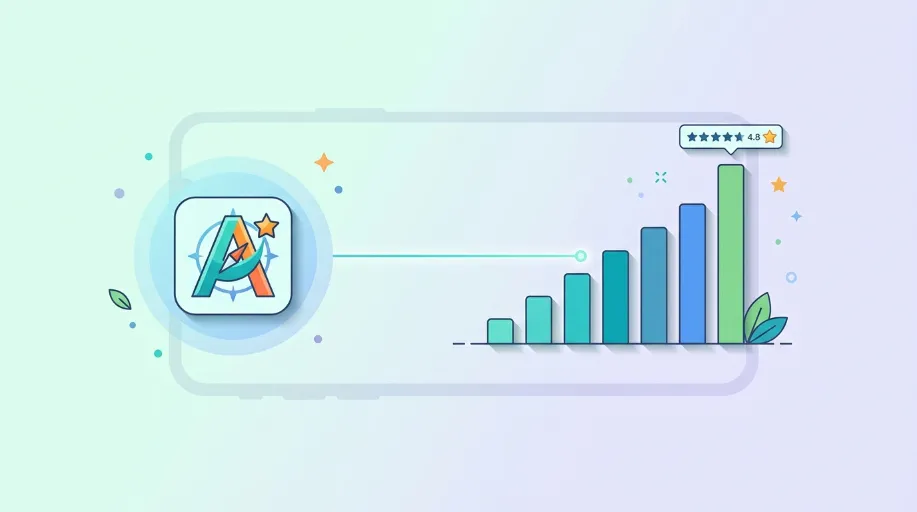
Ratings velocity, meaning how quickly and consistently positive ratings accumulate, is a genuine ranking factor on both stores. A strong review strategy alongside proper keyword optimisation supports ranking more effectively than keyword work carried out in isolation.

How long does app store optimisation take to show results?

Initial optimisation typically takes around three weeks to implement fully, though ranking improvements can take several weeks longer to become clearly visible, since both stores factor in performance data that accumulates gradually after changes go live.

Is App Store optimisation different from Play Store optimisation?

Yes. Apple weighs the title, subtitle and a dedicated keyword field heavily, while Google Play relies more on the title and description text alongside category performance and ratings velocity. Each store needs its own separate strategy rather than one approach applied to both.

How much does app store optimisation cost in the UK?

Cost depends on whether you need one store or both, how competitive your category is, and whether screenshot and listing content needs rebuilding alongside the metadata work. A single store keyword and metadata optimisation is straightforward; a full audit across both stores with new screenshot sequences takes longer. Most projects fall between £X and £Y, and the free listing audit tells you which end you are at before you commit.

Start today

Built the App, Still Waiting on Downloads

A well built app with a poorly optimised listing can sit unseen in search results for months. Let's find out where your visibility and conversion are actually being lost.

What's in your free consultation

Delivered in 48 hours by a senior developer.

Full ASO audit across both App Store and Play Store
Keyword and metadata optimised for genuine search relevance
Screenshots and listing content built to actually convert
Ongoing monitoring as ranking and competitors shift