

Skip to content
GDPR Compliance

GDPR Website Audits & Cookie Consent for UK Businesses

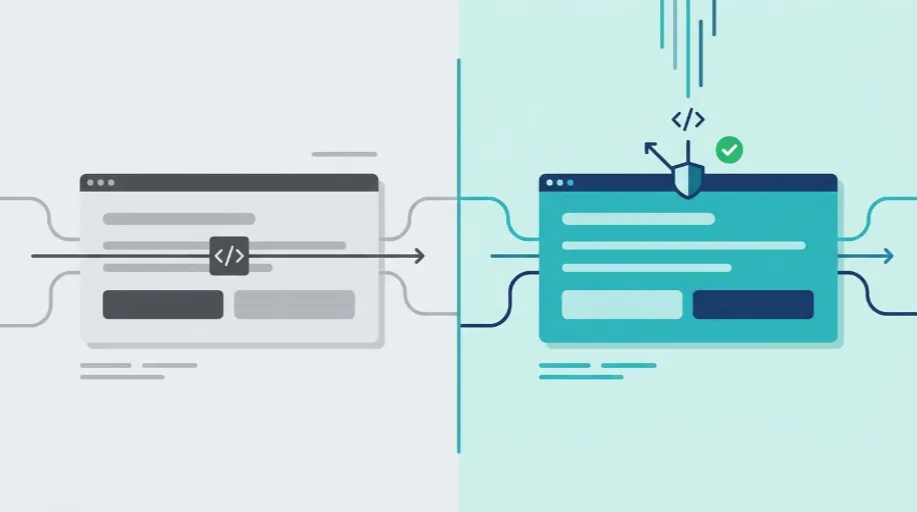
A cookie banner alone does not make a website GDPR compliant. Most sites we audit have one sitting there, technically present, quietly doing nothing because it loads every tracking script before a visitor has clicked a thing. Real compliance covers far more than a banner: what data your site actually collects, how it is stored, what lawful basis you are relying on, and whether your privacy documentation matches what is genuinely happening behind the scenes. We audit sites properly, implement cookie consent that actually blocks scripts until consent is given, and get the paperwork behind your website in order.

Fixed-price quotes UK-based developers 90+ PageSpeed guaranteed
Web Ranko team working on GDPR Compliance
UK-based GDPR & PECR audits

Data Protection

What GDPR website compliance actually covers, and why a cookie banner is not enough

GDPR compliance for a website touches several separate things that often get treated as one job. There is cookie consent, meaning visitors are properly asked before non essential tracking scripts load, not after. There is your privacy policy, which needs to accurately describe what data is collected and why, rather than a generic template copied from another site. There is the lawful basis question, working out whether you are relying on consent, legitimate interest, or contract for each type of data processing happening on your site. And there is the technical side, checking where data actually goes once a form is submitted or an account is created.

Most sites we review get the visible part right and the invisible part wrong. The cookie banner looks fine, but the scripts behind it were already firing before anyone clicked accept. The privacy policy exists, but it does not match the actual third party tools connected to the site, such as analytics platforms or embedded booking widgets. We go through this properly, checking both what visitors see and what is happening underneath, so the compliance is genuine rather than cosmetic.

One thing worth being precise about: in the UK, cookies are governed by PECR — the Privacy and Electronic Communications Regulations — with UK GDPR setting the standard for what valid consent looks like. Both are enforced by the ICO. In practice that means consent has to be freely given and as easy to refuse as to accept, and non-essential scripts must not run before it. We audit against both, not just the GDPR half.

Sites with a cookie banner that does not actually block scripts
Businesses with a privacy policy that does not match the site's actual data collection
Sites collecting form data with no clear lawful basis documented
Businesses using analytics or marketing tools without proper consent controls
Sites that have never had a proper GDPR review carried out
Web Ranko GDPR Compliance specialist at work

Common issues we fix

Tracking scripts firing before cookie consent is given High
Privacy policy that does not reflect actual data collected on the site High
No clear lawful basis recorded for processing personal data High
Contact and enquiry forms with no privacy notice attached Med
Cookie consent tool not properly categorising script types Med
No process in place for handling a data subject access request High
Third party embeds and widgets loading tracking cookies unnoticed Med
No record of consent kept for marketing communications High

What's Included

What's Included in GDPR Compliance

A senior developer owns your project from first line to launch. Here is exactly what you get.

GDPR Website Audit

We review your site thoroughly to understand exactly what data is being collected, where it goes, and what cookies and scripts are firing without proper consent.

  • Full review of cookies, scripts and third party tools in use
  • Assessment of data collected through every form on the site
  • Review of current privacy policy against actual site behaviour
  • Written report outlining every gap found, prioritised by risk

Cookie Consent Implementation

Consent needs to genuinely block non essential scripts until a visitor agrees, categorised correctly rather than lumped into one generic accept button.

  • Cookie consent tool configured to block scripts before consent
  • Cookies categorised correctly across necessary, analytics and marketing
  • Consent choices recorded and stored as evidence
  • Banner designed to remain clear without harming user experience

Privacy Policy and Documentation

Your privacy policy and related documentation get reviewed and rewritten so they genuinely reflect what your site does with visitor data.

  • Privacy policy reviewed and updated against actual data practices
  • Cookie policy documented clearly and kept current
  • Lawful basis identified and recorded for each data type
  • Documentation structured to be genuinely readable, not just legal filler

Technical Data Flow Review

We trace what happens to data once it leaves a form or account signup, checking where it is stored and which third parties receive it.

  • Form submissions traced through to storage and processing
  • Third party integrations reviewed for data sharing implications
  • Data retention settings checked against stated policy
  • Security of stored personal data assessed at a technical level

Analytics and Marketing Tool Review

Analytics platforms and marketing pixels are common sources of unnoticed compliance gaps, and we review each one connected to your site individually.

  • Every analytics and marketing tool identified and reviewed
  • Consent gating applied correctly to each tracking script
  • IP anonymisation and data sharing settings checked where relevant
  • Recommendations given for tools carrying disproportionate risk

Ongoing Compliance Support

GDPR requirements and guidance continue to shift, and new tools get added to sites regularly, so we offer ongoing review rather than a one-time fix.

  • Periodic review as new tools or forms are added to the site
  • Updates applied when cookie categorisation guidance changes
  • Support available if a data subject access request is received
  • Annual review recommended to keep documentation current

Why It Matters

Why UK Businesses Choose Webranko for GDPR Website Compliance

Compliance that only looks right is not compliance. We check what your site actually does behind the visible cookie banner, so the work genuinely reduces risk rather than just adding a checkbox to a form.

Web Ranko development team
Get a free GDPR Compliance audit

Genuine Technical Review

We check what scripts actually fire and when, not just whether a cookie banner is present on the page.

Documentation That Matches Reality

Your privacy policy is written to reflect what your site genuinely does, rather than a generic template copied elsewhere.

Every Tool Accounted For

Analytics, marketing pixels and embedded widgets are reviewed individually, since these are where most unnoticed gaps sit.

Senior Technical and Practical Approach

Your review is carried out by people who understand both the technical site build and the practical compliance requirements involved.

Ongoing, Not One Time

We review your setup periodically as new tools get added, since compliance drifts quietly if nobody keeps checking.

How We Work

How Webranko Handles GDPR Website Compliance

That's the full engagement. The free review is a lighter check we turn around in 48 hours.A structured audit process that checks what your site actually does, so the fixes address real gaps rather than surface level appearances.

Web Ranko development team at work
Senior developers. Fixed-price. No surprises.
Week 1

GDPR Website Audit

We review every cookie, script, form and third party tool on your site to understand exactly what data is being collected and how.

Week 1 to 2

Gap Report and Priorities

You receive a clear written report showing every compliance gap found, ranked by risk, before any changes are made.

Week 2

Cookie Consent Implementation

Consent tooling is configured properly, blocking nonessential scripts until a visitor actually agrees, and categorised correctly throughout.

Week 3

Documentation Updates

Your privacy policy and related documentation are rewritten or updated to genuinely reflect what the site does with visitor data.

Ongoing

Periodic Review

We review the setup again as new tools or forms are added, keeping compliance current rather than treating it as finished.

Real Results

Why Our GDPR Reviews Go Deeper

35+ Years combined team experience
100+ Cookie and script checks per audit
2wk Full audit & fix typical timeline
24hr Average response to your enquiry
Rebecca Sinclair

We genuinely thought our cookie banner meant we were covered. Webranko found our analytics and a marketing pixel were both firing before anyone had clicked accept, and our privacy policy hadn’t been updated in three years. Having it reviewed properly, rather than just assuming the banner was doing its job, was a relief.

Rebecca Sinclair Director, Sinclair Home Consultancy

In-Depth Guide

The Complete Guide to GDPR Compliance

Our team has written a comprehensive guide covering technical specs, best practices, and the exact approaches we use on every project.

Most businesses assume their cookie banner means the job is done. It rarely does.

We’ve audited plenty of UK sites where the banner sits there looking perfectly compliant, while Google Analytics and a Facebook pixel have already fired in the background before anyone clicked a single button. That gap between what a site looks like it’s doing and what it’s actually doing is where most GDPR exposure quietly lives.

GDPR Website Requirements: The Direct Answer

Here’s the breakdown UK businesses need before assuming they’re covered.

Requirement What It Actually Means Common Mistake
Cookie consent Non-essential scripts must not run until consent is given Banner present, scripts still firing early
Privacy policy Must accurately describe data actually collected Generic template that doesn’t match the site
Lawful basis A documented reason for processing each type of data No lawful basis recorded at all
Data subject rights A process for handling access or deletion requests No process exists until a request arrives
Third-party tools Each tool reviewed for its own data handling Analytics and widgets assumed to be fine
Consent records Evidence kept of what a visitor agreed to Nothing stored, no proof if ever questioned

One thing worth being precise about, because it trips people up constantly. In the UK, cookies are governed by PECR, the Privacy and Electronic Communications Regulations, while UK GDPR sets the standard for what valid consent actually looks like. Both are enforced by the ICO. In practice that means consent has to be freely given and as easy to refuse as it is to accept, and non-essential scripts must not run before it. Auditing against the GDPR half alone leaves the part that actually gets enforced unchecked.

None of this is about ticking a legal box for the sake of it. It’s about knowing what your own website is doing with the data it collects, and most site owners genuinely don’t.

Why the Cookie Banner Is Usually the Smallest Part of the Problem

In our testing across dozens of UK client sites, the visible cookie banner is rarely where the real risk sits. It’s what happens underneath it.

We worked with a Bristol-based consultancy last year. Their banner looked correct, with clear wording. It had accept and reject options. It was also styled properly. Behind it though, three separate marketing scripts were loading the moment the page rendered, regardless of what the visitor clicked. Nobody had configured the consent tool to actually block anything. It was decorative.

That’s a genuinely common pattern. A cookie management plugin gets installed, someone ticks a few boxes, and everyone assumes the technical blocking is happening automatically. It often isn’t, unless someone has gone in and configured which script categories actually get held back before consent.

What a Proper GDPR Website Audit Actually Checks

A surface-level review looks at whether a banner exists. A proper one goes considerably further.

  • Every cookie and script running on the site, mapped against whether it’s necessary, functional, analytics, or marketing
  • Every form on the site, checking what data gets collected and where it’s sent once submitted
  • Third-party embeds and widgets, since booking tools, chat widgets and review plugins often set their own cookies unnoticed
  • The privacy policy itself, compared line by line against what the site genuinely does, not what a template assumes it does
  • Data retention settings, checking how long information actually sits in storage after collection
  • Lawful basis documentation, recording why each type of processing is happening, whether that’s consent, contract, or legitimate interest

Skip any one of these and you end up with a site that looks compliant on the surface while carrying real gaps underneath, the kind that only surface when someone actually asks a difficult question.

Data Protection Isn’t Separate From Site Security

There’s a piece of this that gets overlooked constantly. GDPR isn’t only about consent and paperwork; it’s also about whether the personal data your site collects is actually stored securely once it arrives.

A form that collects names, emails and phone numbers, sitting on a site with outdated plugins or weak access controls, is a data protection risk regardless of how well-written the privacy policy happens to be. We’ve seen sites with immaculate cookie consent setups running on WordPress installations several versions out of date, with the admin login wide open to brute-force attempts. If you’re unsure where your site actually stands on that front, our Website Security Audit looks specifically at those technical vulnerabilities, the kind that turn a documentation gap into an actual data breach.

Compliance Drifts Quietly Without Anyone Noticing

Here’s something we tell every client directly. A GDPR review carried out once and never revisited stops being accurate within months, sometimes weeks.

A new booking plugin gets added. A marketing team connects a fresh analytics tool. A developer drops in a chat widget to help with support enquiries. Each one of these can quietly introduce new cookies, new data flows, and new gaps between what your privacy policy says and what your site actually does. Nobody sets out to break compliance; it just erodes gradually as a site evolves.

This is exactly why we build ongoing checks into our website maintenance work rather than treating GDPR as a single project with a finish line. Sites that get regular attention catch these drift points early, before they’ve been sitting unnoticed for a year.

Where GDPR and Technical SEO Actually Overlap

This one surprises people. Cookie consent tools, when configured badly, can genuinely damage page speed and Core Web Vitals scores, because poorly built consent banners often block rendering or load heavy scripts regardless of what gets clicked.

We’ve seen sites where fixing the cookie consent implementation properly, blocking scripts correctly rather than just visually hiding a banner, improved load time noticeably as a side effect. If a wider technical review has flagged performance issues alongside compliance concerns, it’s worth looking at both together. Our technical SEO team regularly finds that consent tooling and performance problems are more connected than people expect, and fixing one properly often improves the other.

Getting This Right Without Overcomplicating It

None of this needs to be intimidating. Most gaps we find come down to a handful of recurring issues: scripts firing early, documentation that hasn’t kept pace with the site, and nobody quite owning the responsibility of checking either.

Fixing it properly means someone actually going through the site, tool by tool, form by form, rather than assuming a plugin installed years ago is still doing its job. That’s the difference between a website that looks compliant and one that genuinely is.

This guide covers website compliance. It isn’t legal advice on your wider data protection obligations.

FAQ

GDPR Compliance questions, answered honestly

Questions UK businesses ask us most before a GDPR website compliance review.

Ask us anything
Is a cookie banner enough to make a website GDPR compliant?

No. A cookie banner alone rarely meets requirements if scripts load before consent is given or if cookies are not properly categorised. GDPR compliance also depends on lawful basis, privacy documentation and how data is actually handled once collected.

Does my privacy policy need updating regularly?

Yes, whenever new tools, forms or third-party services are added to your site. A privacy policy that no longer matches what your site actually does creates a compliance gap, even if it looked accurate when it was first written.

What counts as personal data on a website?

Personal data includes anything identifying a person, such as names, email addresses, IP addresses, and cookie identifiers used for tracking. Contact forms, newsletter signups and analytics tools all typically collect personal data that falls under GDPR requirements.

Do I need consent for Google Analytics?

In most cases, yes. Analytics tools that set cookies or track identifiable behaviour generally require consent before running, unless configured specifically to avoid personal data collection. This needs checking on a tool by tool basis rather than assumed.

How long does a GDPR website audit take?

A typical website audit and remediation takes around two weeks, covering the technical review, gap report, cookie consent implementation and documentation updates. Larger sites with multiple forms and integrations can take longer to review thoroughly.

How much does a GDPR website audit cost?

It depends on the size of the site and how many forms, integrations and tracking tools are connected. A small brochure site is straightforward; an ecommerce site with multiple marketing pixels and a booking system takes longer. We quote a fixed price after the free review, so you know the number before committing.

What happens if our website isn't GDPR compliant?

In the UK the ICO can issue enforcement notices and fines, but for most small and medium businesses the realistic risk is different: a complaint, a data subject access request you can’t answer, or a client’s procurement team asking questions you can’t evidence. The cost of getting it in order is far smaller than the cost of being asked and having nothing to show.

Is cookie consent covered by GDPR or PECR?

Both, in effect. In the UK, cookies fall under PECR, while UK GDPR sets the standard for what counts as valid consent. Both are enforced by the ICO, which is why we audit against both rather than treating it as a GDPR-only question.

Start today

Is Your Cookie Banner Actually Doing Its Job

Most cookie banners look compliant and quietly are not. Let's check what your site is actually doing before it becomes a bigger problem.

What's in your free consultation

Delivered in 48 hours by a senior developer.

Full technical review of cookies, scripts and third party tools
Privacy policy checked against what your site actually collects
Clear written report ranked by risk, not vague generalities
Ongoing review available as new tools get added to your site