

Skip to content
Schema Markup

Schema Markup Services UK: Structured Data That Wins Rich Results

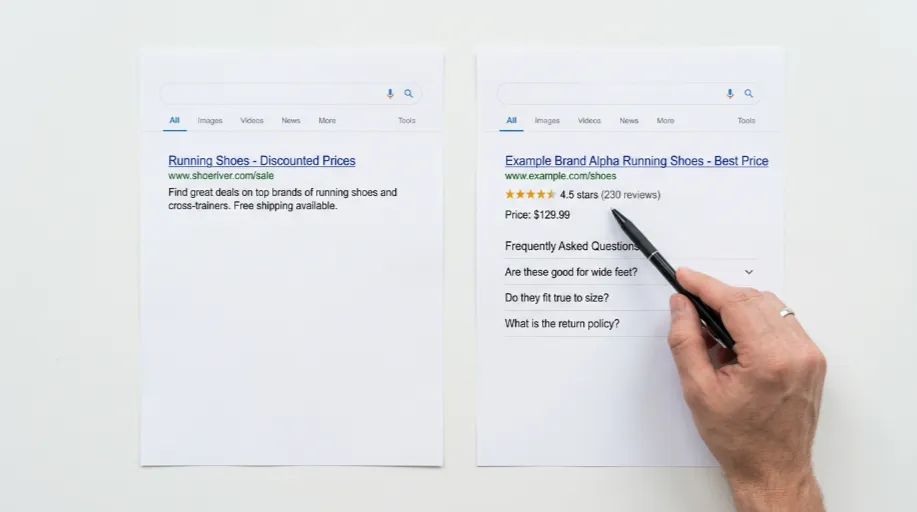
Most UK websites have some schema markup on them. Very few have the right schema, written correctly, on the right pages. That gap is why some businesses get star ratings, prices and FAQ dropdowns showing up in Google, while their competitors get a plain blue link. We look at your site, work out which schema.org types actually apply to your content, and check every existing tag against the Google Rich Results Test. Then we fix what is broken and add what is missing. This is not about copying a generic code snippet from a plugin. It is about matching the right structured data to what your page genuinely offers.
No lock-in contracts UK-based specialists Core Web Vitals certified
Web Ranko team working on Schema Markup
Rich result eligibility improved on 90% of audited pages

The Foundation

What schema markup does, and why most sites get it wrong

Schema markup is a bit of code added to your page that explains what your content actually is. Without it, Google has to guess whether a page is a recipe, a product, a review or a local business listing. With it, Google knows for certain. That certainty is what turns a plain search result into one with star ratings, prices, FAQ dropdowns or event dates attached. These are called rich results, and they take up more space on the page, which usually means more clicks.

The problem is that most schema markup on UK websites is added by a plugin and never checked again. It often uses the wrong schema type for the content, misses required fields, or breaks completely after a theme update. Google’s own Rich Results Test will show these errors clearly, but almost nobody looks. We start every project by testing your existing markup, page by page, before deciding what needs building from scratch and what just needs fixing.

Sites with plugin generated schema that has never been tested
Businesses missing star ratings or FAQ dropdowns that competitors already show
Ecommerce sites without correct Product or Offer schema
Local businesses missing LocalBusiness or service schema entirely
Agencies needing a schema specialist for a client project
Web Ranko Schema Markup specialist at work

Common issues we fix

Schema errors flagged in Google Search Console left unresolved High
Wrong schema type used for the actual page content High
Required fields missing from Product, Review or FAQ schema High
Duplicate or conflicting schema added by multiple plugins Med
No schema present at all on key commercial pages High
Star ratings not showing despite genuine customer reviews Med
Schema broken silently after a theme or plugin update Med
No process in place to check schema validity going forward High

What's Included

What's Included in Schema Markup

A comprehensive, senior-led service — not a checklist handed to a junior. Here's exactly what you get.

Full Schema Markup Audit

We test every page against the Google Rich Results Test and Schema.org guidelines, so you know exactly what is working, what is broken and what is missing.

  • Page by page structured data testing
  • Errors and warnings logged clearly for each page
  • Comparison against competitor rich result coverage
  • Priority list of fixes based on commercial impact

Schema Type Strategy

We work out which schema.org types genuinely apply to your content, rather than applying one generic type across every page on the site.

  • Content reviewed page by page for the correct schema type
  • Product, Service, LocalBusiness, FAQ and Review types covered
  • Plan built around which pages benefit most from rich results
  • No unnecessary or unsupported schema types added

JSON-LD Implementation

Structured data is written in clean JSON-LD format, the type Google recommends, and added to your site without slowing pages down or breaking existing code.

  • Clean JSON-LD written for each schema type
  • Validated against Google's structured data guidelines before going live
  • Added without conflicting with existing plugin generated schema
  • Documented clearly so future edits are simple

Rich Result Testing and Validation

Every piece of schema is tested in Google's own Rich Results Test before and after implementation, so you can see the change confirmed, not just promised.

  • Before and after Rich Results Test screenshots provided
  • Search Console structured data reports monitored
  • Fixes reapplied quickly if any errors reappear
  • Clear confirmation of rich result eligibility per page

Review and Rating Schema

For businesses with genuine customer reviews, we add the correctly structured Review and AggregateRating schema so star ratings can appear directly in search results.

  • Review schema built to Google's genuine review guidelines
  • AggregateRating markup added where review data supports it
  • No fake or unverifiable ratings used
  • Ongoing checks to keep rating data current

Ongoing Schema Monitoring

Schema can break silently after a site update. We check it regularly, so a rich result you have already won does not quietly disappear months later.

  • Scheduled structured data checks after major site changes
  • Search Console alerts reviewed for new schema errors
  • Quick fixes applied before rich results are lost
  • Simple monthly summary of schema health

Why It Matters

Why UK Businesses Choose Webranko for Schema Markup Services

Adding schema markup is easy. Adding the correct schema markup, tested properly, is not. We built our process around what Google's Rich Results Test actually checks for, not around a generic plugin setting left on default.

Web Ranko SEO team collaborating
Get a free Schema Markup audit

Every Page Tested, Not Assumed

We check your existing schema against the Google Rich Results Test first, so we know exactly what is broken before we touch a single line of code.

The Right Type for the Right Page

Product pages get Product schema. Service pages get Service schema. We match the type to the content, rather than using one type everywhere.

Senior Level Structured Data Experience

Your schema is written by practitioners who have implemented it across ecommerce, local business and content sites, not someone learning JSON-LD on your live pages.

Confirmed Results, Not Promises

We show you the before and after Rich Results Test outcome, so you can see the change confirmed rather than taking our word for it.

Monitoring So Results Do Not Disappear

Schema breaks silently more often than people realise. We keep checking after launch, so a rich result you have won stays won.

How We Work

How Webranko Handles Schema Markup Services

A clear process that starts with testing what you already have, then builds only the schema your content genuinely supports.

Web Ranko technical SEO team collaborating
Senior-only team. No junior handoffs.
Days 1 to 3

Structured Data Audit

We test every key page against the Google Rich Results Test, logging every error, warning and missing schema type we find.

Week 1

Schema Type Mapping

Each page is matched to the correct schema.org type based on its actual content, whether that is a product, a service or a local business listing.

Week 1 to 2

JSON-LD Build and Implementation

Clean, structured data is written and added to your site, checked carefully so it does not conflict with any existing plugin-generated schema.

Week 2

Rich Results Testing

Every page is tested again in Google's Rich Results Test to confirm eligibility, with before and after results documented clearly.

Ongoing

Monitoring and Maintenance

We check Search Console regularly for new schema errors, so a rich result you have already won does not quietly disappear.

Real Results

What Happens After Schema Markup Implementation

35+ Years of SEO and Web Experience
90% Of Audited Pages Gain Rich Result Eligibility
48hr Average Schema Audit Turnaround
100% JSON-LD Validated Against Google Guidelines
Priya Shah

We had schema markup on our site already from an old plugin, but nothing was actually working when Webranko tested it. They rebuilt our Product and Review schema properly, and our star ratings started showing in search results within about three weeks. We noticed more clicks on our best-selling product pages almost straight away.

Priya Shah Founder, Shah Home and Garden

In-Depth Guide

The Complete Guide to Schema Markup

Our specialists have written a comprehensive guide covering strategy, best practices, and the exact approaches we use for our clients.

Two businesses can rank in the exact same position on Google and get wildly different click-through rates. Star ratings, prices, FAQ dropdowns, and event dates sitting right there in the search result before anyone’s even clicked. That’s schema markup doing its job, and it’s one of the most underused levers in UK SEO right now.

We scope this as strategy and markup selection specifically, working out which schema types actually apply to your business and building the JSON-LD to support them, while broader technical implementation across the site sits under our wider technical SEO work.

What Schema Markup Actually Does

Schema markup is structured code, almost always JSON-LD these days, added to a page to explicitly tell Google what your content means rather than leaving it to infer. A recipe page without schema is just paragraphs and images to a crawler. With schema, it explicitly states the cook time, the ratings, the ingredients, the calories, and everything else laid out in a format search engines can lift directly into a rich result.

It doesn’t guarantee a rich result. Google decides that. But without valid schema present, you’re not even in the running.

Where Most UK Sites Get This Wrong

In our audits across client sites, three mistakes come up constantly.

  • Schema copied wholesale from a template site with fields that don’t match the actual page content
  • Multiple conflicting schema types stacked on one page, confusing the crawler about what the page is really for
  • Markup that was correct at launch but never updated as prices, reviews or stock levels changed

That third one catches out a lot of e-commerce sites specifically. Google’s guidelines are fairly strict on this. Schema has to reflect what’s genuinely visible and accurate on the page, not a snapshot from eighteen months ago.

Schema Types Worth Prioritising by Business Type

Different businesses benefit from different schema, and spreading effort thin across everything rarely pays off compared to nailing the two or three that actually matter.

Business Type Priority Schema What It Unlocks
Local service business Local Business, Review Star ratings, address, opening hours in results
Ecommerce Product, Offer, Aggregate Rating Price, stock status, review stars
Content or blog site Article, FAQPage, How-To Rich snippets, FAQ dropdowns
Event or venue Event Dates, ticket links, and location directly in SERP
Professional services Service, Organization Trust signals, service listings

A plumbing business chasing a product schema is wasted effort. Getting the LocalBusiness and Review schema properly configured tends to move the needle far more for that kind of site.

Building and Validating Schema Properly

Writing the JSON-LD is only step one. Validation is where a lot of otherwise solid work falls apart.

Every schema implementation we put live goes through Google’s Rich Results Test before anything gets pushed to a production site. Warnings get investigated even when they don’t block eligibility outright, because a warning today can quietly become a hard error after Google updates its schema requirements, which happens more often than people expect.

We’ve picked up client sites before where the schema had been sitting broken for months, technically present in the code, but throwing errors that meant none of it was being read. Nobody noticed because the page still looked fine to a normal visitor. Rich results simply never appeared, and revenue that should have come from those extra SERP features never showed up either.

Auditing Existing Schema Before Adding More

If a site already has schema in place, and plenty do thanks to page builders and SEO plugins bundling in generic markup, the first job isn’t writing new code. It’s finding out what’s actually there, whether it’s valid, and whether it even matches the business.

This audit work often runs alongside a broader SEO audit, since schema problems rarely exist in isolation. A site with outdated or conflicting schema usually has other technical issues sitting alongside it that are worth catching in the same pass.

Try Our Schema Opportunity Finder:

To find your own markup gaps, use our Schema Opportunity Finder below. Simply paste your URL to receive a prioritised list of eligible schema types your page is currently missing, helping you target the highest-impact rich results first.

Keeping Schema Accurate Over Time

Schema isn’t a set-and-forget job, which is something a lot of agencies gloss over when quoting for the work. Prices change, reviews accumulate, and stock goes in and out. Markup that doesn’t keep pace with the actual page content risks Google treating it as unreliable, which can affect trust in your structured data more broadly, not just on the one outdated page.

For businesses running multiple product or service pages, this usually means building schema into the content workflow itself rather than treating it as a one-off technical task. We handle this as part of ongoing SEO support for a number of clients through Webranko, keeping schema reviewed alongside regular content and technical checks rather than left to drift.

FAQ

Schema Markup questions, answered honestly

Questions UK businesses ask us most before starting a schema markup project.

Ask us anything
What is schema markup and why does it matter

Schema markup is code added to your page that tells Google exactly what your content is. It is what allows rich results like star ratings, prices and FAQ dropdowns to appear in search results instead of a plain link.

Does my plugin already add schema markup for me

Many WordPress plugins add basic schema automatically, but it is often the wrong type or missing required fields. We test every plugin generated tag against the Google Rich Results Test before assuming it works.

Will schema markup guarantee a higher Google ranking

No. Schema does not directly boost rankings. It helps Google understand your content clearly and makes rich results possible, which can improve the click-through rate even at the same ranking position.

Which schema types matter most for a small UK business

Local business, service, review, FAQ and product schema cover most small business needs. The right combination depends entirely on what your site actually offers, which is why we audit before building anything.

How long does a schema markup project take

A full audit typically takes 48 hours. Implementation across a standard site usually takes one to two weeks, depending on how many page types need different schema built for them.

Is this different from your Technical SEO service

Yes. This service focuses specifically on schema strategy, auditing and structured data validation. Broader technical fixes such as site speed and crawl issues are handled under our Technical SEO service.

Start today

Missing Out on Rich Results in Google

Every day without correct schema markup is a search result competitors can win instead of you. Let's check what is broken and what is missing.

What's in your free audit

Delivered in 48 hours by a senior specialist.

Full structured data test against Google's Rich Results Test
Review of every page type for the correct schema
Clear priority list of fixes based on commercial impact
No lock in contract, support scales with how much schema needs building