

In-Depth Guide
The Complete Guide to WordPress Security
Our team has written a comprehensive guide covering technical specs, best practices, and the exact approaches we use on every project.
Most WordPress sites get hacked not because they are the target but because they leave an exploit open that has a public document that bots scan for constantly. The process of WordPress security hardening UK closes those gaps before an automated scanner ever finds anything worth exploiting. There’s no glamors in it. The point of a hardened site is that nothing happens there, which is why you never hear about it.
Where Hardening Fits Against Audit and Recovery
Most businesses will waste expensive resources treating all of their security as equally essential when in fact security work is delivered in three distinct phases.
Examine, Eliminate, Then Fortify.
An audit reviews your current setup and identifies issues that have already become weak points and provides a fix plan. When a site is compromised, the injected code is cleaned off the site, and a functional state is returned. The act of removing malware. Hardening refers to a site which is secure, but it has particular technical weaknesses that an attack may succeed through.
If you confuse these stages, you will get strange results. When a business orders an audit they receive long lists of vulnerabilities but nothing is done about them. the diagnosis was correct The incident did not lead to action. A site can go through malware removal and be declared clean, but if it’s not hardened afterwards, it’s wide open to that same attack a second time.
Why Prevention Costs Less Than Recovery
The need for hardening is easily established once you weigh it against the alternative. The cost of recovering from a hack is almost always higher than the relevant prevention work would have cost. The same applies to malware removal, downtime, data loss risk, damage to customer trust, and the disruption that follows. When hackers breach a website, search engines can suspend or drop the website while problems are being resolved. The security problem will turn into a revenue problem in days rather than weeks.
What Attackers Are Actually Scanning For
Automated Bots, Not Targeted Attacks
Most WordPress compromises don’t involve a human deliberately targeting your business. Automated bots scan huge numbers of sites continuously for a small, well known set of exploitable weaknesses. They don’t care what your business does or how much traffic you get. They’re looking for one open door, and if your site has it, you’re tagged regardless of size.
This changes what hardening is actually for. You’re not defending against a determined attacker studying your specific site. You’re making sure your site never matches the conditions an automated scanner is looking for, which is a far more manageable and well defined goal than it first sounds.
The Four Weaknesses That Get Exploited
Four categories explains most successful WordPress compromises. When an admin username is a default or guessable, password guessing attacks don’t get limited. There is no two-factor or rate limiting. XML-RPC endpoints can be found that allow remote attackers to conduct brute force attacks and denial-of-service-style attacks despite being considered unnecessary on many sites. Obsolete themes or plugins, containing a vulnerability that was publicly revealed and patched, but no update was done. This could be due to lax file permissions, which allow an attacker far more access than they ever should have.
How Webranko’s Hardening Process Closes These Gaps
Locking Down the Login Layer
Login is the most targeted entry point, so hardening starts here. Two factor authentication means a compromised password alone isn’t enough to grant access. Rate limiting stops automated brute force attempts from running thousands of password guesses uninterrupted. Removing default admin usernames and generic account names takes away the easiest first guess in any credential attack.
Blocking Bad Requests Before They Land
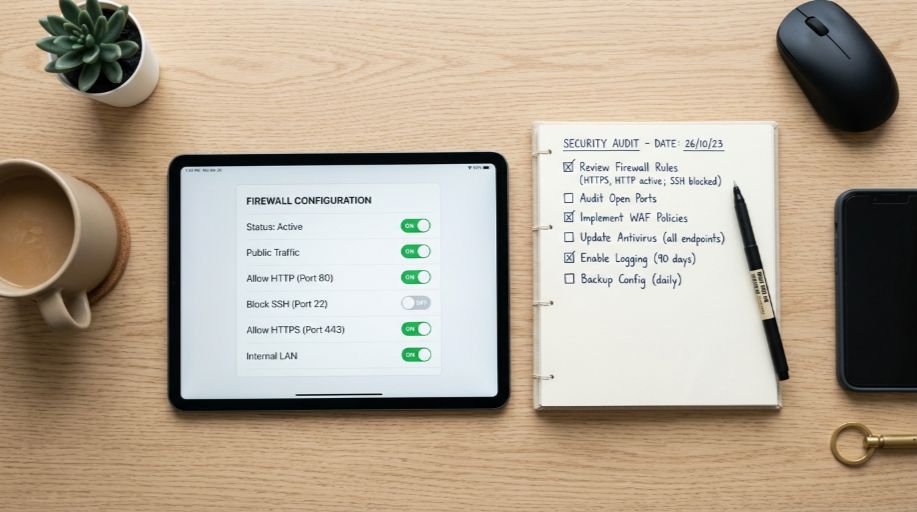
A properly configured firewall sits in front of the WordPress installation and filters out malicious request patterns. Combined with disabling or restricting XML RPC where it isn’t actively needed, this closes two of the most abused technical entry points without affecting how genuine visitors use the site.
Keeping Every Component Current
New plugin and theme vulnerabilities get disclosed constantly, and the gap between disclosure and active exploitation by bots is often measured in days. A disciplined update process, alongside removing abandoned plugins that will never receive another security patch, keeps this door shut on an ongoing basis rather than as a single task ticked off once.
Restricting the Damage Any Single Breach Can Do
File and directory permissions decide how much damage is possible even if some access is gained. Webranko tightens these to the minimum the site actually needs to function, disables file editing from inside the WordPress admin panel, and protects sensitive configuration files, so one point of failure never turns into full control of the site.
Hardening Is Never a One Off Task
New vulnerabilities surface every week across the WordPress plugin ecosystem, so a hardening configuration set once and never revisited slowly loses effectiveness as weaknesses appear that weren’t accounted for originally. This is exactly where Website Security Monitoring earns its place, watching continuously for the moment a hardened defence stops holding rather than waiting for the next scheduled review to find out.
Hardening also naturally connects to larger changes on your site. If you’re moving hosts or rebuilding on a new server, our WordPress Migration Service folds hardening into the process from the start, so the new environment goes live secure rather than getting hardened as an afterthought once it’s already public.
If you’re unsure whether your current setup has any weaknesses at all, a proper security audit is the right place to begin before hardening work starts. Get in touch with Webranko and we’ll assess your site, show you exactly where the gaps are, and build a hardening plan around what your business actually needs.