


Skip to content
Velour and Co case study — Web Ranko
  1. Home
  2. Case Studies
  3. Velour and Co
WooCommerce Case Study

WooCommerce SEO Case Study: 312% Revenue Growth for a UK Fashion Retailer

312% revenue growth in 9 months for a WooCommerce fashion store that had never done SEO properly

Velour and Co Fashion Retail Manchester, UK 9 months
312%
Revenue increase
800+
Keywords on page one
9 Months
Time to results
4.1x
Return on SEO investment

Get your free consultation

Tell us about your project — we'll respond within 48 hours with honest advice.

No spam. No sales pitch. Just honest advice.

Velour and Co

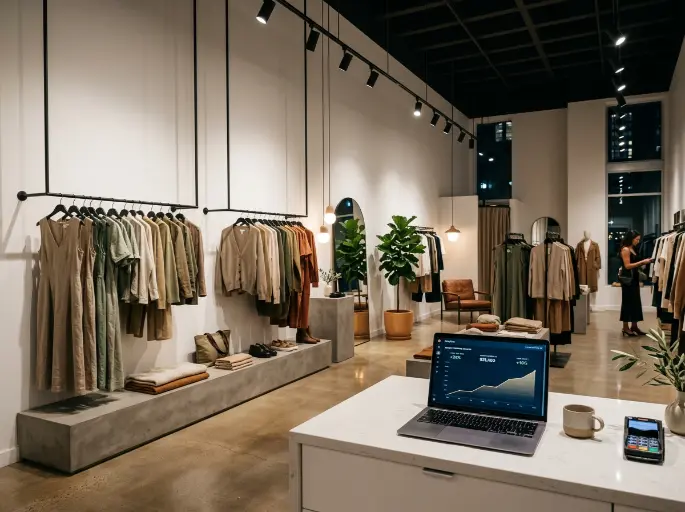
Velour and Co. is a Manchester-based independent women's fashion retailer selling contemporary clothing and accessories through their WooCommerce store. They had a strong product range and loyal repeat customers, but their organic search presence was almost nonexistent, and the vast majority of their revenue was coming through paid social ads with no sustainable organic channel in place.

Fashion Retail Manchester, UK 2024 9 months Technical SEO On-Page SEO Off-Page SEO Local SEO eCommerce SEO Content Strategy WooCommerce Speed Optimisation
Velour and Co — Fashion Retail

The Problem

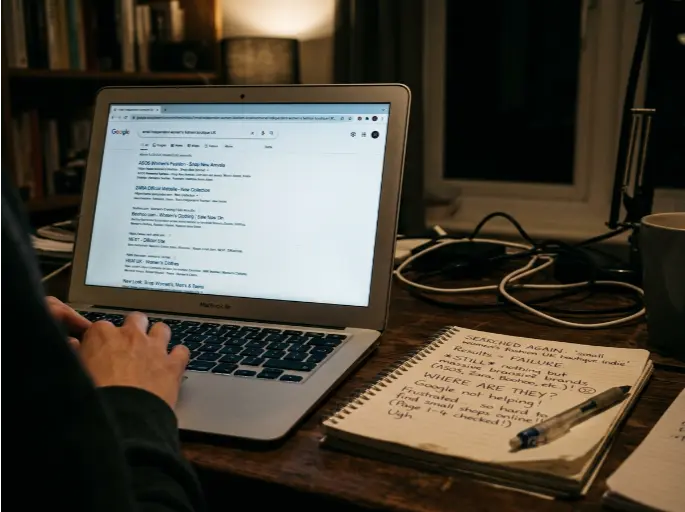
A WooCommerce store invisible to Google with thin pages and zero organic strategy

When Velour and Co. came to us, their WooCommerce store had been live for three years but had never had any serious SEO work done on it. A full technical audit revealed the kind of issues we see regularly on e-commerce sites that have grown organically without any SEO oversight. Product pages were being indexed with duplicate title tags pulled straight from the product name with no optimisation. Category pages had fewer than 50 words of content on them. Google had nothing meaningful to work with on the pages that mattered most for commercial search intent.

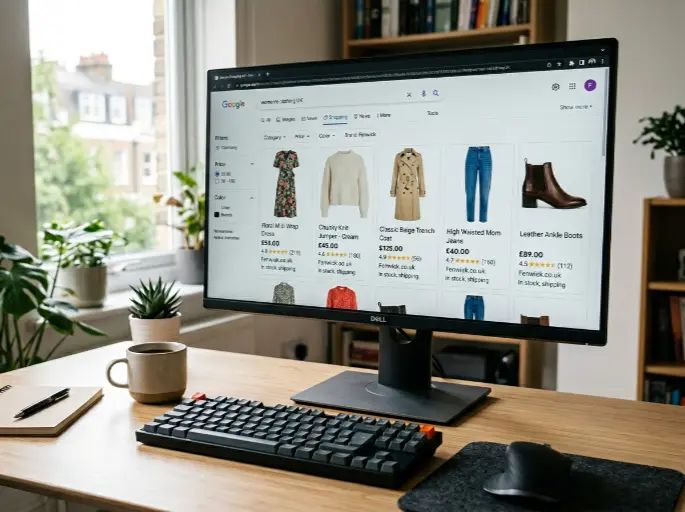
The product schema situation was equally poor. Not a single product page had structured data in place which meant Google Shopping results were showing incomplete information, and click-through rates were suffering as a result. Internal linking between category pages and product pages was almost completely absent. The site architecture made it genuinely difficult for Google to understand which pages were most important, and the crawl budget was being wasted on hundreds of filtered URL variations that had been left open for indexing by mistake.

  • Category pages with fewer than 50 words of content providing no ranking signal
  • Product pages using duplicate auto-generated title tags with no keyword targeting
  • Zero product schema markup causing incomplete Google Shopping appearances
  • Crawl budget waste from hundreds of unblocked filter and sort URL variations
  • No internal linking strategy between category pages and product pages
  • Site speed scoring 34 on mobile PageSpeed Insights due to unoptimised image pipeline
Velour and Co — challenges before Web Ranko

Our Approach

A structured ecommerce SEO rebuild focused on category pages, schema and site architecture

We treated this as a ground-up e-commerce SEO rebuild rather than a series of quick fixes layered on top of existing problems. The strategy had three clear phases. Phase one addressed every technical issue that was limiting crawlability and wasting indexing budget. Phase two rebuilt the category pages and product page templates with proper content and keyword targeting. Phase three introduced product schema sitewide, fixed the internal linking architecture and began a content-led approach to capturing upper-funnel fashion search traffic that would feed commercial pages with authority.

  • Full WooCommerce technical SEO audit and remediation
  • Category page content rebuild across 18 core category pages
  • Product page title tag and meta description optimisation across 340 products
  • Product and BreadcrumbList schema markup implemented sitewide
  • Crawl budget fix via robots.txt and canonical tag strategy for filtered URLs
  • Internal linking architecture rebuild across category and product page hierarchy
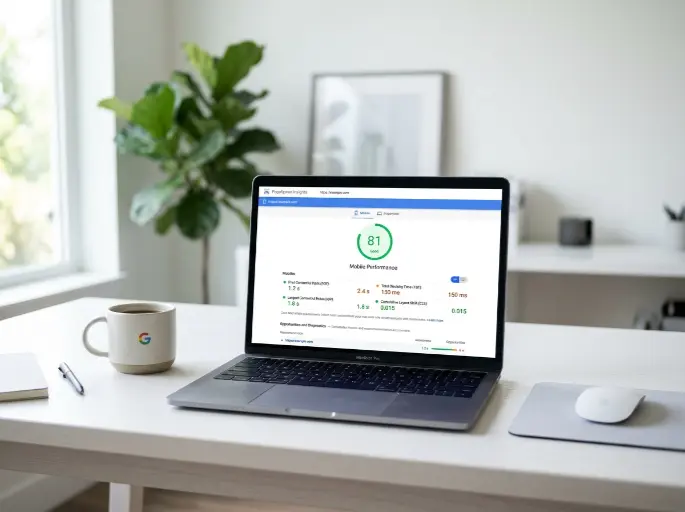
  • Site speed optimisation bringing mobile PageSpeed score from 34 to 81
  • Upper funnel fashion content targeting informational keywords feeding category pages
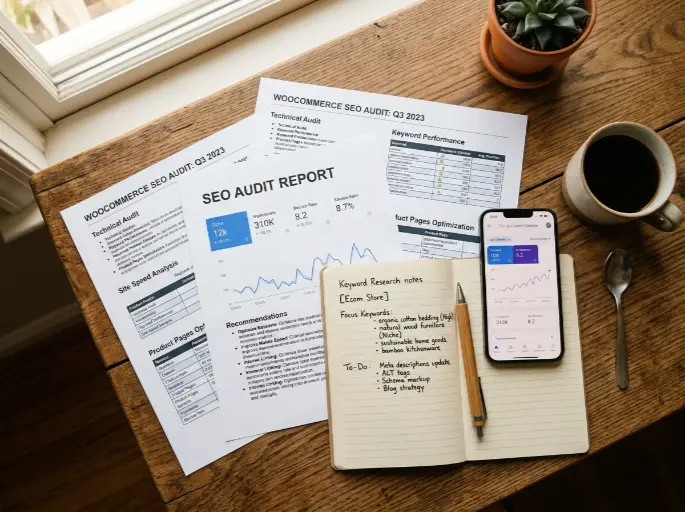
Web Ranko working on Velour and Co

Real Results

Nine months later organic revenue had grown by 312% and the store was no longer dependent on paid ads

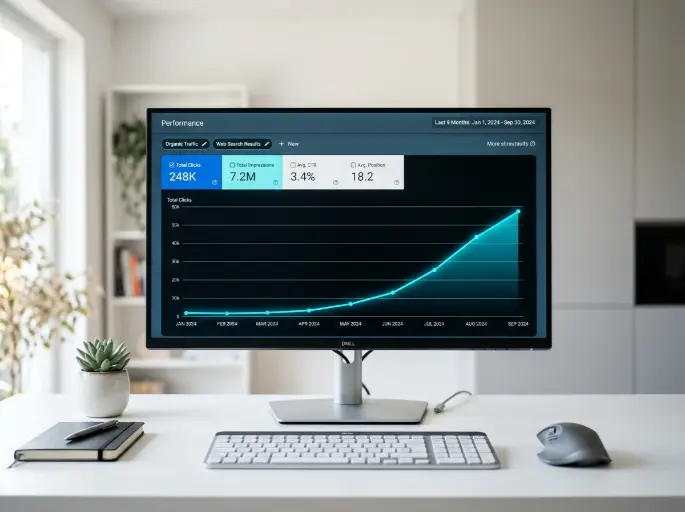
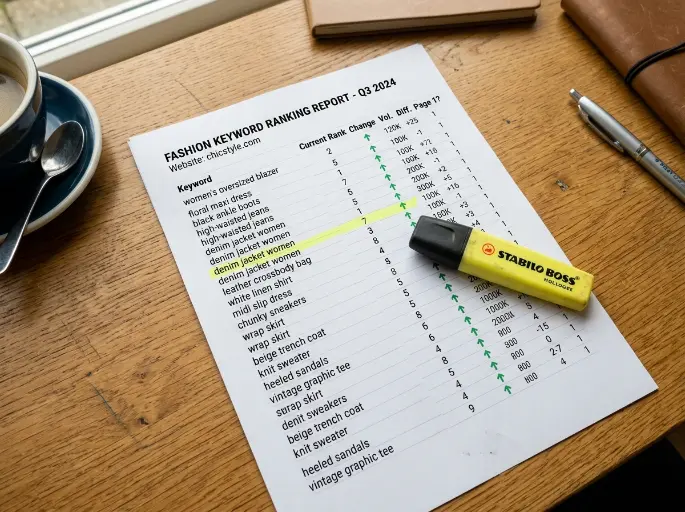
The technical fixes in phase one produced the first visible movement. Within six weeks of resolving the crawl budget issues and implementing canonical tags on filtered URLs, Google Search Console was showing a significant increase in pages being properly indexed. The category page content rebuild drove the first major ranking gains around month four. By month six, Velour and Co. had over 400 keywords ranking on page one. By month nine that number had grown to over 800, and organic revenue for the month was up 312% compared to the same month the previous year. The store went from deriving roughly 8% of revenue from organic search to over 41% within the nine-month campaign period.

312%
Organic revenue increase
800+
Keywords ranking on page one
41%
Revenue share from organic search
34 to 81
Mobile PageSpeed score improvement
Velour and Co — results screenshot from Google Search Console Google Search Console data

Side by Side

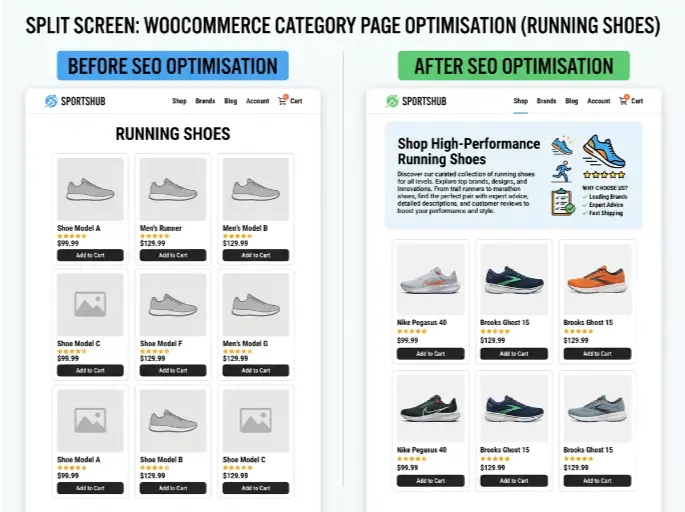
Before & After

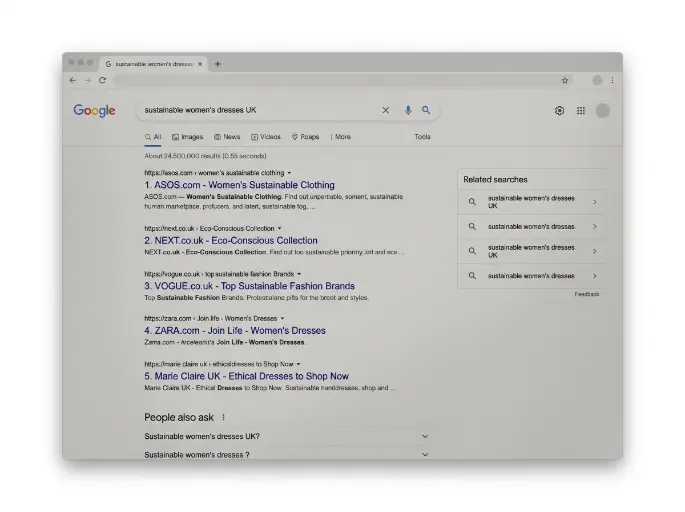
Velour and Co — before Web Ranko Before
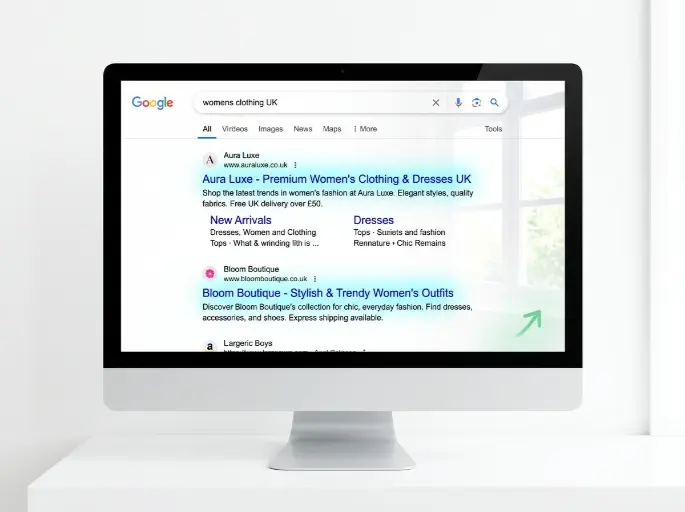
Velour and Co — after Web Ranko After

How We Got There

Project timeline

Month 1 to 2

Technical Audit and Crawl Budget Fix

Full WooCommerce technical audit completed. The robots.txt file was updated to block, filter and sort URL variations. Canonical tags implemented across paginated and filtered pages. XML sitemap cleaned to include only indexable canonical URLs. Mobile speed optimisation began with an image pipeline rebuild using WebP conversion and lazy loading.

Crawlable page count reduced from 4,200 to 890 canonical URLs, mobile PageSpeed improved from 34 to 81
Month 2 to 5

Category Page and Product Page SEO

All 18 core category pages were rewritten with 300 to 500 words of targeted content, including primary keywords, buying intent signals and internal links to key product pages. Product title tags and meta descriptions rewritten across all 340 products with keyword targeting built around product type, colour, occasion and style search queries.

First page one rankings appearing by month four, 400 plus keywords in top ten by month six
Month 4 to 7

Schema Markup and Internal Linking

Product schema implemented across all 340 product pages including price, availability, rating and brand fields. The BreadcrumbList schema was added sitewide. Internal linking audit completed and a new linking structure built to pass authority from category pages down to key product pages and from informational content up to commercial category pages.

Google Shopping rich results appearing for 280 plus products, click through rates up 34%
Month 6 to 9

Content Strategy and Upper Funnel Capture

Twelve long-form fashion guide articles were written targeting informational keywords with high commercial intent, such as 'how to style wide-leg trousers UK' and 'best occasionwear dresses UK 2024'. Each piece is built with strong internal links pointing to relevant category pages to pass topical authority and drive qualified traffic into the purchase funnel.

800 plus keywords on page one by month nine, organic revenue share growing from 8% to 41%
Sophie Hargreaves

Before working with Web Ranko, we were spending a significant amount every month on Meta ads just to keep sales consistent. The results from organic search had always been almost nothing. Within six months of starting the SEO campaign we were seeing more organic revenue than we had ever generated before, and by month nine we actually reduced our ad spend because we didn't need to lean on it as heavily. The product page work and the category content completely changed how Google sees our store. I genuinely didn't think SEO could move this fast for an e-commerce business, but the data doesn't lie.

Sophie Hargreaves Founder, Velour and Co Manchester

How Our WooCommerce SEO Strategy Increased Revenue by 312%

This ecommerce SEO case study UK documents one of the more satisfying projects we have worked on. Velour and Co had a genuinely good product, a loyal customer base, and a WooCommerce store that had been live for three years. What they didn’t have was any meaningful organic presence. Almost every sale came from paid social ads, and Sophie, the founder, knew it wasn’t sustainable long term. She wanted organic search to carry some of that weight. Nine months later, it was carrying most of it.

The Store Before SEO: Good Products, Invisible Pages

Velour and Co is a Manchester based independent women’s fashion retailer. Contemporary clothing, occasionwear, accessories, the kind of range that sells well when people can find it. The problem was discoverability. Their WooCommerce store had never had any serious SEO investment, and it showed in every metric that mattered.

Monthly organic traffic when we started was sitting at around 820 visits. Fewer than 20 keywords were ranking anywhere in the top twenty on Google. The store was generating roughly 8% of its total revenue from organic search, with the remaining 92% coming from Meta ads and email. For a three year old ecommerce business with over 340 products, that ratio told a clear story about what had been missing.

Metric Starting Position
Monthly organic traffic 820 visits
Keywords ranking in top 10 Fewer than 20
Organic revenue share 8% of total revenue
Mobile PageSpeed score 34
Products with schema markup 0
Category pages with real content 0 of 18

This is actually one of the most common situations we see when new ecommerce clients come to us. The store works fine technically in the sense that people can browse and buy. But from Google’s perspective it’s almost invisible because the foundations that make pages rankable simply aren’t there.

What the Audit Found

The first thing we do on any ecommerce project is a full technical audit before touching a single piece of content. What we found at Velour and Co was a textbook example of an unoptimised WooCommerce store.

The crawl budget situation was the most urgent problem. WooCommerce filter and sort parameters were generating thousands of URL variations, color filters, size filters, sort by price, sort by newest, all of which were open to indexing. Google was crawling 4,200 URLs when there were only around 890 canonical pages worth indexing. Every crawl was wasting budget on URLs that would never rank and should never have been indexed in the first place.

Category pages were essentially empty from a content perspective. The average category page had fewer than 50 words: just a page title and a grid of product images. Google had nothing to work with to understand what each category was about or why it should rank for relevant search terms.

Product pages were pulling their title tags automatically from the product name with zero keyword optimisation applied. A dress called the Margot Wrap Dress had a title tag that said exactly that and nothing else. No colour, no style descriptor, no occasion signal, nothing that matched how real people search for products like that online.

And there was not a single piece of product schema markup anywhere on the site. Every Google Shopping appearance was showing incomplete information because the structured data that tells Google about price, availability, and ratings simply didn’t exist.

Our WooCommerce SEO Approach

Good WooCommerce SEO results don’t come from doing one thing well. They come from fixing multiple layers of the same problem simultaneously. Our approach at Web Ranko on ecommerce projects always starts with the technical foundation because there is no point building content on a site that Google can’t crawl properly.

Fixing the Technical Foundation

We updated robots.txt to block all filter and sort URL variations from crawling. Canonical tags were implemented across paginated and filtered pages to consolidate signals to the right URLs. The XML sitemap was rebuilt to include only the 890 canonical indexable pages. Within six weeks of these changes going live, Google Search Console was showing a significant improvement in how many of the right pages were being discovered and indexed.

The mobile speed work ran alongside this. Image pipeline rebuilt with WebP conversion and lazy loading. Unused plugin scripts dequeued. The result was a mobile PageSpeed score that increased from 34 to 81, directly impacting Core Web Vitals pass rates and overall crawlability.

Category Page Content Rebuild

This was the highest-impact piece of work in the entire campaign. All 18 core category pages were rewritten with 300 to 500 words of genuine targeted content. Not filler, not keyword stuffing, but real buying intent copy that described the range, addressed common questions shoppers have in that category and included natural internal links to key product pages within the collection.

The product page SEO work ran in parallel. Every one of the 340 product title tags was rewritten to include the product type, key descriptors, and occasion or style signals that matched real search behavior. A dress became “Margot Wrap Midi Dress in Sage Green for Wedding Guest Occasions” rather than just “Margot Wrap Dress.”

Product Schema and Internal Linking

Product schema went live across all 340 product pages covering price, availability, rating and brand. The BreadcrumbList schema was added sitewide. The internal linking audit identified dozens of category pages that had zero links pointing to their most important products and a new linking structure was built to fix that properly.

Upper Funnel Content

From month six, we began publishing long-form fashion guide content targeting informational keywords with strong commercial intent. Each piece was built with direct internal links into relevant category pages. This layer of the strategy significantly accelerated keyword growth in the final three months of the campaign.

The Results After 9 Months

Metric Before After 9 Months
Monthly organic traffic 820 visits 6,240 visits
Keywords ranking on page one Fewer than 20 800 plus
Organic revenue share 8% 41%
Mobile PageSpeed score 34 81
Products with schema markup 0 340
Google Shopping rich results 0 280 plus products

By month nine organic revenue had grown by 312% compared to the same month the previous year. Sophie reduced her Meta ad spend by 35% in the final quarter of the campaign because the organic channel had grown strong enough to carry the volume that paid social had previously handled.

That shift, from paid dependency to organic sustainability, is what genuinely good ecommerce SEO case study UK results look like in practice.

What Made the Difference

Three things drove the majority of the results in this campaign.

  • Category page content was the biggest single lever. Google cannot rank an empty page. Eighteen category pages that previously had nothing now had real content signalling topical relevance and buying intent, and those pages became the primary drivers of organic traffic growth.

  • Crawl budget optimization unlocked the indexing potential that had been sitting unrecognized. Reducing the crawlable URL count from 4,200 to 890 meant Google started spending its crawl budget on pages that could actually rank rather than wasting it on filter variations.

  • Product schema changed the appearance and click-through rate of every Google Shopping result that Velour and Co appeared in. More complete Shopping listings converted clicks at a higher rate, and that improvement compounded over the nine-month period.

If your WooCommerce store is in a similar position and you want to understand what online store organic traffic UK growth could look like for your business, get in touch and we will give you a straight, honest assessment of where the opportunity is.

For more insights into successful strategies, you can explore our case studies or learn about our approach to digital growth.

Start today

Ready to make your WooCommerce store work as hard as your products do

Most e-commerce stores are leaving significant organic revenue on the table because of fixable technical and content issues. Tell us about your store and we will show you exactly where the opportunity is.

Free audit — delivered in 48 hours
No lock-in contracts — month-to-month
Senior specialist on your project from day one
Measurable results or we tell you why not

Get your free consultation

Tell us about your project — we'll respond within 48 hours with honest advice.

No spam. No sales pitch. Just honest advice.