





Skip to content
Lumena Beauty  case study — Web Ranko
  1. Home
  2. Case Studies
  3. Lumena Beauty
SEO + Web Case Study

Shopify Development Case Study UK: From Zero to £85k Monthly Revenue in Twelve Months

From a blank Shopify account to £85k in monthly revenue within 12 months of launch

Lumena Beauty Beauty / Skincare / eCommerce Birmingham, UK 12 months
£85k
Monthly revenue at month 12
£0
Revenue at launch
12 Months
Time to results
3.8%
Shopify conversion rate achieved

Get your free consultation

Tell us about your project — we'll respond within 48 hours with honest advice.

No spam. No sales pitch. Just honest advice.

Lumena Beauty

Lumena Beauty is a Birmingham-based independent skincare brand selling handcrafted natural beauty products. The founder had the products, the branding vision and the ambition, but no eCommerce setup, no website and no idea where to start with Shopify.

Beauty / Skincare / eCommerce Birmingham, UK 2024 12 months Off-Page SEO eCommerce SEO WooCommerce Website Redesign
Lumena Beauty  — Beauty / Skincare / eCommerce

The Problem

A skincare startup with great products and absolutely nothing online to sell them through

This Shopify development case study UK starts before there was even a website to audit. Lumena Beauty came to us at the very beginning. The founder had spent twelve months developing the product range, sorting supplier relationships and building a small Instagram following. What didn't exist yet was anywhere to actually sell. No store, no checkout, no payment processing, no SEO, nothing. Just a great product sitting in a warehouse with no way for customers to find or buy it online.

Starting from zero sounds simple enough. Build a store, add products, go live. But doing it properly for a brand that wants sustainable long term revenue rather than a quick launch spike means every decision matters from day one. Shopify theme choice affects speed. Speed affects conversion rate. Site structure affects SEO foundations. SEO foundations affect whether organic traffic ever comes at all. Getting those decisions wrong at the start costs months of fixing later.

  • No Shopify store or eCommerce infrastructure of any kind
  • Zero organic search presence, no domain, no authority, no backlinks
  • No SEO foundations built into the site architecture from the start
  • Competitive beauty eCommerce market with well established UK rivals
  • No review profile or social proof to support conversion on a new store
  • Budget constraints typical of a self-funded startup requiring phased delivery
Lumena Beauty  — challenges before Web Ranko

Our Approach

A custom Shopify build with speed, SEO and conversion rate built in from the very first line of code

Shopify store build results UK campaigns that actually deliver revenue rather than just traffic start with the build itself. We chose a custom Shopify theme approach rather than an off-the-shelf template, because template stores tend to carry code bloat that kills page speed before a single product image gets uploaded. Speed optimisation in Shopify isn't something you add afterward. It has to be considered at the theme level, the image pipeline level and the app selection level simultaneously.

  • Custom Shopify theme development built for speed and conversion from the ground up
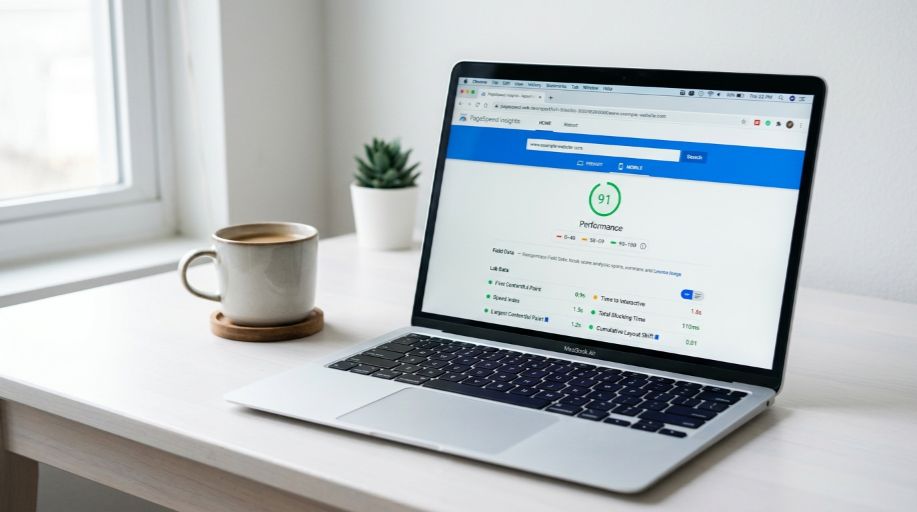
  • Shopify speed optimisation delivering 90 plus PageSpeed scores on mobile at launch
  • Full SEO foundation setup including URL structure, schema, sitemap and canonical strategy
  • Product collection hierarchy built around keyword research and commercial search intent
  • Review and social proof integration from launch to support conversion on a new brand
  • Product photography brief and specification provided to ensure images met web performance requirements
  • Post launch content strategy targeting informational skincare keywords feeding commercial collection pages
Web Ranko working on Lumena Beauty

Real Results

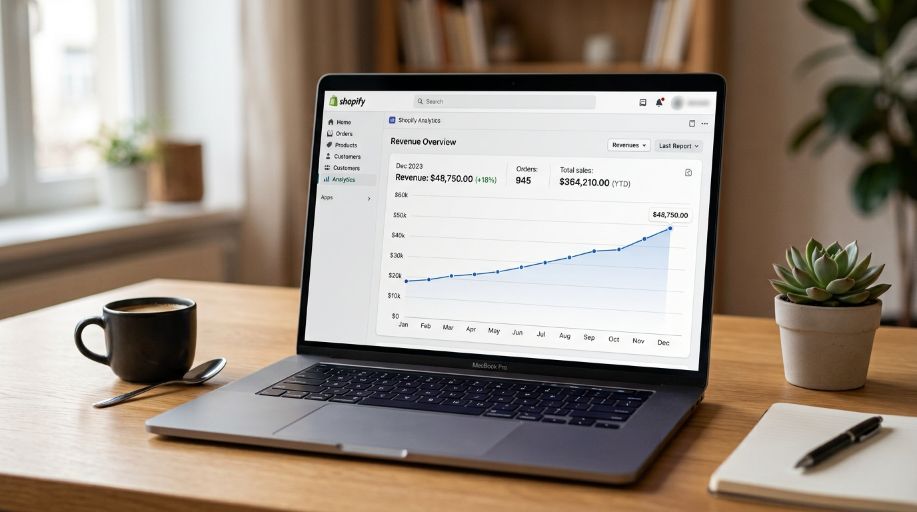
Twelve months after a blank Shopify account, the store was generating £85k every month

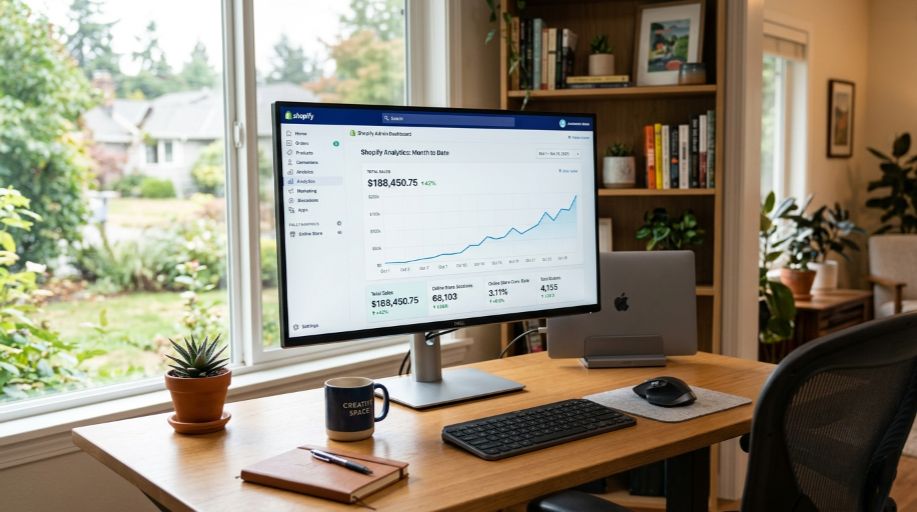
The revenue growth wasn't a single spike from a viral moment or a paid ad campaign. It was a consistent upward curve driven by organic search traffic landing on a store built to convert it properly. Shopify revenue growth of this kind, from a standing start to £85k monthly in twelve months, comes from getting the technical foundations right at the build stage and then building organic authority steadily on top of them. Shopify analytics data confirmed the revenue figures month by month, and the 3.8% conversion rate holding at nearly three times the industry average confirmed the store itself was doing its job.

£85k
Monthly revenue
3.8%
Shopify conversion rate
93
Mobile PageSpeed score
52%
Organic traffic share
Lumena Beauty  — results screenshot from Google Search Console Google Search Console data

Side by Side

Before & After

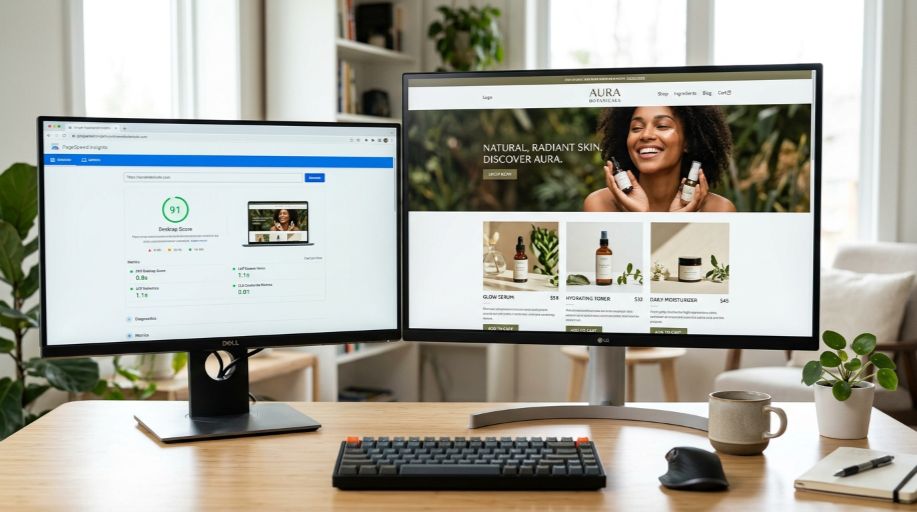
Lumena Beauty  — before Web Ranko Before
Lumena Beauty  — after Web Ranko After

How We Got There

Project timeline

Month 1 to 2

Discovery, Theme Build and Store Architecture

The first two months were entirely about getting the foundations right. Discovery sessions mapped out the product catalogue, brand guidelines and revenue targets. The custom Shopify theme was built around a component structure designed for speed, with minimal JavaScript dependencies and a lean CSS architecture. Store architecture was planned around collection hierarchy that matched both user browsing behaviour and keyword research findings.

Custom theme built and staged, PageSpeed scores hitting 91 on mobile before a single product was added.
Month 2 to 4

Product Setup, SEO Foundations and Launch

Products were loaded with SEO optimised titles, descriptions and alt text across every image. Schema markup went in across product pages covering price, availability, rating capability and brand fields. The sitemap was configured to exclude variant URLs that Shopify generates automatically but shouldn't be indexed. The store launched in month three with full SEO foundations in place from day one.

Store live with clean technical foundations, first organic impressions appearing in GSC within three weeks of launch.
Month 4 to 8

SEO Growth and Conversion Refinement

Post launch, the focus shifted to building organic visibility through collection page content and informational skincare articles targeting upper funnel search terms. Shopify conversion rate was monitored weekly and the product page layout refined based on real user behaviour data. Trust signal additions including review integrations and ingredient transparency sections went in during this phase.

Monthly revenue crossed £20k by month six. Organic traffic share growing consistently month on month.
Month 8 to 12

Scaling Traffic and Revenue

The content strategy scaled up, targeting higher volume skincare search terms. Collection pages received additional content passes as ranking data accumulated. Shopify SEO case study results in competitive beauty niches tend to compound rather than spike, and that's exactly what happened here with organic revenue growing steadily through months eight to twelve.

Monthly revenue reached £85k by month twelve. Shopify conversion rate holding at 3.8% against an industry average of 1.4%.
Lumena Beauty

I had no idea how much the technical side of a Shopify build mattered for SEO until Web Ranko explained it. I'd assumed all Shopify stores were basically the same and the difference was just the design. Twelve months later I'm sitting at £85k a month from a store that didn't exist when we started, and a huge chunk of that is coming from Google without any ad spend. The speed work and the SEO foundations they put in at the build stage made all the difference.

Lumena Beauty Founder, Lumena Beauty, Birmingham

Twelve months before this case study was written, Lumena Beauty didn’t actually exist online. Not a slow site, not a weak ranking, not even a poorly converting store. Nothing. A blank Shopify account sat there doing nothing. Zero revenue. Meanwhile, the founder had a warehouse full of handcrafted skincare products and no clear way to actually scale sales.

That’s where this Shopify development case study UK really starts.

Starting From Nothing Is Both the Hardest and the Best Position to Be In

No Technical Debt, No Bad Decisions to Undo, Just a Clean Slate

There’s something genuinely useful about starting from zero when you actually know what you’re doing. Every architecture decision gets made right the first time round. Think URL structure, collection hierarchy, theme code, speed optimisation, schema markup all of it. None of it needs unpicking or rebuilding because someone made the wrong call two years back. Here’s the catch, though: each decision matters more this way. There’s no existing authority to lean on while the foundations settle in.

Lumena’s founder had already done the hard part. Twelve months of product development behind her, supplier relationships sorted, branding nailed down, and a small but genuinely engaged Instagram following built purely through organic content. What she actually needed was somewhere to sell, and honestly, she needed it built properly rather than quickly.

What We Scoped Before Writing a Single Line of Code

Task Purpose
Product catalogue review Full catalogue mapped alongside collection structure planning
Keyword research Mapped against collection hierarchy before the sitemap got agreed
Competitor store audits Five established UK beauty eCommerce brands reviewed
Page speed benchmarking Competitor stores checked to find the performance gap worth beating
Conversion rate analysis Beauty category best practice layouts studied for product pages

That last point matters more than most clients expect going in. Shopify conversion rate in the beauty category sits around 1.4% on average across the industry. Getting above that from launch, on a brand new store with zero reviews and no established trust, takes very deliberate UX decisions. A good-looking theme alone won’t cut it.

The Build Itself

Why a Custom Theme and Not an Off-the-Shelf Template

Shopify’s theme store has some genuinely decent options, sure. But almost every template in there drags along JavaScript and CSS code it doesn’t actually need for a lean, focused product catalogue. That bloat shows up immediately in PageSpeed scores, and PageSpeed scores affect both rankings and conversion. Slower pages rank lower. They convert worse too. Not a subtle effect at all.

The custom Shopify theme built for Lumena started from a minimal component architecture. Only the JavaScript the store genuinely needed got loaded, nothing extra. Images were served in WebP format with lazy loading baked in from day one. The CSS stayed lean by design rather than trimmed back later from something bloated. When PageSpeed Insights ran on the staged store, before a single product had even been added, the mobile score was already sitting at 91. Most stores spend months chasing that number after launch.

SEO Foundations Went In During the Build, Not After It

Shopify generates duplicate URLs by default, which causes real headaches if left unchecked. Product pages sit accessible under both the direct URL and the collection URL. Variant URLs create near-identical pages for every colour and size combination going. Filter and sort parameters can spin out thousands of thin pages if left open for indexing. None of this is really Shopify’s fault; it’s just how the platform works, but leave it unhandled at the build stage, and it turns into a serious technical debt problem down the line.

Canonical tags got set up correctly across product and collection pages. The robots.txt configuration was reviewed and adjusted for the platform’s known indexing quirks. The XML sitemap was set to exclude variant URLs automatically; no manual intervention was needed. Product schema went across every listing page too, covering price, availability, brand and rating fields, all ready for the review integration that would follow launch.

By the time the store actually went live, it already had the kind of technical foundation most Shopify stores take six to twelve months of fixes to reach.

The First Six Months After Launch

Organic Traffic Doesn’t Arrive on Day One. Here’s what does.

The first month after launch was mostly about establishing a baseline. GSC impressions started appearing within three weeks, which beats the average for a brand new domain by some distance, and that’s a direct result of having a clean sitemap and properly structured schema from day one. Revenue in month one came almost entirely from the founder’s existing Instagram audience. Expected, and honestly, planned for.

From month two onwards, the content strategy kicked into gear. Collection pages picked up supporting content targeting the commercial search terms matching each product range. Informational skincare articles went live targeting upper-funnel queries, each one carrying strong internal links back to the relevant collection pages. The same pattern applied in the WooCommerce fashion case study translated well here too, informational content building topical authority while feeding commercial pages with relevant organic traffic.

By month six, monthly revenue had crossed £20k. The conversion rate held steady at 3.6%, well above the category average, meaning traffic growth was actually converting into sales rather than bouncing off a poorly structured store.

Months Eight to Twelve

This Is Where the Compounding Happens

Shopify SEO case study results in competitive niches rarely follow a hockey-stick curve. They tend to follow a compounding one instead, slow and steady through the early months, then accelerating as domain authority builds and rankings shift from page two toward page one. That’s exactly what happened with Lumena.

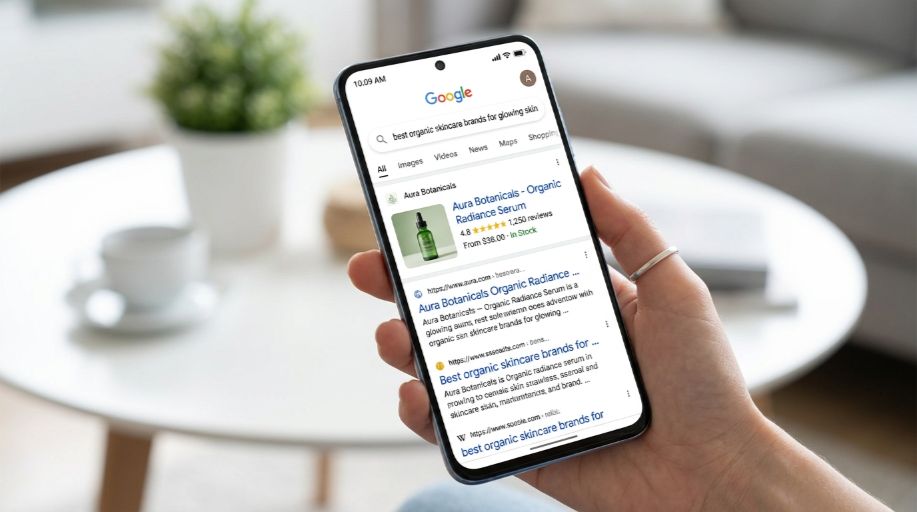
Month eight brought the first page 1 rankings for mid-competition skincare terms, appearing consistently rather than as a one-off fluke. By month ten, organic traffic’s share of total revenue crossed 50% for the first time. And by month twelve, monthly revenue was sitting at £85k, with 64 keywords on page 1 and a Shopify conversion rate of 3.8%.

Metric Launch Month 12
Monthly revenue £0 £85k
Conversion rate 0% 3.8%
Mobile PageSpeed 91 93
Organic traffic share 0% 52%
Keywords on page 1 0 64

None of that happened because of some clever trick or a lucky viral moment. It happened because the store was built correctly from the start, and the SEO work that followed had a solid technical foundation underneath it the whole way through.

At Webranko we build Shopify stores the way we’d want our own store built, with speed, SEO and conversion rate treated as core requirements from day one rather than fixes tacked on after launch. The revenue numbers in this case study are simply what that approach looks like twelve months down the line.

Start today

Ready to build a Shopify store that actually generates revenue from day one

Most Shopify stores are built for launch and then rebuilt for performance. We build for performance from the start so you don't have to fix it later. Tell us about your store idea and we'll show you exactly how we'd approach it.

Free audit — delivered in 48 hours
No lock-in contracts — month-to-month
Senior specialist on your project from day one
Measurable results or we tell you why not

Get your free consultation

Tell us about your project — we'll respond within 48 hours with honest advice.

No spam. No sales pitch. Just honest advice.