






Ranking an accountancy firm on Google isn’t remotely like ranking a restaurant or a builder. The rules shift entirely. Financial services content falls under what Google calls YMYL, short for Your Money or Your Life. That label means Google’s quality systems scrutinise these pages harder, longer, and with far more suspicion than most other niches get. A dodgy restaurant review is mildly annoying at worst. Bad financial advice? That costs people real money. Google knows this, and its algorithm reflects it completely.
That’s where this SEO for accountant UK case study begins. Not with keywords, not with content plans, but with a much bigger question: did Google trust this website enough to rank it at all?
The Problem Was Trust, Not Traffic
Eight Years of Trading and Almost No Online Presence
Pemberton & Associates had been operating out of Leeds for nearly a decade. A solid firm, strong client retention, and the kind of word of mouth that keeps a professional services business ticking along nicely. What they didn’t have was any meaningful digital footprint. Search for chartered accountants in Leeds, and they simply weren’t there. Competitors owned the map pack entirely. Organic results were dominated by firms half Pemberton’s age with a fraction of the experience behind them.
The audit explained why almost instantly.
Thin Pages in a Niche That Demands the Opposite
Service pages were short. Painfully short, in places. Take the tax planning page for small businesses, one of the most searched topics in this entire space, sitting at under 180 words. No author credited anywhere. No qualifications mentioned. Nothing beyond a thin paragraph and a contact form. E-E-A-T signals for financial services were essentially absent. And in a YMYL niche, that doesn’t just dent rankings; it can actively flag the site as low quality within Google’s own quality rater systems.
| Gap | Detail |
|---|---|
| Author credentials | Nowhere to be seen, despite four ACA- and ACCA-qualified accountants on the team |
| Team page | None existed: no photos, no professional background for anyone at the firm |
| Disclaimers | Financial service disclaimers inconsistent across pages |
| Schema | No schema identifying the business as an AccountingService entity |
| GBP profile | 12 reviews and almost no service information after eight years of trading |
| Local citations | Zero across professional accountancy directories |
| National visibility | Chartered accountant Google rankings UK showing only branded terms in GSC |
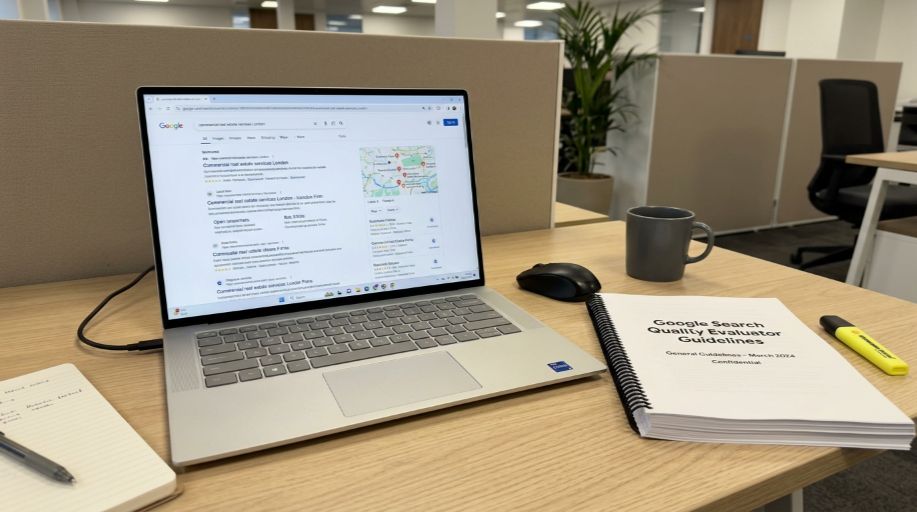
Here’s the honest bit: Google’s quality raters are real people, working through published guidelines in YMYL niches. We read those guidelines cover to cover before writing a single word of new content. Because in this space, understanding how humans judge trust matters just as much as understanding the algorithm itself.
Building Trust Before Building Rankings
E-E-A-T Infrastructure Came First
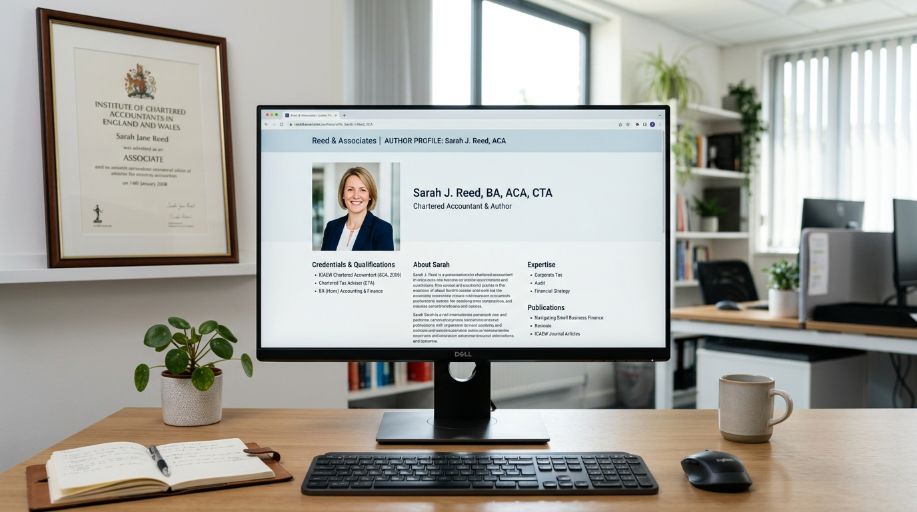
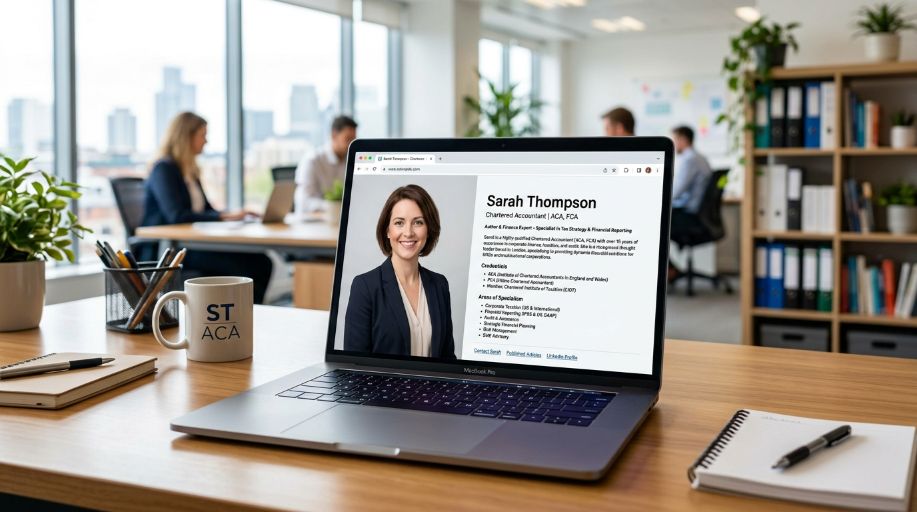
Phase one was all about making the site actually look and function like what it was, a practice run by qualified, experienced professionals. Author profiles went up for all four senior accountants, each one listing qualifications, years in practice, and specialist areas. Not generic corporate bios either. Real professional credentials, laid out clearly, exactly the sort of thing a quality rater would look for.
A proper team page followed, photos included. The financial services disclaimer structure got reviewed and standardised across every single service page. YMYL SEO compliance isn’t something you tick off a list once and forget. It’s a set of signals built consistently, site-wide, until the pattern becomes unmistakable.
What showed up in GSC within six weeks was telling. Pages that had been crawled regularly but largely ignored started appearing properly in index coverage reports. Google was finally starting to take the site seriously.
Rebuilding the Content From the Ground Up
Service Pages That Actually Reflected the Firm’s Expertise
Every core service page got rebuilt with a named, credentialled author attached. Tax planning, business accounting, VAT returns, payroll management, company formation – all of it expanded significantly. Pages grew from under 200 words to over 1,000, each one properly structured with H2 and H3 headings. FAQs went in, drawn from genuine client questions. Internal links now tie related service areas together properly.
This wasn’t content padded out for length’s sake. The accountants themselves reviewed drafts and added the specific, experience-backed detail you simply can’t fake. That’s really the whole point of accountancy firm digital marketing done properly in a YMYL niche. The expertise has to be genuine, because Google’s systems are getting increasingly good at spotting when it isn’t.
This same content-led, authority-building approach runs through everything we do at Webranko, whatever the sector.
Getting the Local Presence Right
Eight Target Locations, Each One Treated Individually
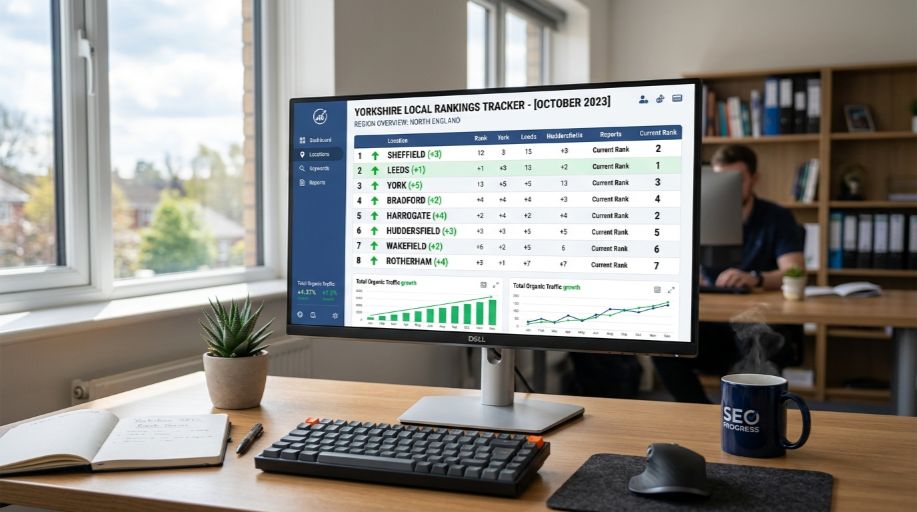
Accountant local pack visibility doesn’t come from a single GBP profile pointing at one office, not in a case like this. Pemberton served clients across eight locations in Yorkshire, and each one needed its own dedicated page, its own local content, and its own supporting citations. That’s what actually gets a firm showing up in map searches across multiple towns.
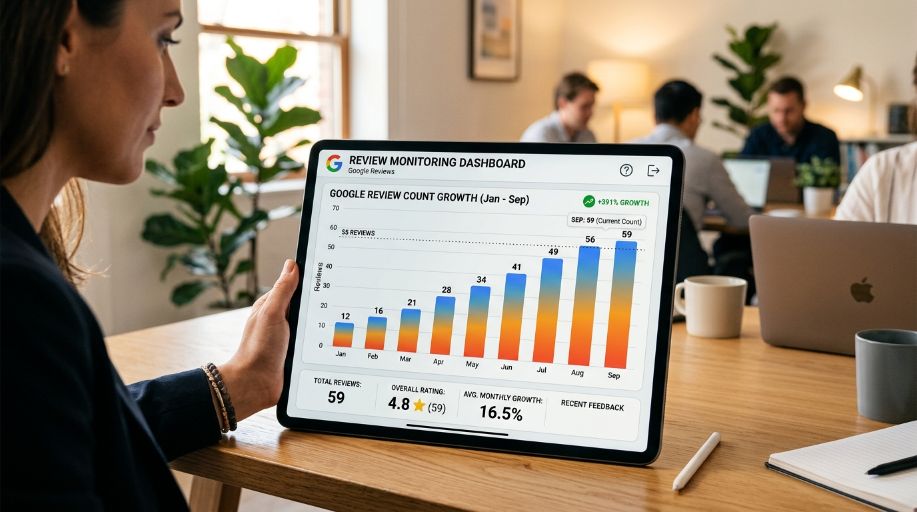
GBP was rebuilt from scratch. Service categories corrected, coverage areas properly defined, photos refreshed throughout. A review request system went in via post-engagement follow-ups, and reviews climbed from 12 to over 55 across the campaign, every single one answered individually by the firm.
Local citation building across 35-plus UK directories ran alongside this, making sure NAP data matched exactly wherever it appeared. Professional directory listings, ICAEW-aligned ones included, were prioritised right alongside the standard business listings.
Eight Months Later
What the Data Actually Showed
By month eight, the gap between where this site started and where it ended up was hard to argue with.
| Metric | Before | After 8 Months |
|---|---|---|
| Keywords ranking | Fewer than 10 | 200 plus |
| Local pack positions | Zero | 8 locations |
| Organic enquiries | Baseline | Up 4x |
| Google reviews | 12 | Over 55 |
| Service page average words | Under 200 | 1000 plus |
That 4x growth in organic enquiries was checked against the firm’s own CRM records, not just click data. Real enquiries, from real businesses, who found a chartered accountancy firm through organic search rather than a referral or a directory listing.
The Thing Most Accountancy Firms Miss Entirely
Content and links matter in every niche, sure. But in YMYL, they come second. The first question Google asks isn’t whether a page is optimised well. It’s whether the people behind that page can actually be trusted with someone’s serious financial decisions. The estate agent case study shows what technical fixes alone can achieve. This one shows what happens when you have to earn Google’s trust first before any of the technical work can deliver a thing.