





Nobody calls a property agent because they found them on page four. That’s just not how it works, and everyone in the industry knows it already. Yet somehow, Harford & Gray Property had been running a live website for years, ranking for nothing except their own brand name. That’s where we came in.
This SEO for estate agent UK case study isn’t about content strategy or social media posting schedules. It’s a technical story through and through. The site was broken in ways that weren’t visible from the outside, and until those problems got fixed, nothing else stood a chance of moving.
What the Crawl Actually Showed Us
200 Crawl Errors and Thousands of Pages Google Should Never Have Seen
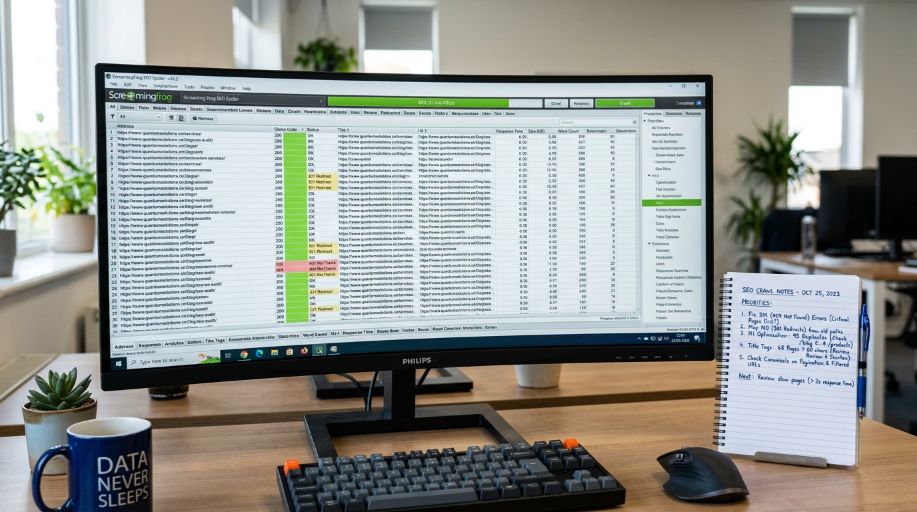
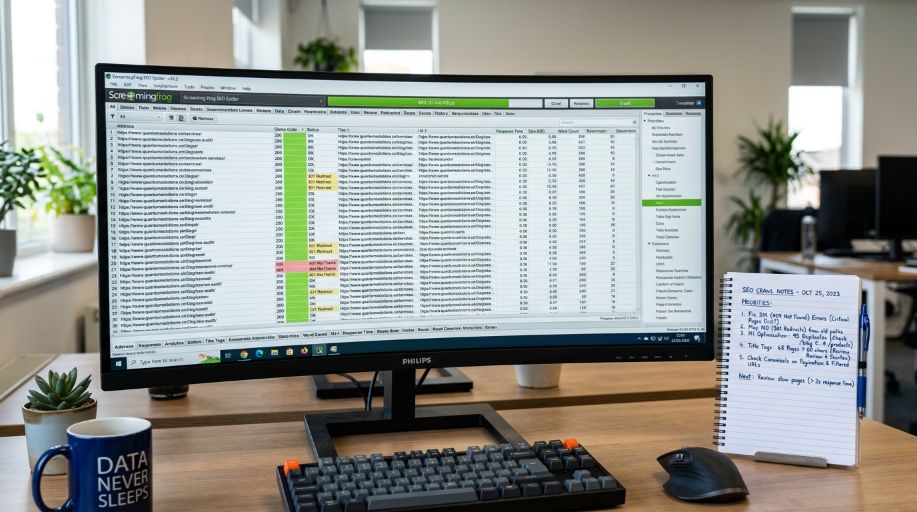
The Screaming Frog audit came back worse than the client expected, honestly. Over 200 crawl errors sat unresolved, broken internal links mixed in with missing canonical tags and redirect chains that had built up over years without anyone cleaning them out. Serious problems on their own, sure, but not actually the biggest issue we found.
The real problem was the indexed page count. Property listing sites generate URLs on the fly, and without proper controls on filter and sort settings, every single combination turns into a brand new URL. Three-bedroom houses in Bristol. Same houses, sorted by price this time. Same houses again, sorted by price with parking added. Each combination becomes its own page. Each page gets crawled. And each one ends up competing against the others for exactly the same searches.
The GSC Coverage Report Confirmed It
Google had over 4,000 pages from this site sitting in its index, yet the agency never had more than 380 properties listed at any given time. Where did that gap come from? Duplicate, thin, auto-generated pages, mostly. These pages ate through crawl budget and dragged rankings down with them. Letting agent Google rankings weren’t going anywhere while Google kept wasting its time crawling thousands of near-identical URLs.
The Speed Problem Made Everything Worse
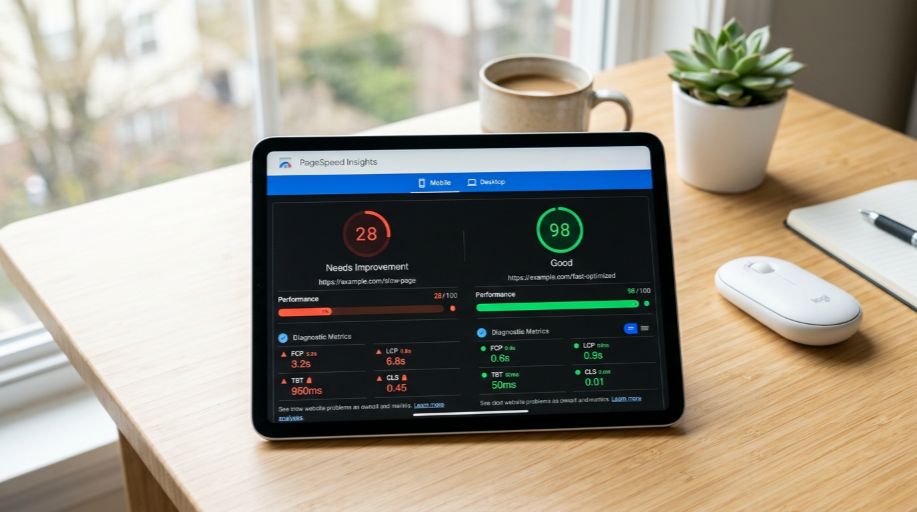
A mobile PageSpeed score of 23 isn’t slow. It’s genuinely broken. Unoptimised images everywhere, render-blocking scripts loading before any actual content, zero lazy loading in sight. Google’s Core Web Vitals data showed failing scores across both Largest Contentful Paint and Cumulative Layout Shift. And for a site where most users are browsing properties on their phone during a commute or a lunch break, a score of 23 is basically unusable.
Fixing the Foundation Before Anything Else
Crawl Budget Was the Priority
Robots.txt got updated straight away to block every filter and sort URL parameter variation going. Canonical tags went across every paginated and filtered listing page, all pointing back to the clean root URL. The XML sitemap was rebuilt entirely from scratch, this time including only the 380 pages that actually deserved a place in the index.
Within three weeks, the GSC coverage report started shifting noticeably. Crawl errors began clearing out. The indexed page count started dropping steadily. Google was finally spending its time on pages that mattered instead of thousands of duplicates nobody was ever going to search for.
Core Web Vitals and Schema Came Next
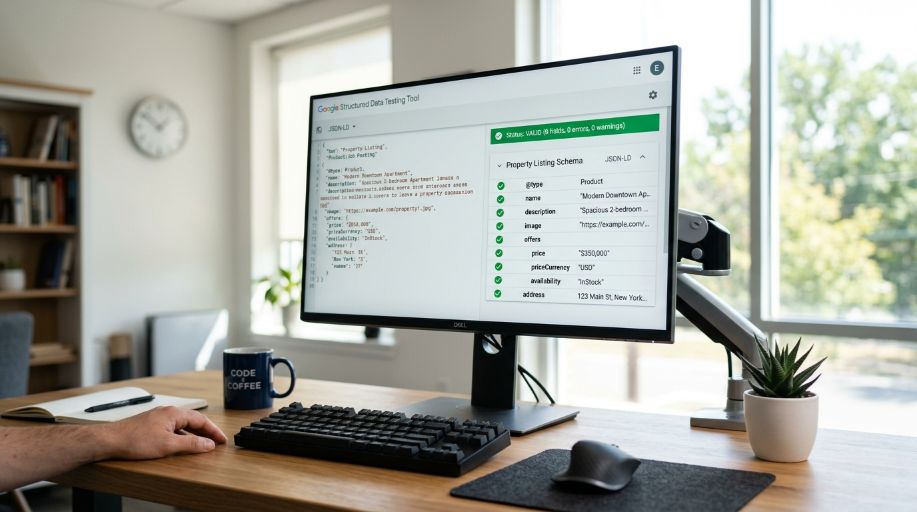
Every image across the site got converted to WebP format with lazy loading built in. Render-blocking scripts were deferred so actual page content could load first for a change. Property schema markup was built and rolled out across all active listing pages, covering property type, price, location, availability, and agent details. That last part mattered more than most clients expect going in, because without schema, Google has no structured way to read a property listing at all. It can see the words sitting on the page, sure, but it can’t reliably connect a three-bedroom house to a specific postcode and a monthly rental price.
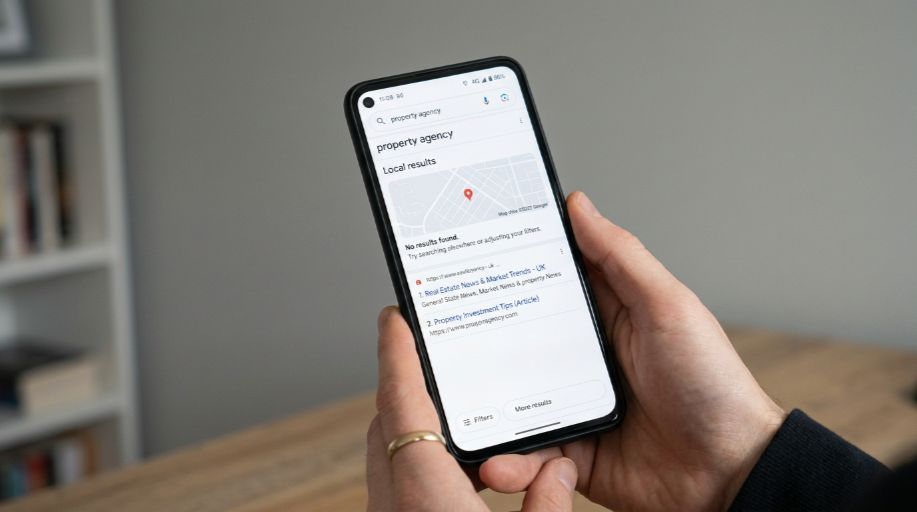
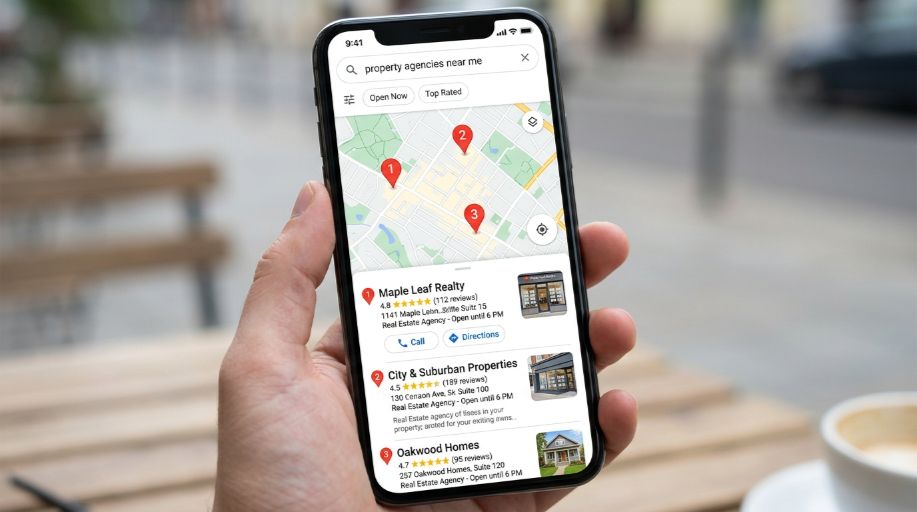
The estate agent GBP profile got rebuilt around the same stage too, with correct service categories, current photos, and proper opening hours in place. Property portal SEO UK work doesn’t exist in a vacuum, and the Maps profile carries genuine weight for local property searches.
Building on the Technical Foundation
On-Page Work and Rental Listings Content
Once the crawl was sorted and the site actually loaded properly, attention shifted to on-page SEO across area and property type pages.
Rental listings content got written around how tenants genuinely search, steering well clear of generic letting agent phrases in favour of specific combinations of area, property type, and price range that actually matched real search behaviour.
Every area page received unique content built around its own local market. Nothing copied, nothing templated with the town name swapped in.
Internal linking was tightened across the whole site too, passing authority properly from the homepage down through property type pages and into the area-specific content sitting beneath them.
This layered approach isn’t a one-off either, it’s something we apply consistently across sectors. You can see a similar pattern play out in the construction company case study, where the same foundation-first method delivered 3x more enquiries within six months.
What Seven Months of Technical SEO Actually Delivered
The Numbers From GSC and the CRM
By month seven, the gap between where this site started and where it landed was significant enough that the client went back and checked the data twice, just to be sure.
| Metric | Before | After 7 Months |
|---|---|---|
| Organic property enquiries | Baseline | Up 450% |
| Mobile PageSpeed score | 23 | 91 |
| Indexed pages | Over 4,000 | 380 canonical |
| Crawl errors | 200 plus | Zero |
| Keywords on page 1 | Fewer than 5 | 38 |
That 450% growth in organic enquiries was checked against the agency’s own CRM records, not just estimated from GSC click data. Real enquiries, from real people, who found Harford & Gray through organic search rather than a referral or a property portal listing somewhere else.
Why the Technical Work Was What Unlocked It
Content alone wouldn’t have moved these numbers. Links wouldn’t have either, not on their own. The site had a fundamental problem with how Google was reading and crawling it, and until that got fixed, everything else was really just piling more layers onto a broken foundation.
The honest truth about real estate SEO case study results is pretty simple, when you get down to it. The property sector is full of broken websites. Most were never properly audited in the first place. Plenty of estate agent sites were built by web designers with little SEO knowledge behind them, and dynamic URL issues like these can quietly destroy a site’s crawl budget without anyone noticing. These problems stay hidden unless someone actually runs a proper crawl. At Webranko, every technical project starts there, because that’s genuinely where you see the real picture.