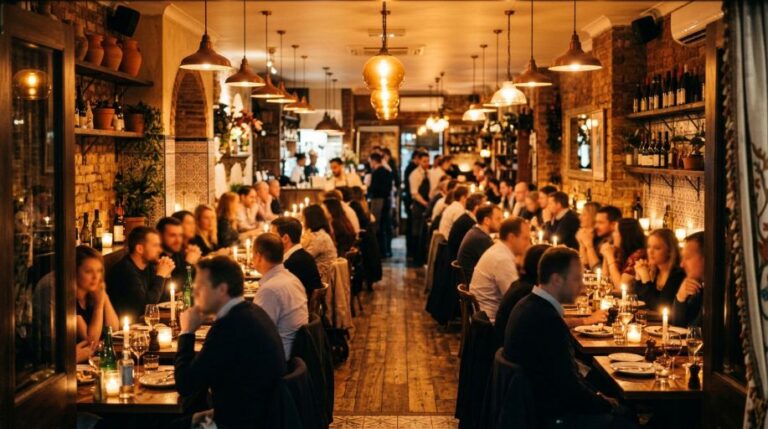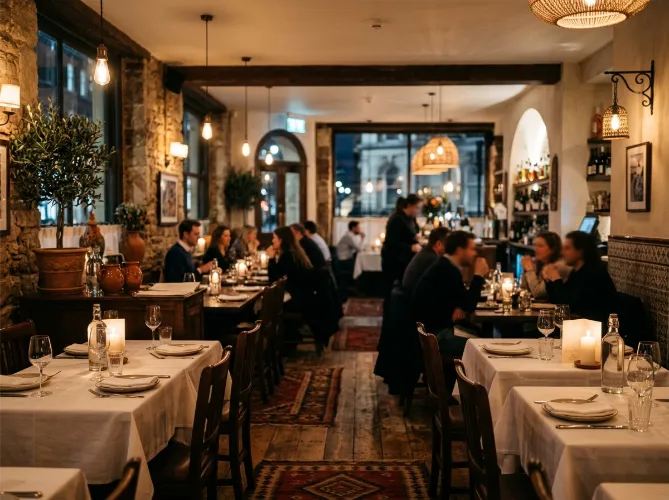
The Olive Tree wasn’t struggling because the food was bad. Not even close. Regulars kept coming back week after week, and honestly, the reviews from people who’d actually eaten there were glowing. So what was the actual problem? Simpler than you’d think, and way more frustrating. New customers just couldn’t find them online. This SEO for restaurants UK case study tells the story of how we fixed that, rebuilding the website and the local search presence side by side until table bookings climbed 180% in five months flat.
What We Found When We Looked Under the Hood
The Website Was Doing More Harm Than Good
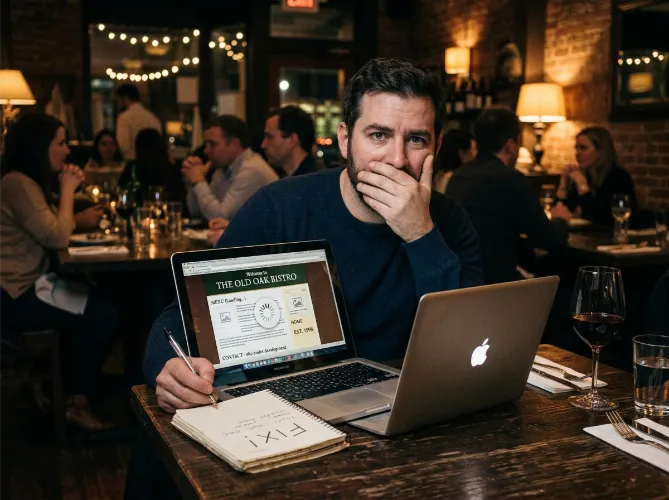
For years, the restaurant had been running on a Wix site. Nobody really chose it carefully; it just got built once, then sat there untouched while everyone forgot it existed. Three clicks deep, that’s where you’d find the menu. Booking system? None. Just a phone number buried in the footer that went unanswered half the time during service. Load that site up on a phone from a Google search, and you’re stuck with something slow and confusing enough to make anyone bounce within seconds.
The Google Business Profile Was Just as bad.
Photos hadn’t been updated in years. Opening hours were wrong, and not just in one place, either, at least two. The menu on the profile? Didn’t match a single thing the kitchen had actually served for the better part of eighteen months. We checked the map pack for restaurants nearby, and four competitors sat right at the top. Some had worse reviews, sure, but their profiles were complete and active, and that’s exactly what Google trusted more.
Here’s What the Full Audit Actually Found
| Issue | Detail |
|---|---|
| Website platform | Outdated Wix site loading slowly on mobile with zero booking functionality |
| GBP listing | Incorrect hours, old images, an inaccurate menu |
| Schema markup | No restaurant schema anywhere on the site |
| Local citations | None across UK hospitality and review directories |
| Booking connection | No link whatsoever between search visibility and table reservations |
| Menu structure | Completely unfriendly to search engines |
Hospitality SEO UK problems tend to look exactly like this, again and again. The dining room itself? Rarely the actual issue. It’s everything built around it online that falls apart.
Why We Rebuilt the Website and the SEO at the Same Time
Running Both Tracks in Parallel Was the Only Approach That Made Sense
Optimising a slow Wix site for local search made zero sense on its own. And launching a gorgeous new website with no local visibility to drive traffic to it? Just as pointless. So both tracks kicked off on the exact same day.
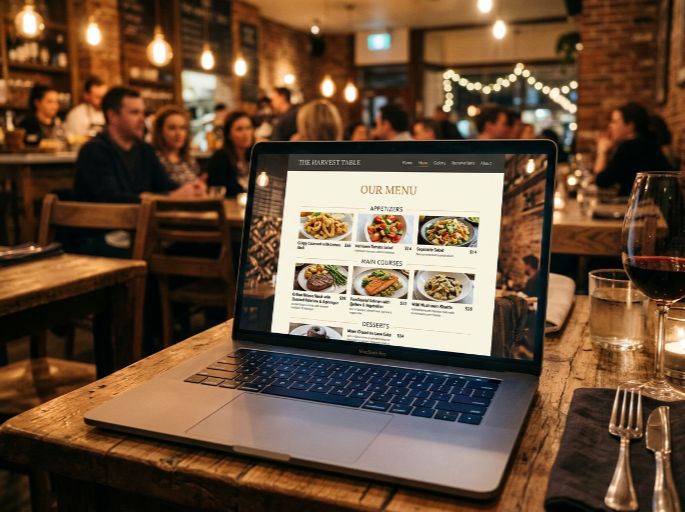
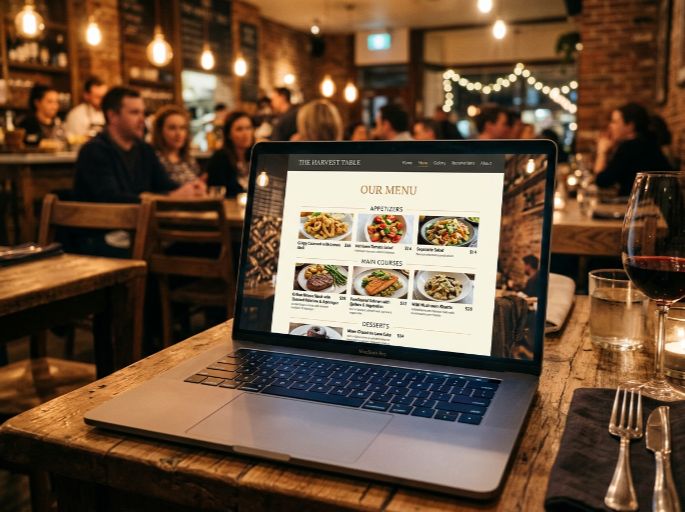
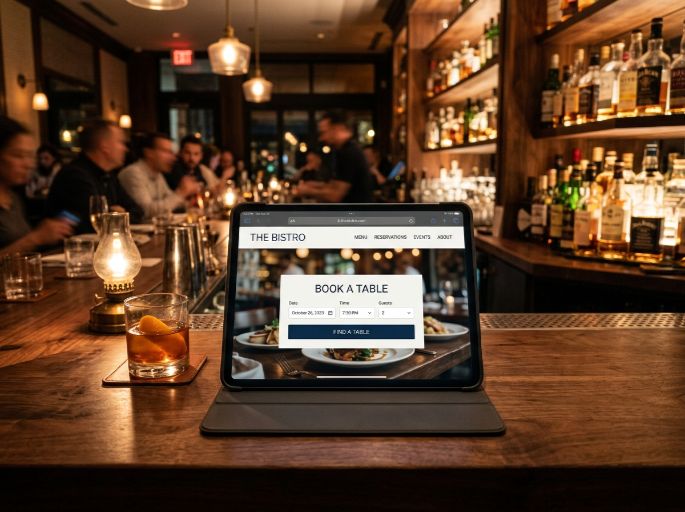
The WordPress rebuild replaced Wix entirely, mobile-first this time, fast-loading, with a table booking system wired directly into both the homepage and the menu page. Sounds basic when you write it down like that, doesn’t it? But the difference it made to conversion showed up almost immediately. People could pull up the menu, pick a date, book a table, and get it confirmed, all without ever touching the phone.
GBP restaurant optimisation ran alongside this from week one. Hours got corrected. Photos got refreshed. The menu got rebuilt to actually reflect what was being served. A regular posting schedule went in too, because an active profile tells Google something a stale one never can, that this business is genuinely still open and paying attention to its own presence.
Getting the Technical Details Right
Schema, Citations and the Stuff Most Restaurants Skip Entirely
Once the new site went live, restaurant schema markup rolled out sitewide. Cuisine type, price range, menu items, and opening hours were structured properly so Google could actually read and use them. The old Wix site had none of this. Which meant Google was basically guessing at what kind of business it was even looking at.
Citation building came next. Inconsistent business information scattered across directories is one of those quiet problems that never looks urgent, right up until you realise it’s been dragging rankings down for years. Listings got cleaned up and rebuilt across 30-plus UK hospitality directories, name, address and phone number matching exactly, everywhere.
By month three, the first page 1 rankings started appearing, mostly branded searches and ‘near me’ terms in the map pack. That early movement gave us real data to work from heading into the final phase, rather than educated guesswork.
Turning Rankings Into Actual Bookings
Content That Connects Search Intent to the Reservation System
Ranking on page 1 means nothing if the person clicking through never books a table. So the final stretch focused entirely on closing that gap. Location- and cuisine-specific landing content went up, built to support table booking SEO directly. Internal links across the menu, booking and location pages got tightened. The path from search result to confirmed reservation stayed as short as possible every step of the way.
This is something we apply across all our local SEO work at Webranko, whatever the sector happens to be. Visibility and conversion have to work together. One without the other? Just a half-finished job, really.
The Results After Five Months
Numbers From the Booking System and Search Console
By month five, 29 keywords were sitting on page 1, spanning branded searches, ‘near me’ terms, and cuisine-specific local combinations that actually convert into covers.
| Metric | Before | After 5 Months |
|---|---|---|
| Keywords on page 1 | Fewer than 5 | 29 |
| Table bookings | Baseline | Up 180% |
| Mobile PageSpeed score | Low 30s | High 80s |
| GBP completeness | Roughly 45% | Fully optimised |
| Local citations consistent | Inconsistent | 92% across directories |
Table bookings through the new system were up 180% compared to the same five-month window the year before, and this wasn’t just more traffic landing on a homepage. These were actual confirmed reservations, coming through a system that didn’t even exist when the project started.
What Made the Difference
It wasn’t one single thing, not really. The WordPress rebuild fixed the conversion problem. GBP optimisation fixed the visibility problem. Schema and citations gave Google the trust signals it needed to take the site seriously. And the content tied all of that together for the people actually searching for somewhere to eat that evening. Run any one of these in isolation, and the results would’ve been a fraction of what they turned out to be.
Want to see this same local and technical SEO approach applied somewhere else? The dental practice case study covers how similar foundations landed page 1 rankings for 47 keywords in six months.
Here’s the honest truth about restaurant SEO, though: it’s really not that complicated. Most restaurants stay invisible online, not because the problem is hard to crack, but because nobody ever got round to fixing it properly.