


When a Manchester building company first got in touch, the problem wasn’t the quality of their work. It was that nobody outside their existing client base could find them. This SEO for a construction company in the UK case study shows how we helped a builder. They relied only on word of mouth. We turned local search into a real, trackable source of new business. We tripled enquiries in six months.
A SEO for Construction Company That Didn’t Need Google, Until It Did
Northbridge Builders had been operating across Greater Manchester for over a decade, building a solid reputation through referrals and repeat clients. For years, that was enough. But growth had quietly stalled, and the owner couldn’t quite work out why, since the standard of work hadn’t dropped at all.
When we ran a local visibility audit, the gap became obvious fast. The business barely existed online. Their Google Business Profile had no photos of finished projects. The service categories were not filled in well. It also had only a few reviews. Searches for “builders Manchester” showed three or four competitors filling the entire map pack. By the owner’s own admission, none of them did better work. They simply showed up first.
Audit Findings
Here’s what the audit found:
| Audit Item | Issue Identified |
| Google Business Profile | Missing project photos, categories, and consistent posting activity |
| Reviews | Fewer than 8 reviews compared to competitors, sitting at 50 plus |
| Service Pages | No service area pages targeting individual Manchester suburbs |
| Website Structure | One generic page trying to cover all services at once |
| Local Citations | Zero local citations across UK trade and business directories |
| Schema Markup | No schema markup identifying the business as a local contractor |
| Call Tracking | No call tracking in place to measure enquiry sources |
This is a genuinely common situation in the trades space. Builder SEO UK problems rarely come down to the quality of the work. They come down to visibility, and visibility is a fixable problem once you know exactly where it’s breaking down.
Building the Foundation SEO for a Construction Company
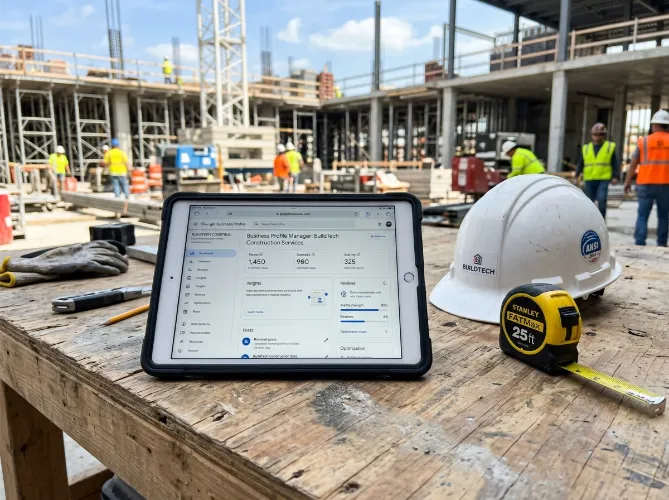
We didn’t start with content or link building. The first month focused on rebuilding the Google Business Profile. Homeowners often see it first. Then they visit the website. Categories were corrected, services were listed correctly, and we introduced a weekly upload routine featuring photos of completed jobs. We also set up a simple review request system. It sends an automatic text after a job is signed off. Most happy customers will leave a review if you ask at the right time.
Alongside the GBP work, we tackled citations. Old listings from years ago were still online. They had old phone numbers and addresses. This quietly confused Google about the correct business details. We cleaned up over 35 directory listings, making sure the name, address, and phone number matched exactly everywhere. Tradesman digital marketing campaigns in the UK often live or die on consistency like this. Most businesses skip it because it is not exciting work.
Turning One Page Into a Proper Service Structure
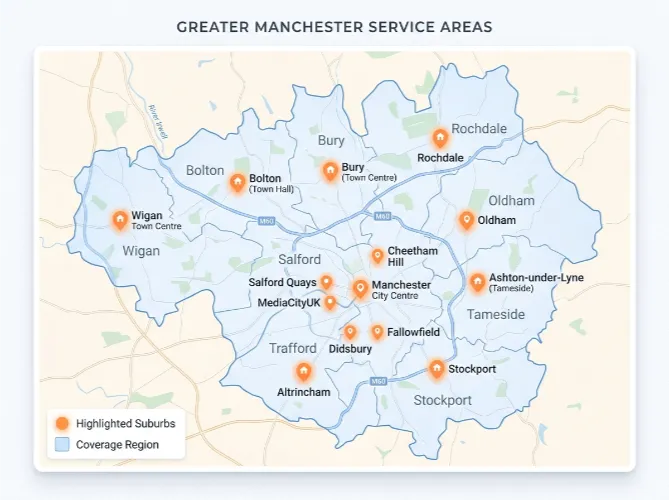
Once the foundation was solid, we rebuilt the website itself. The single catch-all service page was split into dedicated pages for extensions, renovations, loft conversions, and new builds. Each page was written around how homeowners really search, not generic trade language. We then built service area pages for specific Manchester suburbs and nearby towns that the business serves. This gave Google clear signals about where it operates.
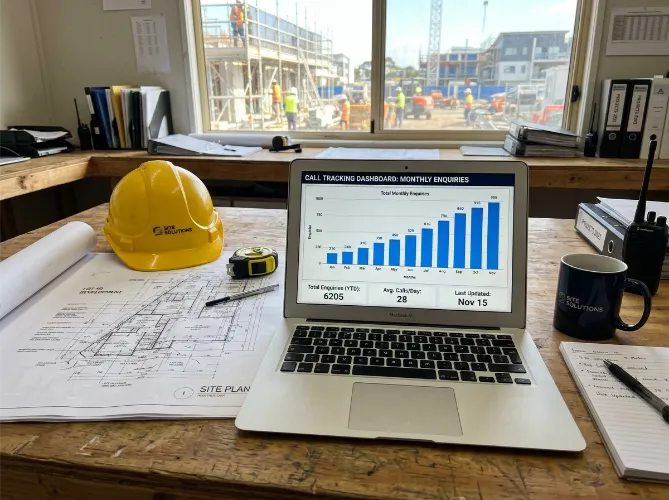
Schema markup was added sitewide, clearly identifying Northbridge Builders as a local construction contractor, with structured data covering services, opening hours, and service areas. We also implemented call tracking, which became one of the most valuable additions. It gave the business clear numbers on where enquiries came from, instead of guesswork.
By month three, the first page one rankings started showing up, mostly for branded searches and near-me terms appearing in the map pack. That early movement gave us real data to refine the next phase rather than working blind.
Reviews and Consistency Compounding Over Time
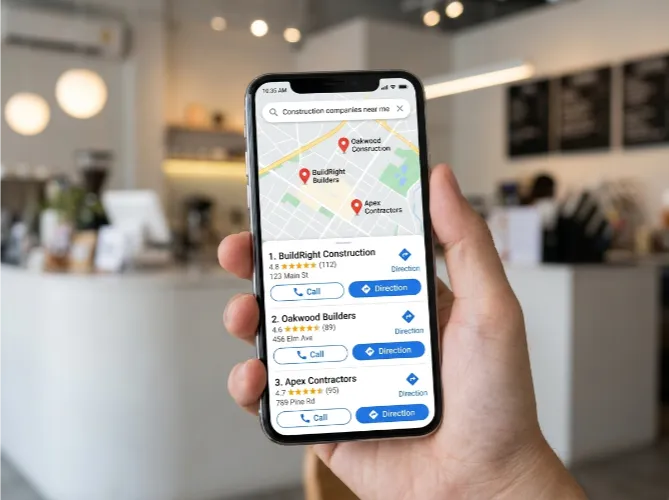
From months three to six, the review system continued to build steadily. The business grew from under 8 reviews to over 40. The owner replied to each review with a personal note. They did not use a templated response. Google’s guidance treats personal replies as a real trust signal. Google Maps visibility for trades was almost nonexistent at the start. It then settled into a consistent top-three spot. This was for builders in Manchester and related construction terms.
What This Campaign Actually Achieved
By the six-month mark, 32 keywords ranked on page one. These included branded terms, “near me” searches, and service-plus-location phrases. They drove booked jobs, not just traffic.
| Metric | Before | After 6 Months |
| Keywords on page 1 | Fewer than 5 | 32 |
| Builder enquiries | Baseline | Up 3x |
| Map pack position | Not ranking | Top 3 |
| Google reviews | Under 8 | Over 40 |
The building contractor’s SEO work paid off directly here. Call tracking confirmed inquiries grew three times versus the same period last year. Unlike referral business, these leads were trackable, attributable, and repeatable each month. They did not depend on someone mentioning the business at a dinner party.
What this case really shows is that local SEO for trades businesses isn’t complicated; it’s just neglected. A complete profile, consistent citations, and a properly optimized GBP will win every time.
This works best with content built on real keyword research and local search intent. Even great craftsmanship loses when it stays invisible online.
For more insights into successful strategies, you can explore our case studies or learn about our approach to digital growth.