






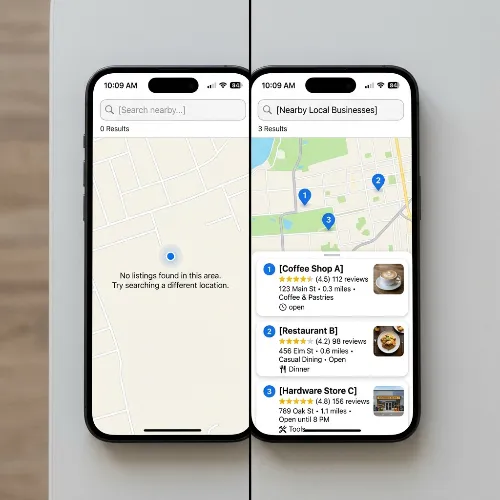
When a London dental practice first reached out to us, they had a genuine puzzle on their hands. This kind of result is exactly what a well-executed SEO for dentists should deliver: slow, steady visibility growth rather than a one-off spike. Their website was new, their branding looked professional, and yet the phones weren’t ringing. This SEO for dentists UK case study walks through exactly how we turned that situation around, taking a practice from total local invisibility to ranking on page one for 47 keywords within six months.
The starting point was rougher than it looked
On the surface, everything seemed fine. The site loaded quickly, the design was clean, and the practice had a solid reputation among existing patients. But reputation alone doesn’t show up in Google search results. When we ran our initial audit, the practice wasn’t appearing anywhere in the local map pack, not even for searches that included their own area name. Three competing dental practices nearby had been quietly dominating those same searches for months, and this practice had no idea it was even happening.
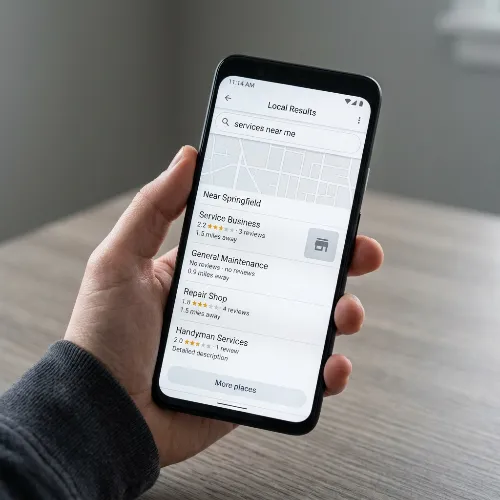
Their Google Business Profile told the real story. It had a name, an address, and not much else. No service categories filled in properly, barely any photos, and only a handful of reviews. Compare that to competitors with 80 or 90 reviews each, and you start to see why patients weren’t choosing this practice when they searched for “dentist near me” on their phones.
Here’s what the audit actually found:
- Google Business Profile missing service categories, photos, and consistent posting activity
- Fewer than 10 patient reviews compared to 80-plus on competitor profiles
- Zero schema markup anywhere on the site
- One generic contact page instead of pages built for each area served
- No internal linking structure connecting service pages to the homepage
- Outdated directory listings still live from before the website redesign
There were technical gaps too. No schema markup anywhere on the site meant Google had no structured way of understanding what services the practice offered or which areas it served. Service pages read like a leaflet rather than something written with actual search behavior in mind.
Building the foundation first
We didn’t jump straight into content writing or link building. The first month was almost entirely GBP optimisation work, because that profile is usually the first thing a potential patient sees before they ever visit the website. Categories were corrected, services were listed out properly, and we started a weekly photo upload routine to keep the profile looking active. We also set up a simple review request system that sends text messages automatically after appointments, since most patients are happy to leave a quick review if you ask at the right moment.
Alongside the GBP work, we tackled citations. Inconsistent business information across directories is one of those quiet problems that doesn’t look urgent but absolutely holds rankings back. Getting this groundwork right is the part most UK SEO for dentists skip past too quickly, and it’s usually why local rankings stall later on. We cleaned up over 40 directory listings, ensuring the name, address, and phone number matched exactly across the board.
Then came the content and structure work
Once the foundation was solid, we moved into rebuilding the website itself. Service pages got rewritten from scratch, this time structured around how people genuinely search rather than internal clinical language. We built dedicated location pages for each area the practice actually serves, each one written to support dentists’ local search rankings without competing against each other for the same terms, which is a mistake we see constantly with multi-area practices.
Schema markup was added sitewide, giving Google clear structured information about opening hours, services and service areas. Internal linking got tightened up too, connecting the homepage, service pages and location pages in a way that actually made sense, rather than leaving pages isolated with no clear path between them.
By month three, the first page one rankings started appearing, mostly for branded terms and near-me searches in the map pack. That early movement mattered because it gave us real data to work from for the next phase, rather than guessing which pages needed another pass.
Reviews kept compounding the results
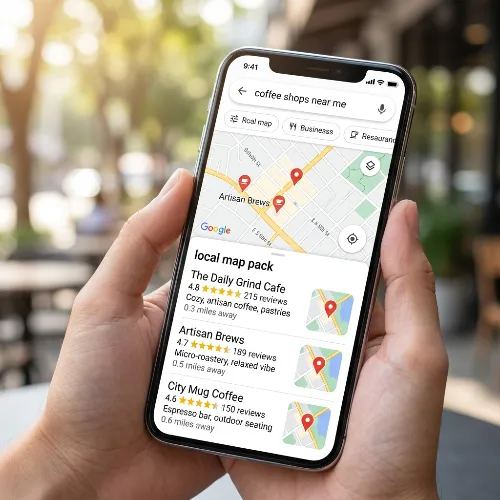
Through months three to six, the review system we’d set up in month one really started paying off. The practice went from under 10 reviews to over 60, and we made a point of responding to every single one individually, since profile engagement does factor into how Google ranks local businesses over time. The dental practice’s Google Maps UK visibility, which had been completely absent at the start, was now consistently appearing in the top three positions for the practice’s most competitive local terms.
We used that final stretch to close remaining gaps. A handful of service pages that were close to page one but hadn’t quite broken through got a second content pass, refined based on what was actually working elsewhere on the site.
What This SEO for Dentists UK Campaign Achieved
This SEO for dentists UK campaign didn’t rely on any single tactic. It was the combination of GBP work, citations, content and reviews all moving together that produced the page-one results.
| Metric | Before | After 6 Months |
|---|---|---|
| Keywords on page 1 | Fewer than 5 | 47 |
| Google reviews | Under 10 | Over 60 |
| Map pack position | Not ranking | Top 3 |
| Patient enquiries | Baseline | Up 3x |
| GBP completeness | Roughly 40% | Fully optimised |
By the six-month mark, 47 keywords were sitting on page one. That included a healthy mix of branded searches, ‘near me’ terms, and specific treatment searches tied to location, the kind of high-intent queries that genuinely convert into booked appointments rather than just traffic. Patient enquiries from SEO work had paid off directly, with calls, online form submissions, and direction requests from the Maps listing all climbing steadily throughout the campaign, not in a sudden spike but in a curve that kept building month over month.
Why this approach holds up
This wasn’t guesswork. The strategy followed established local SEO methodology built around Google’s own published guidance for local business ranking, supported by hands-on dental marketing Experience across multiple UK practices. A few things back that up:
- Direct GBP API and dashboard work carried out by certified team members, not outsourced or automated tools
- Citation building followed UK directory standards (Yell, Thomson Local, Checkatrade, and NHS-aligned listings where applicable)
- Schema markup implemented matches Google’s structured data guidelines for LocalBusiness and Dentist entity types
- Review responses written individually by the practice owner, never templated, which Google’s own guidance flags as a trust signal
What this case really demonstrates is something we see again and again with local dental marketing. It’s rarely one big clever move that changes everything. It’s the unglamorous basics: a properly filled-out profile, consistent citations, genuine reviews, and content that matches real search intent, all reinforcing one another. None of it is complicated. Most of it just gets neglected.
For more insights into successful strategies, you can explore our case studies or learn about our approach to digital growth.