








Most private clinics don’t actually have a quality problem. What they have is a visibility problem. Meridian Health had genuinely excellent doctors, strong patient outcomes, and clinical standards that would impress anyone who walked through the door. Google, though, had no way of knowing any of that. And in a niche where Google checks harder than almost anywhere else online, that invisibility was costing real patient enquiries every single week.
That’s where this SEO for private clinic UK case study begins.
Why Healthcare SEO Plays by Different Rules
YMYL Means Google Is Actively Suspicious of Medical Content
Private healthcare falls squarely inside what Google classifies as Your Money or Your Life content. A bad restaurant recommendation is mildly annoying at worst. Bad medical information, on the other hand, causes genuine harm, and Google’s algorithm reflects that completely. It doesn’t just want well-optimised pages here. It wants verifiable proof that whoever wrote the content actually knows what they’re talking about.
When we first audited Meridian’s website, none of those signals existed. Seven GMC registered clinicians were working out of a well-equipped Manchester clinic, yet the website could’ve been written by absolutely anyone. No doctor profiles. No credentials listed. No named authors on clinical pages. No medical schema markup anywhere. Any human quality rater checking this against Google’s guidelines would’ve flagged it as low trust immediately, no question.
The Specific Gaps We Found
| Area | Issue |
|---|---|
| Clinical service pages | Averaging under 250 words on serious medical topics |
| Doctor credentials | Not a single name, GMC number or specialism anywhere on the site |
| Governance signals | No clinical governance statement, no accreditation listings, no professional body memberships |
| Medical schema | Absent across every page, so Google had no structured confirmation this was even a medical business |
| National keyword visibility | Completely zero, despite the clinic accepting patients from anywhere in the UK |
| Patient enquiries | Stuck at a plateau, with no growth channel beyond local word of mouth |
The national reach gap made the trust problem worse, honestly. Competing nationally in private GP SEO means going head to head with large healthcare groups that have spent years building domain authority and structured medical content. Show up in that space without E-E-A-T signals in place, and you’re not facing a ranking challenge. You’re facing a non-starter.
Building Medical Trust Before Building Rankings
The First Two Months Were Entirely About Credibility Signals
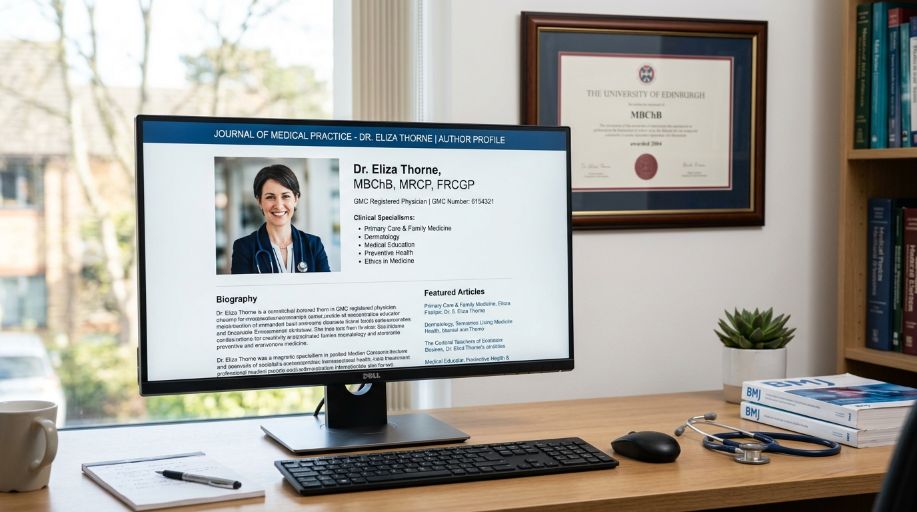
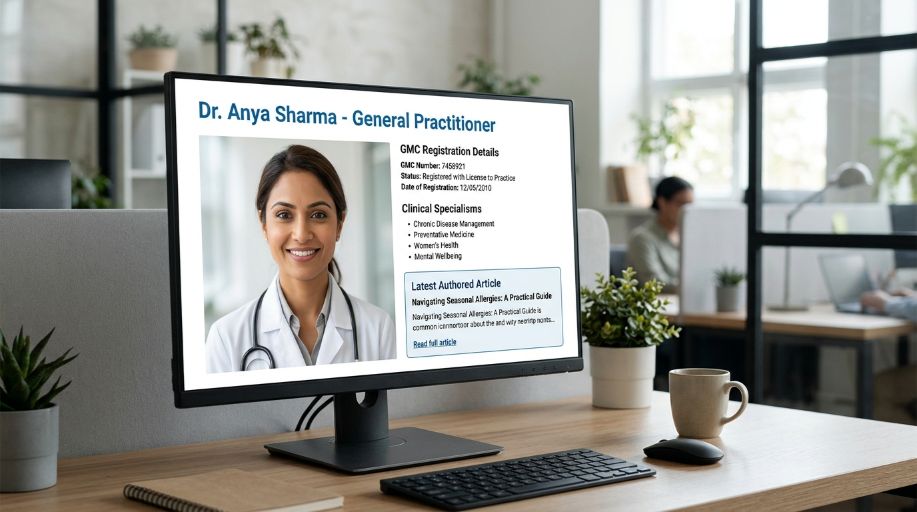
Nothing else was going to work until Google could actually verify who was behind this website. So doctor profiles went up for all seven clinicians, each built properly with a GMC registration number, years of practice, specialist areas, and a short clinical biography written in the doctor’s own voice rather than generic corporate copy. That last bit matters more than people think. Quality raters can absolutely tell the difference between a real clinical biography and one stitched together from a job description.
A clinical governance page went live. Professional body memberships got added to the footer and the about section. The medical content disclaimer structure was standardised across every service page, so clinical information was presented consistently with the right professional context attached. None of this is glamorous SEO work, not even close. But it’s completely necessary in YMYL healthcare SEO.
What happened in GSC within three weeks told the story on its own. Pages that had been crawled regularly and mostly ignored suddenly started appearing properly in coverage reports. Google was finally starting to take the site seriously.
Rebuilding the Clinical Content
Service Pages That Actually Reflected What the Doctors Knew
Every core treatment page got a full content rebuild, each one written with a named doctor author attached. Private GP consultations, specialist referrals, diagnostic services, and health screening packages – page after page went from under 250 words to over 1500, structured around proper clinical headings, evidence references, patient suitability sections, and FAQs pulled from real questions the clinic’s reception team fielded every week.
The doctors reviewed every single draft themselves. Clinical accuracy isn’t optional in YMYL content, and Google’s systems keep getting sharper at spotting writing that sounds medical but lacks any real clinical depth. There’s a noticeable difference between a page written with genuine clinical input and one produced purely to tick SEO boxes, and in this niche, that difference shows up directly in the rankings.
Medical schema markup went across every treatment page, doctor profile, and clinic location, all at once. Physician credentials, medical speciality, service type, and location data are all structured so Google’s systems could read and verify it rather than guess. Paired with the author profiles already in place, the schema gave Google machine-readable trust signals to match what humans could already see on the page.
Taking the Clinic National
A Keyword Strategy Built Across 12 Clinical Service Areas
Local visibility is one conversation. National visibility in healthcare SEO in the UK is a completely different one. The content architecture we built mapped clinical services to search intent at a national scale, covering everything from high-intent commercial queries like ‘private GP appointment UK’ right through to informational condition pages targeting symptom and diagnosis searches that feed commercial intent further down the funnel.
Condition pages went up across the clinic’s major clinical areas, each one carrying the same E-E-A-T signals as the core service pages: named authors, clinical references, and proper disclaimers. Internal linking tied informational condition content back to relevant treatment pages throughout, so topical authority built up consistently instead of sitting in isolated pockets scattered across the site.
We saw the same layered approach drive results in the accountancy firm case study, where E-E-A-T infrastructure had to come first before traditional SEO signals could deliver anything at all. Healthcare’s just the more demanding version of that same challenge. At Webranko we treat YMYL compliance as a foundation requirement, never an optional extra.
Nine Months Later
What the Booking System and GSC Data Actually Showed
By month nine, the gap between where Meridian started and where it ended up landing was big enough that the clinical director actually asked us to double-check the numbers.
| Metric | Before | After 9 Months |
|---|---|---|
| Keywords ranking nationally | Fewer than 20 | 500 plus |
| Patient enquiries | Baseline | Doubled |
| Doctor profiles live | Zero | 7 |
| National page 1 rankings | Zero | 38 core terms |
| Medical schema pages | Zero | All treatment pages |
Patient enquiry growth was confirmed against the clinic’s own booking system records, not guessed at. Real new patients finding Meridian through organic national search, people who’d never heard of the clinic through local word of mouth, never seen a local ad, and never been referred by a Manchester GP. They found the clinic simply because it was ranking nationally for the medical services they were actively searching for.
The Thing That Makes Healthcare SEO Different From Everything Else
Rankings in this niche work as a trust vote, not just a relevance signal. Google isn’t only asking whether a page matches the search query. It’s asking whether the people behind that page should actually be trusted with someone’s medical decisions. Getting that answer right, consistently, across every page, every author credit, every schema field, and every clinical disclaimer is what real national healthcare visibility takes. The 500 keywords and the doubled enquiries? That’s just what it looks like once the data catches up.